
Intel Panther Lake Core Ultra 300: 180 TOPS AI and Xe3 GPU Powerhouse
Friday, October 03, 2025Intel Panther Lake Core Ultra 300: 180 TOPS AI and Xe3 GPU Powerhouse

In the fast-paced world of mobile processors, Intel’s Panther Lake, launching as the Core Ultra 300 series, is poised to redefine AI laptops in 2025. This Intel mobile processor isn’t just a refresh—it’s the first showcase of Intel’s cutting-edge 18A manufacturing process, blending raw performance, advanced AI capabilities, and superior graphics. With a debut planned for late 2025, Panther Lake aims to power everything from ultrabooks to handheld devices, challenging rivals like AMD and Qualcomm. Curious about its predecessor?
A Fresh Start with 18A Technology
Panther Lake marks the debut of Intel’s 18A node, a breakthrough that packs more transistors onto silicon while optimizing power efficiency. This Intel 18A processor is central to the company’s push to reclaim chip design leadership in the United States. The lineup splits into Panther Lake-H for high-performance needs and Panther Lake-U for slim, efficient builds. Unlike past generations, there’s no bulky HX variant, signaling Intel’s focus on nailing the essentials.
Compared to Lunar Lake, Panther Lake’s architecture is a full overhaul. It features Cougar Cove performance cores paired with Darkmont efficiency cores, with some models potentially adding low-power Skymont cores later. Configurations include the H series with up to four performance cores, eight efficiency cores, and four low-power cores, sipping 25 watts normally and peaking at 45 watts. The U series targets ultra-portables with two to four performance cores, emphasizing efficiency. Early engineering samples reveal robust cache setups: 1.6 MB L1, 24 MB L2, and 18 MB L3 across 16 cores. Clock speeds remain under wraps, but the potential is clear.
Spec Comparison: Panther Lake-H vs. Panther Lake-U
| Model | Cores | TDP | Memory |
|---|---|---|---|
| Panther Lake-H | 4P+8E+4LP | 25-45W | LPDDR5X-8533 |
| Panther Lake-U | 2-4P+4E | 15W | LPDDR5X-8533 |
GPU Revolution: Xe3 Celestial
The graphics story is where Panther Lake shines. It introduces the Xe3 Celestial architecture, Intel’s bold leap in integrated GPUs for AI laptops. Top models pack 12 Xe3 cores—a 50 percent jump over Lunar Lake’s graphics. This isn’t just more power; it’s smarter power, with faster clocks, improved power management, and features like advanced AV1 video encoding for smoother streaming and beefier XMX engines for AI-accelerated tasks. Paired with LPDDR5X memory, Xe3 aims to rival AMD’s RDNA 3.5 graphics, making Panther Lake a gaming and creative powerhouse. Want more on Intel’s GPU ambitions?
AI at the Edge: 180 TOPS of Neural Muscle
AI is the future, and Panther Lake’s fifth-generation Neural Processing Unit delivers with up to 180 tera operations per second (TOPS). This AI laptop chip enables on-device tasks like real-time translation and image generation without cloud reliance, outpacing Lunar Lake and AMD’s Strix Halo (rumored at 120 TOPS). This edge AI power means faster responses, better privacy, and longer battery life, with developer-friendly tweaks for adaptive apps.
Competitor Showdown: Panther Lake vs. AMD and Qualcomm
How does Panther Lake stack up? Against AMD’s Ryzen AI 300 series, its 180 TOPS NPU offers a clear edge over Strix Halo’s rumored 120 TOPS, especially for AI-driven workloads like generative art or voice processing. The 12 Xe3 Celestial cores could also challenge AMD’s RDNA 3.5 graphics in gaming laptops, potentially delivering higher frame rates in titles like Cyberpunk 2077. Compared to Qualcomm’s Snapdragon X Elite, Panther Lake’s 18A process and higher core counts promise better multi-threaded performance for creators. While benchmarks are pending, Intel’s balanced approach—CPU, GPU, and NPU—positions it as a versatile contender.
Memory and the Backbone of Speed
High-performance chips need fast memory, and Panther Lake delivers with LPDDR5X at 8533 MT/s for thin-and-light laptops and DDR5 at 7200 MT/s for beefier systems. This ensures seamless data flow between cores, GPU, and NPU, minimizing bottlenecks in multitasking or 4K editing. Compared to older generations, this memory boost drives snappier performance, keeping Panther Lake competitive in memory-hungry scenarios.
When Will It Hit Shelves?
Patience is key. Intel plans to unveil Panther Lake in Q4 2025, with production ramping up in Q1 2026. By mid-2026, expect premium ultrabooks and compact workstations powered by this chip, ready to tackle workloads that choke today’s hardware.
Why Panther Lake Matters
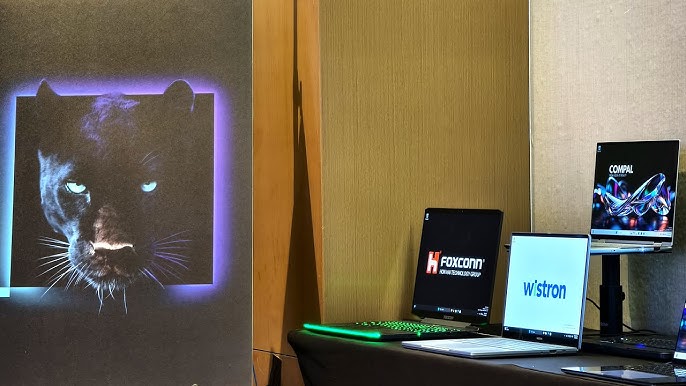
Beyond specs, Panther Lake is Intel’s bet on homegrown tech to fuel U.S. innovation and jobs. Success here could stabilize Intel’s finances and boost its influence amid shifting political winds. For consumers, it means laptops with desktop-level power, efficient cooling, and AI smarts. In the ring with AMD and Qualcomm, Panther Lake’s strong cores, killer graphics, and 180 TOPS NPU make it a future-proof choice. Early Computex demos hint at its potential—can Intel deliver the spark to reclaim mobile dominance? The roar of Panther Lake is coming.
What do you think—can Panther Lake outmuscle AMD and Qualcomm? Drop your thoughts in the comments below!