
Intel's 18A Node Achieves Record-Low Defect Density, Signaling Major Manufacturing Milestone
Saturday, October 11, 2025Intel's 18A Node Achieves Record-Low Defect Density, Signaling Major Manufacturing Milestone
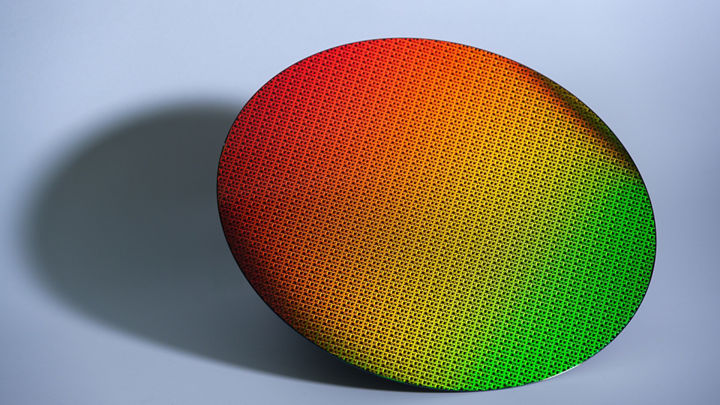
In the high-stakes world of semiconductor manufacturing, a process node's success is often determined not by its marketing name, but by its yield—the ratio of functional chips to defective ones on a silicon wafer. In a significant achievement, Intel has announced that its groundbreaking Intel 18A (1.8nm-class) process node has achieved a record-low defect density, signaling that the technology is not just ready for production, but is performing exceptionally well.
A Critical Milestone for Manufacturing Readiness
Defect density, measured in defects per square centimeter, is a key indicator of a manufacturing process's maturity and profitability. A lower defect density directly translates to higher yields, meaning more usable chips can be produced from each wafer, which lowers costs and increases available supply.
By achieving a record-low defect density for its 18A node, Intel is sending a clear message to the industry and potential customers: its manufacturing process is robust, reliable, and ready for high-volume manufacturing. This milestone is a powerful validation of the years of research and development invested in the node, as well as the efficacy of its new RibbonFET and PowerVia technologies.
Building Confidence for Customers and Intel's Foundry Ambitions
This announcement is particularly significant for Intel's foundry services (IFS). To win business from major tech companies who design their own chips, a foundry must prove it can produce chips at scale with competitive yields and reliability.
A record-low defect density is the ultimate proof point. It demonstrates that Intel can not only develop cutting-edge process technology but also execute its manufacturing with world-class precision. This will likely boost customer confidence in Intel's ability to be a reliable, high-volume manufacturing partner, a key goal of the company's IDM 2.0 strategy.
For Intel's own products, this milestone ensures that upcoming CPUs like Panther Lake and data center chips like Clearwater Forest will be produced in high volumes with strong performance and efficiency characteristics, right on schedule.

A Sign of a Resurging Manufacturing Engine
This achievement comes at a pivotal time for Intel. After years of facing stiff competition from TSMC and Samsung, and stumbling on previous process nodes, the company is demonstrating a clear and compelling manufacturing turnaround. The successful ramp of Intel 4 and now the proven readiness of 18A show that Intel's internal execution is improving dramatically.
The low defect density of 18A is more than just a technical statistic; it's a symbol of Intel's resurgence. It proves that its ambitious five-nodes-in-four-years roadmap was not just marketing speak, but an achievable goal. It positions Intel to not only compete with but potentially leapfrog its rivals in the race to produce the world's most advanced chips.
With its Fab 52 facility in Arizona now operational and producing 18A wafers with record-low defects, Intel has the tools, the technology, and now the proven manufacturing prowess to reclaim its position as a leader in semiconductor fabrication. For the industry and for consumers, this signals that the competition at the cutting edge of chip manufacturing is about to get much more intense.