
Intel XeSS 3 Deep Dive: Multi-Frame Generation Promises Up to 4x FPS on Every Arc GPU
Saturday, November 08, 2025Intel XeSS 3 Deep Dive: Multi-Frame Generation Promises Up to 4x FPS on Every Arc GPU
Intel is ready to steal the upscaling spotlight again. Hot on the heels of XeSS 2, the company has officially unveiled XeSS 3 with a headline-grabbing feature called Multi-Frame Generation (MFG) that can quadruple frame rates on both new and existing Arc graphics cards. Here is everything we know about the tech, the numbers Intel is claiming, and what it means for gamers in 2025 and beyond.

What XeSS 3 Adds
- XeSS-SR – AI-upscaled image quality (unchanged from XeSS 2)
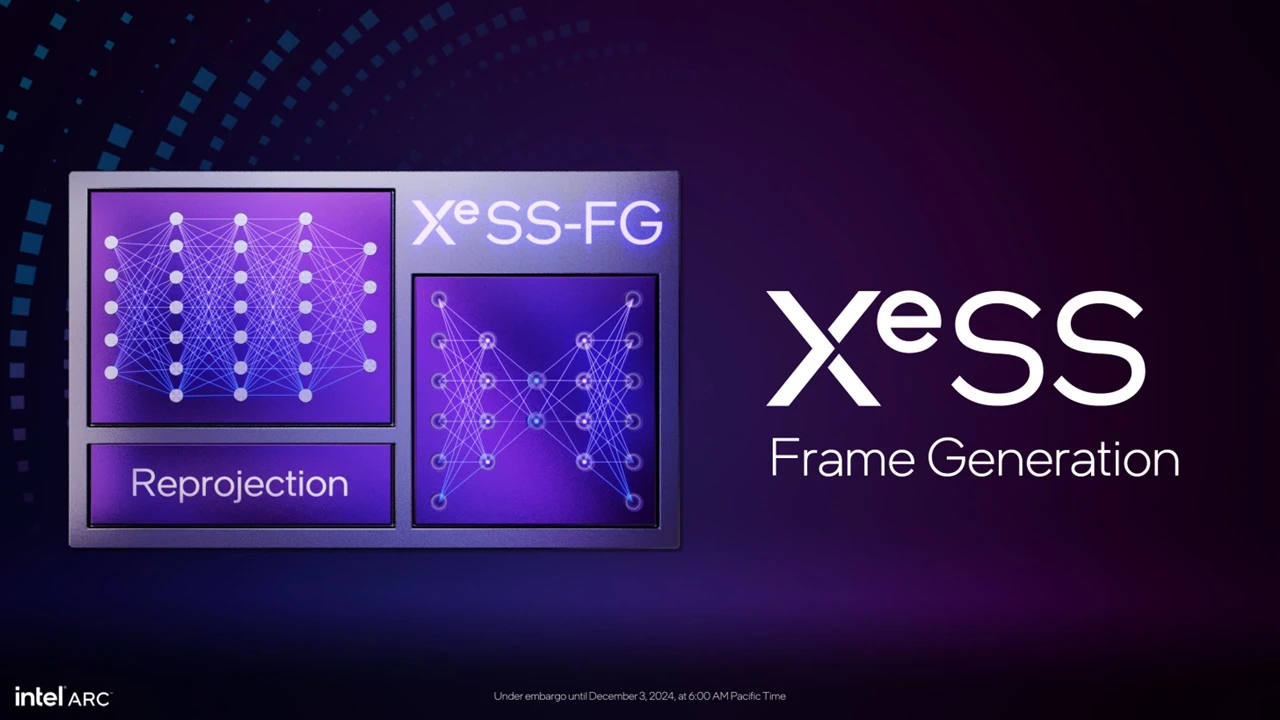
- XeSS-FG – single-frame generation (carried over from XeSS 2)
- XeSS-MFG – Multi-Frame Generation that inserts up to three additional AI frames for every traditionally rendered frame, giving a theoretical 4× fps boost
- XeLL 2 – updated low-latency mode that keeps click-to-response times tight even when MFG is active
How Multi-Frame Generation Works
Intel uses the same inputs as its single-frame pipeline—motion vectors, depth buffers and an optical-flow field—but now runs the XMX AI cores three times instead of once. The result is three synthetic frames inserted between two natively rendered frames. Frame-pacing logic then delivers the quintuplet to the display at evenly spaced intervals, so motion stays smooth and artifacts are minimized.
Early Performance Claims
Intel showed two live demos at its October 2025 Tech Tour:
| Title | Native FPS | XeSS 3 MFG 4× | Uplift |
|---|---|---|---|
| Painkiller (Epic, 1080p) | 62.9 | 245 | 3.9× |
| Dying Light: The Beast (Max, 1080p) | 34.2 | 133 | 3.9× |
Both runs used a 45 W Panther Lake processor with 12 Xe3 cores, so expect lower multipliers on older Arc A-series GPUs, but the technology itself scales across the entire XMX-equipped stack.
Hardware Support – No One Left Behind
Unlike NVIDIA's DLSS 4 MFG, which is locked to RTX 50-series GPUs, Intel says XeSS 3 MFG will roll out to every GPU that already supports XeSS 2. That list includes:
- Arc A-series discrete cards (Alchemist / Xe1)
- Arc B-series discrete cards (Battlemage / Xe2)
- Core Ultra 100V/100T Meteor Lake iGPUs
- Core Ultra 200H/200HX Arrow Lake-H iGPUs
- Panther Lake Xe3 mobile chips at launch
Support will arrive in phases: Xe2 first, Xe1 later, according to Intel's Tom Petersen.
Game Compatibility & Override Modes
Intel is keeping the API identical to XeSS 2, so any game that already supports XeSS 2 will automatically inherit XeSS 3 MFG. Gamers can choose between 2×, 3× or 4× generation multipliers inside the new Intel Graphics Software app. Early testers report that 4× mode looks best when the base frame rate is above 60 fps; anything lower can show minor ghosting during fast camera whips.
Bonus Features Shipping Alongside XeSS 3
- Precompiled Shader Distribution – Intel's cloud compiles shaders ahead of launch and pushes them to your PC, cutting stutter and load times
- Shared GPU/NPU Memory Override – lets iGPUs borrow up to 50 % of system RAM, useful for 1440p gaming on thin-and-light laptops
- XeLL 2 Low Latency – updated pacing algorithm keeps total input lag within 2 ms of native even at 4× MFG
Bottom Line – Why XeSS 3 Matters
Intel is the first vendor to bring multi-frame generation to previous-generation hardware. If the live demos hold up in the real world, a $200 Arc A580 could soon deliver 120 fps-plus at 1440p in supported titles, while a Panther Lake ultrabook might hit 60 fps in Cyberpunk 2077 without a dGPU. That kind of generational leap usually requires a new graphics card; Intel is giving it away in a driver drop. Keep an eye out for the public release when Panther Lake lands in early 2026.
XeSS 3 is expected to debut alongside Intel Panther Lake CPUs in Q1-2026 and will roll out as a driver update for all XMX-equipped Arc GPUs.