
Call of Duty: Black Ops 7 Faces Backlash Over Excessive Use of AI-Generated Artwork
Friday, December 12, 2025Call of Duty: Black Ops 7 Faces Backlash Over Excessive Use of AI-Generated Artwork
The annual release of Activision’s premier military shooter, Call of Duty: Black Ops 7, has been overshadowed by a major controversy. According to reports from the games media, the latest installment in the billion-dollar franchise is "littered" with generative AI artwork across numerous in-game assets, sparking a debate about value, creative integrity, and the future of human artists in AAA development.
Despite being developed by hundreds of workers across multiple studios and following a predecessor that grossed over $1 billion in its first ten days, the newest Black Ops title features an "extremely egregious amount" of machine-generated visuals. Critics argue that this extensive reliance on AI art is a sign that Activision is "ripping players off," as the company prioritizes cost-cutting over paying human artists for commissioned work, even in a game priced at $70.
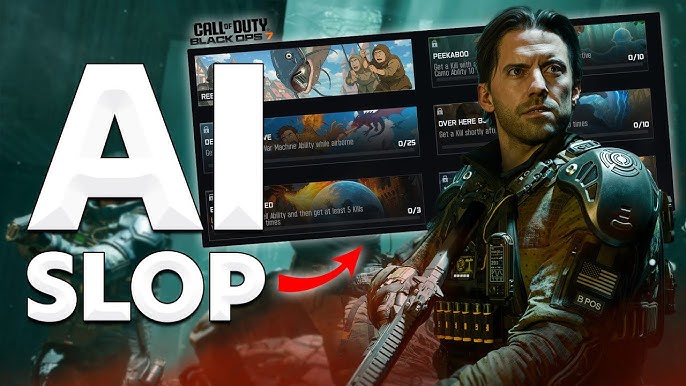
AI Art Infests Almost Every Facet of the Experience
The use of generative AI is reportedly not confined to a single, isolated element but permeates almost every level of the player experience in Call of Duty: Black Ops 7. Specific instances highlighted in the controversy include:
- Calling Cards: Dozens of the game’s Calling Cards, which serve as small pieces of artwork displayed on player profiles, are populated with AI-generated images. Examples include images prompted in a popular "Ghibli-style" and others described as lacking creativity.
- Environmental Assets: The issue extends beyond cosmetics, with reports of AI-generated posters and other "smeared assets" appearing within the campaign and multiplayer levels themselves.
- Achievement Rewards: Perhaps the most controversial use is in the game’s toughest rewards. Almost every Calling Card related to the campaign, including rewards for beating the endgame scenario, uses AI artwork instead of commissioned human art to celebrate player achievements.
- Prestige Icons: The highly coveted Prestige icons, which represent the ultimate achievement for dedicated players, reportedly "reek of generative tools" with smeared details, over-designed lines, and other inconsistencies, despite potentially being slightly touched up by a human artist.
A Growing Trend in the Franchise
This is not the first time the Call of Duty franchise has faced criticism for its use of AI-generated visuals. The controversy follows previous incidents:
- 2023’s Modern Warfare 3: This title included an AI-generated Calling Card within the premium $15 "Yokai Wrath" cosmetic bundle.
- 2024’s Black Ops 6: This entry was heavily criticized for using a generated image of a Zombie Santa that infamously had six fingers instead of five, a common visual artifact of early generative AI tools.
In Black Ops 7, however, the volume of AI use is reportedly much higher, suggesting Activision has become more emboldened in pushing machine-generated visuals to the consumer. Notably, the game’s Steam page includes a disclaimer stating: "Our team uses generative AI tools to help develop some in game assets."
The Core Debate: Value and Integrity
The central question raised by critics is what the $70 price tag truly covers when major creative assets are generated for essentially zero creative cost. When consumers purchase a video game, they are often paying for the service provided by the creative team—the artists, writers, and designers.
The argument is clear: when AI replaces human artists, it not only "shafts" the artists but also devalues the product the consumer is buying. Critics contend that charging full price for art that "is worth nothing" because "no one made it" constitutes a rip-off from the biggest gaming franchise on the planet. The high-profile use of AI in assets like Prestige icons—which are meant to celebrate a player's dedication—is viewed as particularly insulting.

Frequently Asked Questions (FAQ)
Q: What is the main controversy surrounding Call of Duty: Black Ops 7?
A: The main controversy is the excessive use of generative AI artwork in numerous in-game assets, including Calling Cards, Prestige Icons, and environmental posters, despite the game's high price and the franchise's massive revenue.
Q: Where is the AI art most prominent in the game?
A: The AI art is most visible on the Calling Cards, particularly those rewarding campaign achievements, and in the prestigious Prestige Icons.
Q: Has the Call of Duty franchise used AI art before?
A: Yes. Previous games like Modern Warfare 3 (2023) and Black Ops 6 (2024) have been criticized for incorporating AI-generated images in cosmetic items.
Q: What is the technical issue cited with the AI art?
A: The images often display common flaws of generative AI, such as smeared details, inconsistent design lines, and an overall "up-chuck" visual quality, despite the game's high production budget.
Q: Is there an official statement from the developers about AI use?
A: Yes, the game’s Steam page reportedly includes a disclaimer acknowledging that the development team "uses generative AI tools to help develop some in game assets."