
What Microsoft's 2025 Gaming Moves Really Mean for You
Wednesday, December 10, 2025Beyond the Press Release: What Microsoft's 2025 Gaming Moves Really Mean for You
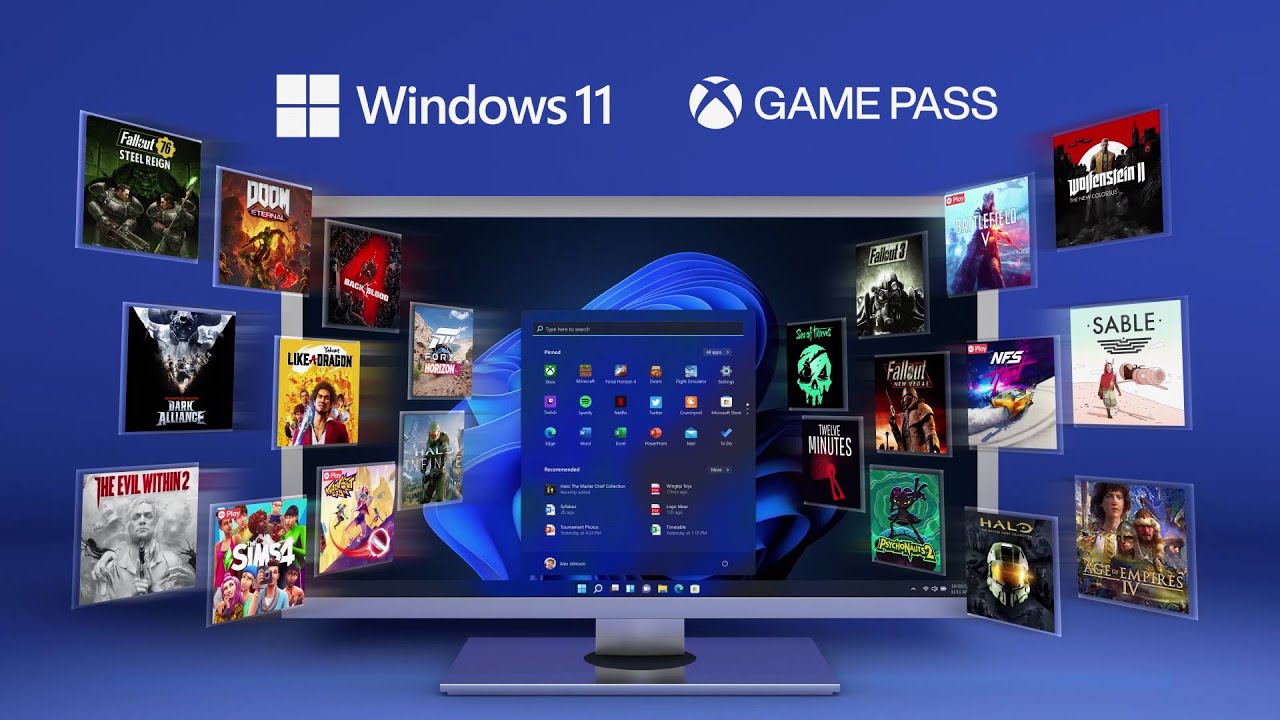
In 2025, Microsoft made bold strides to solidify Windows as the definitive PC gaming platform. While their official blog post outlines the "what," the real story is the "why" and "so what." This isn't just a list of features; it's a strategic playbook showing how Microsoft plans to win the next era of gaming by converging its Xbox and Windows divisions, tackling its biggest weaknesses, and laying groundwork it hopes others will build upon.
The Handheld Play: More Than Just New Hardware
The launch of the ASUS ROG Ally devices is the most visible part of a much deeper strategy. Microsoft isn't just endorsing a handheld; it's fundamentally retooling Windows to be competitive in a space dominated by streamlined consoles and dedicated devices like the Steam Deck.
The Real Innovation is Software: Features like the Xbox Full Screen Experience (FSE) and Advanced Shader Delivery (ASD) are direct responses to long-standing PC gaming pain points: a cluttered OS and stuttering first-time gameplay. By solving these for handhelds, Microsoft is creating solutions that benefit all Windows PCs. FSE's expansion to desktops and laptops is a clear sign this is a core Windows feature, not a niche handheld mode.
A Blueprint for Partners: By co-developing these system-level optimizations with ASUS and AMD, Microsoft is creating a template. It signals to other manufacturers that if they build a Windows handheld, the OS will now have a dedicated, performance-tuned mode to support it. This is an open invitation to grow the Windows handheld ecosystem against a walled-garden competitor.
The Arm Gambit: Fixing the Foundation
For years, "Windows on Arm" and "gaming" were mutually exclusive terms. Microsoft's 2025 updates are a concerted, multi-pronged attack on the three major barriers that held it back.
- The Library Problem (Solved by Local Play & Prism): Enabling local installs via the Xbox app and enhancing the Prism emulator with AVX support is the one-two punch needed for a viable game library. It's no longer just about cloud streaming or a handful of native ports.
- The Anti-Cheat Wall (Now Breached): Getting Easy Anti-Cheat and BattlEye on board is arguably the most critical, behind-the-scenes victory. This single move unlocks a vast catalog of competitive multiplayer games, making an Arm laptop a legitimate device for playing Fortnite or Apex Legends with friends.
- The Performance Question (The Future Bet): The preview of Auto Super Resolution (Auto SR) coming to the AMD Ryzen AI NPU in the ROG Ally X is a glimpse of the future. Microsoft is betting that AI upscaling and neural rendering will be the great equalizer, allowing efficient Arm chips to deliver visual fidelity competitive with traditional x86 powerhouses.

DirectX: Building the Next Decade's Graphics Engine
The updates to DirectX Raytracing (DXR 1.2) and the work on neural rendering aren't just about prettier graphics today. They're about control and influence.
Performance as a Platform Play: By delivering up to 2.3x ray tracing gains through its API, Microsoft ensures the most advanced lighting techniques are synonymous with "DirectX." This gives developers a reason to prioritize its ecosystem over others.
Neural Rendering is the Long Game: By baking ML tools into DirectX via Shader Model 6.9, Microsoft is planting a flag. It's providing the foundation so that when AI-based denoising, super-resolution, and dynamic asset generation become standard, they will be built on Microsoft's framework. They are building the runway for an AI-native graphics revolution.
The Big Picture: A Unified Gaming Vision
Look at these updates not as isolated projects, but as interconnected pieces. The handheld optimizations make Windows portable. The Arm support makes Windows efficient and opens it to new silicon partners. The DirectX advances keep it visually dominant.
Together, they serve a unified vision: a single, flexible gaming platform that runs seamlessly across a desktop powerhouse, a sleek Arm laptop, and a dedicated handheld. Microsoft is systematically removing the reasons not to choose Windows for every gaming scenario.
For gamers, the takeaway is that Windows is being reshaped with intention. The company is finally leveraging its unique position—owning both the dominant PC OS and a major gaming ecosystem (Xbox)—to create a cohesive experience. The fruits of this labor in 2025 are just the beginning of a more integrated and powerful gaming future on Windows.