
Can Blizzard Use AI to Decompile and Modernize Diablo 2 in 2026?
Thursday, February 12, 2026Can Blizzard Use AI to Decompile and Modernize Diablo II in 2026?
Short answer: Blizzard does not need to decompile Diablo II at all. They already have the source code. The longer answer explains why this question keeps coming up, where AI actually fits, and why Diablo II: Resurrected quietly settled the debate.
Why This Question Keeps Coming Up
For years, Diablo II has been described as a game that cannot be remade. David Brevik and other original developers have said it openly, and fans repeat it often. The reasoning is familiar: the engine is ancient, the code is fragile, and the game’s identity depends on quirks that were never formally documented.
With modern AI tools advancing rapidly, a new version of the question has emerged. Could Blizzard, in 2026, use artificial intelligence to decompile Diablo II: Lord of Destruction and modernize the engine?
It sounds plausible, but it is based on a faulty premise.
Blizzard Still Has the Diablo II Source Code
This is not speculation. It is effectively proven by Diablo II: Resurrected itself.
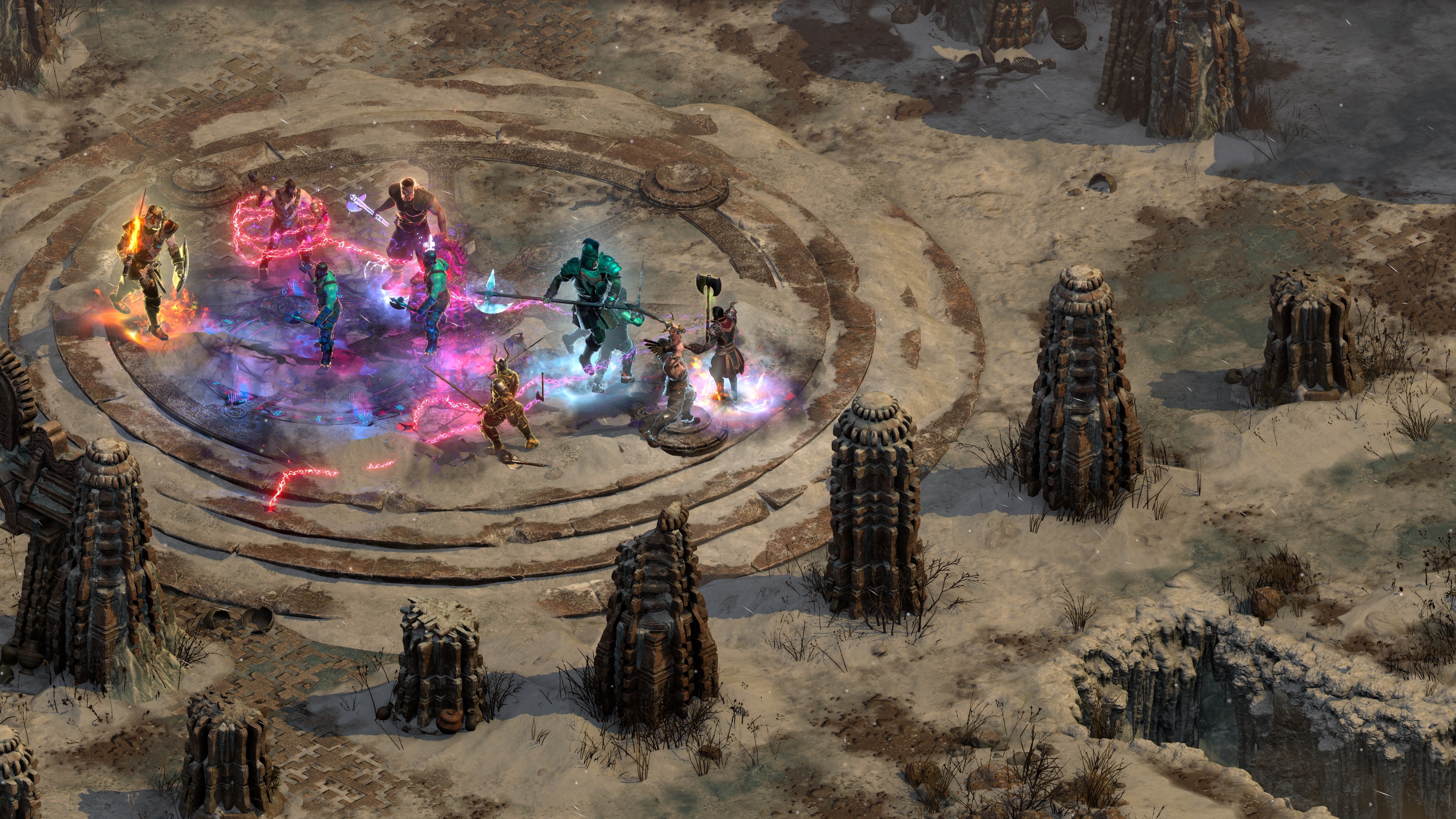
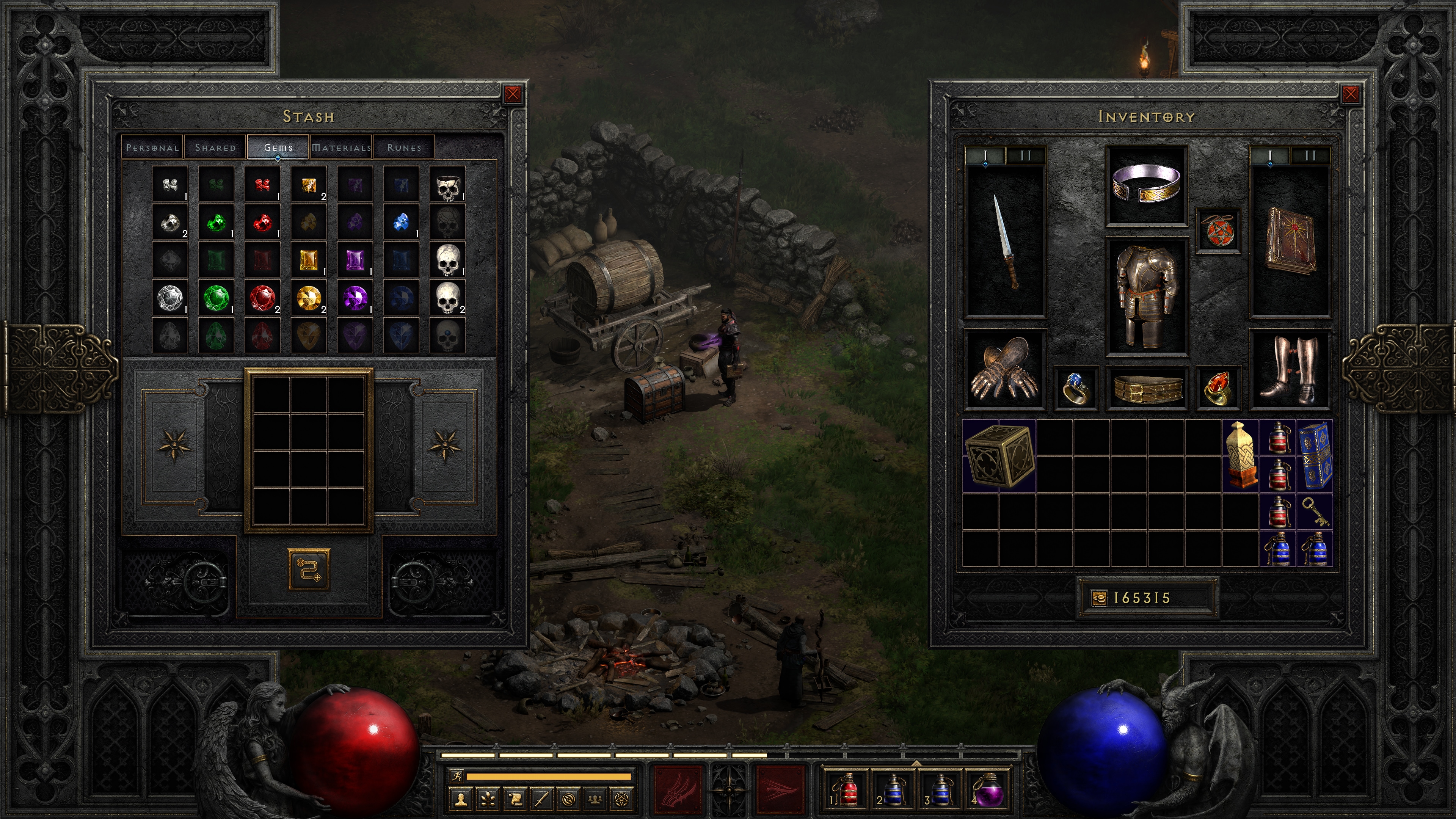
Resurrected is not a rewrite or a recreation. The original Diablo II gameplay engine is still running underneath the modern presentation. Blizzard added a new rendering layer, updated the interface, and expanded platform support, but the core logic remains unchanged.
Damage calculations, random number generation, monster AI, animation breakpoints, pathfinding, and timing behavior all come directly from the original engine. When players toggle legacy graphics, the simulation does not restart because it is the same game state.
You cannot maintain or evolve a system like that without access to the original source code.
Post-Launch Updates Confirm It
After launch, Blizzard continued to update Diablo II: Resurrected with balance changes, skill adjustments, bug fixes, and ladder updates. These are not binary patches or hacks. They are source-level changes.
If Blizzard were working only from compiled executables, iteration would be slow, risky, and error-prone. Instead, updates arrived regularly and predictably, which strongly implies an active codebase under version control.
Internal development branches, including canceled or internal expansion concepts such as Reign of the Warlock, further reinforce this. Those projects survive as source trees and documentation, not as standalone binaries.

What David Brevik Actually Meant
When David Brevik said Diablo II would be extremely difficult to remake, he was not claiming that Blizzard lost the code. He was warning against rebuilding the game from scratch on a new engine.
Diablo II’s identity is shaped by fixed-frame logic, subtle math quirks, timing artifacts, and behaviors that were never intentionally designed but became canonical through play. Many of these systems interact in ways that are not obvious even when reading the code.
Reproducing those behaviors perfectly is hard with full source access. Doing so without it is dramatically harder.
Where AI Actually Fits
AI becomes relevant only if Blizzard chooses to rewrite Diablo II instead of preserving it.
Modern AI tools can help engineers understand old code, infer intent behind undocumented systems, assist with refactoring, and generate regression tests. Used correctly, AI acts as a force multiplier for experienced engineers.
What AI cannot reliably do is guarantee exact behavioral parity on its own. Diablo II demands precision. Small differences in timing, RNG, or state ordering are immediately noticeable to long-time players.
Why Blizzard Did Not Use AI for Diablo II: Resurrected
Because it would have introduced unnecessary risk.
Blizzard already had the safest possible solution: keep the original gameplay engine intact and modernize everything around it. This preserved Diablo II’s feel while avoiding the danger of subtle behavioral drift.
An AI-assisted rewrite would have required enormous validation effort with no meaningful upside.
When Blizzard Might Use AI in the Future
AI becomes interesting if Blizzard ever decides to fully decouple Diablo II from its legacy architecture. This could be done for long-term preservation, deeper engine modernization, or integration into future Diablo platforms.
In that scenario, AI could help engineers navigate decades-old code, identify hidden dependencies, and reduce the risk of breaking established behavior. Even then, the process would remain human-led and test-driven.
Final Verdict
Blizzard has the Diablo II source code. Diablo II: Resurrected exists because Blizzard preserved and reused the original engine, not because it recreated it.
AI was not needed for that project and would likely have made it riskier. AI becomes relevant only if Blizzard chooses to rewrite Diablo II, not maintain it.
The real barrier to modernizing Diablo II is not technology. It is the risk of changing something that still works precisely because it was never modernized in the first place.