
French Retailer Mocks €1,039 Valve Steam Machine With €999 "Stim Machine" Desktop Alternative
Friday, June 26, 2026Following the formal closure of Valve's pre-order registration lottery window on June 25, 2026, the tech community has focused heavily on the premium €1,039 price tag of the upcoming living room system. Seizing on consumer sticker shock, prominent French PC hardware retailer TopAchat has launched a direct satirical counter-campaign, introducing a parody gaming configuration dubbed the "Stim Machine" to highlight the stark price-to-performance premiums of Valve's custom form factor.
The marketing campaign directly contrasts the hidden financial premium consumers pay for extreme engineering compaction, showing that standard off-the-shelf desktop components can comfortably undercut Valve's closed ecosystem pricing while delivering unthrottled thermal performance.
The Catch: How the Community Is Reacting to the Parody
The satirical listing emerged across European hardware spaces almost immediately after Valve updated its storefront directory language from fixed target metrics to a softer "Up to 4K" environment. Hardware collectors and system builders quickly circulated TopAchat's promotional configurations as a real-world reality check against modern console marketing trends.
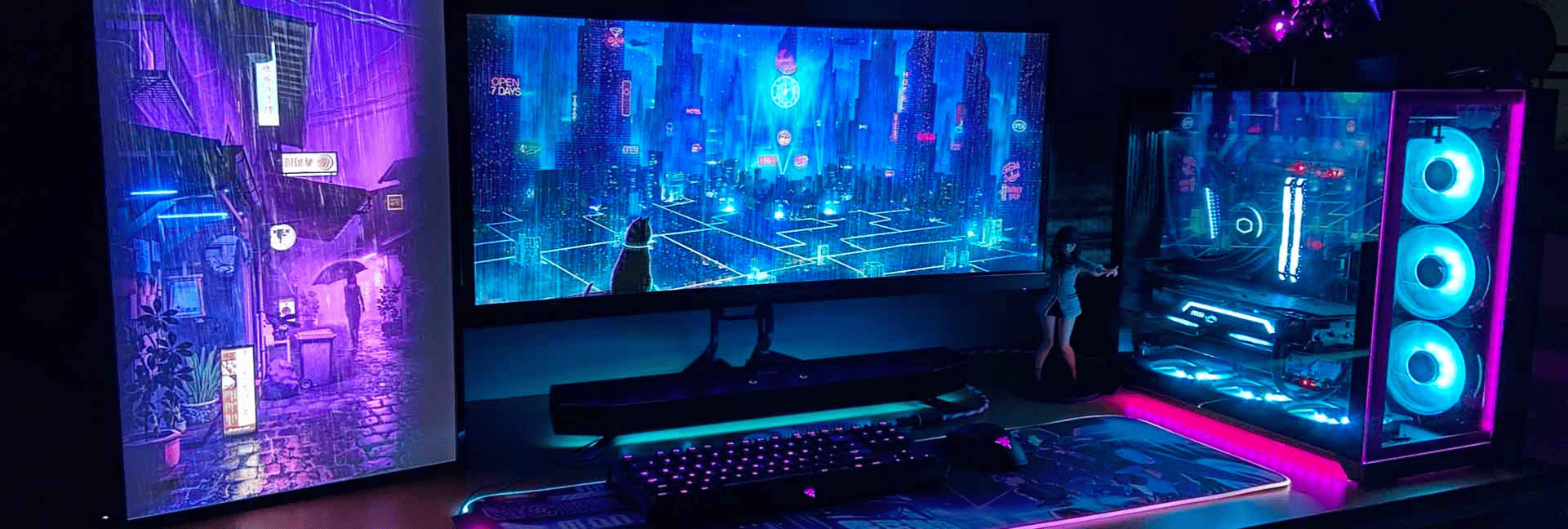
The community response highlights a persistent tension in the PC landscape: the cost of miniaturization. While Valve’s engineering marvel packs a semi-custom 28 Compute Unit architecture into a tight 6-inch cube, system builders are pointing out that a sub-€1,000 investment in standard tower infrastructure completely sidesteps the proprietary platform markups, cooling compromises, and strict hardware deployment constraints of the official machine.
Why Component Realities Favor the Standard Desktop
Early data modeling and testing frameworks from major technical outlets indicate that while Valve’s custom APU handles optimized living room execution profiles beautifully, it faces clear physical constraints. The console's 8GB allocation of GDDR6 video memory faces massive bandwidth pressure when confronting heavy 9th-generation title assets at high presentation scales.
By contrast, standard desktop systems utilizing open architectures avoid these memory allocation bottlenecks entirely. A dedicated standalone desktop graphics card benefits from independent high-bandwidth VRAM pathways and unconstrained PCIe lane access, bypassing the power-sharing limitations that occur when an integrated CPU and GPU are forced to battle for a single thermodynamic and power delivery envelope.
Hardware Reality Check: System Architecture Comparisons
To contextualize the financial and performance differences driving this retail mockery, the underlying hardware architectures break down across these distinct engineering paths:
| Hardware Vector | Official Valve Steam Machine (€1,039) | TopAchat "Stim Machine" Alternative (€999) |
|---|---|---|
| Core Processing Unit | Semi-Custom AMD Zen 4 APU Architecture | Standard AMD Ryzen 5 / Intel Core i5 Desktop CPU |
| Graphics Pipeline | Integrated RDNA 3 Custom Chip (28 CUs) | Dedicated Discrete Graphics (AMD Radeon RX 7600 Class) |
| Thermodynamic Dynamic | 6-Inch Enclosure; Shared Power Target | Standard ATX/ITX Tower; Isolated Component Fans |
| Platform Upgrade Path | Completely Soldered; Non-Upgradable Silicon | Fully Modular; Standard PCIe, AM5/LGA Sockets |
SEO Key Takeaway: The retail emergence of the "Stim Machine" campaign proves that Valve's €1,039 pricing strategy has created a hyper-competitive battleground. By explicitly marketing the system as a premium premium device, Valve has allowed component retailers to capture budget-conscious purists by offering modular, unrestricted, full-scale gaming rigs for a clean €40 less than the console alternative.