
Skyborne vs D&D: How WoW's New Air Elves Echo Air Genasi, Sylphs, and Netherese Cities
Sunday, September 13, 2026By Indie Kings | September 13, 2026
Updated September 13, 2026: Blizzard revealed the Skyborne, a new playable elven race in World of Warcraft: Forever, alongside their floating homeland Zephras Isle during the BlizzCon 2026 What's Next panel. Within hours of the reveal, tabletop veterans on forums and the r/warcraftlore subreddit were drawing straight lines to Dungeons & Dragons: air-touched elves, swirling blue skin markings, and a race born from a pact with elemental wind spirits. This article makes the full case, point by point, with sources for every claim. The comparison is drawn, and readers can judge how much is influence, how much is convergent fantasy, and how much is coincidence.
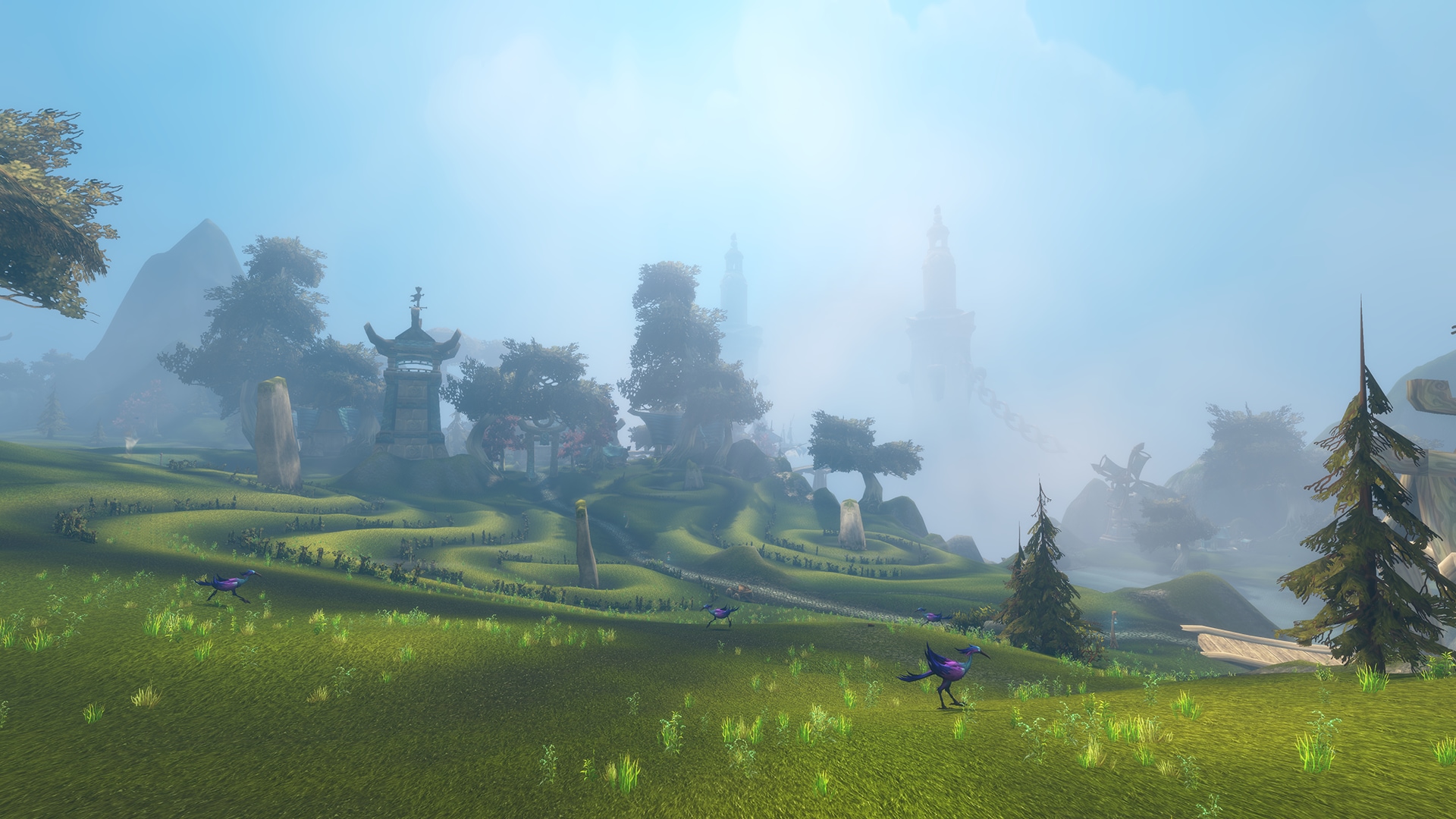
Table of Contents
- The D&D Bloodline: Warcraft Grew Up at the Table
- Air Genasi: The Element-Infused Elf
- Sylphs and the Swirling Blue Markings
- Netherese Flying Cities and Zephras Isle
- The Shadow-Elf Precedent
- The Bottom Line
- Frequently Asked Questions
1. The D&D Bloodline: Warcraft Grew Up at the Table
The influence case starts with a documented, public record: the creators of Warcraft were Dungeons & Dragons players. Chris Metzen, the primary world-builder of the Warcraft franchise, has said so repeatedly. The biography published on Wikipedia records that Metzen, "a fan of Dungeons & Dragons, cites the Dragonlance series of novels and Star Wars as the primary inspirations for his fantasy and science fiction creations," a claim sourced to Cecil Vortex's 2008 interview with Metzen.
In a Forbes interview published March 16, 2013, Metzen was equally explicit about the genesis of the franchise:
"Warcraft is shaped by a lot of different visual stills. Certainly back in 1993 when we started building the first Warcraft games it was anything from Conan, Lord of the Rings, Dungeons & Dragons, and all those kinds of classic fantasy troves, but with a '90s comic sensibility."
The tabletop roots did not stay in the past. Metzen's post-Blizzard tabletop project Auroboros is built directly on the Dungeons & Dragons campaigns he ran as a teenager, as PC Gamer reported in April 2021 and GamesBeat restated in June 2025, noting Metzen used "D&D in the '80s and '90s" with "the 1st and 2nd Edition rules." In that interview he called D&D "a foundational wellspring of creative ideas." When the creative director most responsible for the Warcraft world tells you the starting point was D&D, parallels between a new WoW race and D&D monsters stop being funny coincidences and become expected vocabulary.
Consider the baseline. Classic World of Warcraft launched with dwarves, gnomes, elves, halfling-adjacent gnomes, orcs, trolls, tauren (minotaurs), and undead, alongside wizards, priests, druids, rogues, and paladins. Every one of those races and classes is a mainstay of the original Dungeons & Dragons. Blizzard never denied the borrowings; Metzen named D&D directly as a source. So when Forever adds an elemental elf living on a floating city, the question is not whether D&D is in the DNA. It is. The question is how much the Skyborne resemble specific D&D creations. The next three sections answer that.
2. Air Genasi: The Element-Infused Elf
The first and most direct parallel is to the air genasi, the D&D race of humans, elves, and other folk infused with elemental air. Genasi trace their ancestry to unions between mortals and elemental beings, and the air genasi express that heritage with pale or sky-toned skin, strange gravity-defying movement, and an upbringing in wind-haunted places. The Forgotten Realms wiki's Genasi entry records the publication trail: the genasi were introduced as a player race in the 2nd Edition Planescape book Planewalker's Handbook (1996), appeared in 3rd Edition-era Forgotten Realms material including the 2001 Monsters of Faerun and the 2003 Races of Faerun, and became a flagship player race again in 4th Edition with the 2009 Player's Handbook roster and the Forgotten Realms Player's Guide. Air genasi have ranked among the most popular elemental heritages in every edition since.

Now overlay the Skyborne lore as Blizzard published it. The official pre-purchase announcement for the Warcraft Forever Collector's Edition (September 12, 2026) and the What's Next panel recap describe the Skyborne as elves bound to the element of air, and the panel's lore recap, relayed by coverage of the BlizzCon Skyborne Deep Dive, states that the Skyborne "are elves descended from Highborne exiles who struck a pact with the elemental wind spirits of Skywall generations ago." In other words: mortal elves plus a sacred bond to elemental air beings. That is the exact tectonic plate the genasi race was built on, down to the elemental-air-plane reference, since Dungeons & Dragons places air genasi and djinn on the Elemental Plane of Air while WoW's Skywall is the elemental plane of air in the World of Warcraft cosmology.

Table 1: The race parallel, Skyborne versus D&D air folk
| Trait | Skyborne (WoW: Forever) | Air Genasi (D&D) | Sylph (D&D / Pathfinder heritage) |
|---|---|---|---|
| Origin | Highborne exiles bound by pact to Skywall wind spirits | Mortals descended from beings of elemental air | Mortals with elemental air ancestry, often djinn |
| Elemental source | Skywall, the elemental plane of air | Elemental Plane of Air | Elemental Plane of Air |
| Visual markers | Pale skin with icy blue runic markings in official renders | Pale or sky-toned skin, wind-blown features | Pale skin, swirling blue markings on the body |
| Class / magic affinity | Horde Shaman path, elemental traditions | Air domain, elemental bloodlines | Air affinity, air sorcerer bloodline |
| First appearance | 2026, World of Warcraft: Forever | 1996, Planewalker's Handbook (2E) | Classic-era D&D monster, later geniekin race |
3. Sylphs and the Swirling Blue Markings
The second parallel is the sylph, the classic air spirit and, in later rules, the air-heritage mortal race with a very specific cosmetic signature: swirling blue markings on pale skin. The concept is older than D&D itself. The 16th-century physician Paracelsus defined four elemental spirits, assigning sylphs to air, and Tolkien's mythos carried the idea forward as air spirits; Tolkien Gateway documents that scholars trace Tolkien's sylphs to Paracelsus's chart. Victorian and fantasy fiction then made "sylph" shorthand for a beautiful, delicate, wind-spirited being.

Dungeons & Dragons absorbed sylphs into its monster canon early, and the later Pathfinder rules, which are the direct descendants of D&D 3.5, codified the geniekin sylph. The official Pathfinder rule text, quoted at the d20 SRD and Archives of Nethys, describes the sylph this way: "Sylphs tend to be pale and thin to the point of appearing delicate... Many sylphs can easily pass for humans with some effort, though the complex blue markings that swirl across their skin reveal their elemental ancestry." The same rules give sylphs the Air affinity, an elemental (air) sorcerer bloodline link, and the Auran language, which is the language of the Plane of Air.
Hold that image in your head, then look at the Skyborne reveal. Community discussion after BlizzCon 2026 focused on exactly this detail: the official Skyborne renders show pale-skinned elves carrying icy blue, rune-like markings, a look that reads as elemental-plane coded to any tabletop veteran. Combine the blue swirling skin markings, the pale airy complexion, the elemental-air bond, and an affinity that in the Horde path maps to the shaman's elemental air tradition, and the sylph formula is the closest single template to the Skyborne in all of tabletop history. This is the point where the comparison moves past vibe and onto specific, documented traits shared by the two designs.
4. Netherese Flying Cities and Zephras Isle
The race is only half the story. The Skyborne's home, Zephras Isle, is described by Blizzard as a newly discovered and recently landed floating island that serves as the Skyborne's level 1 to 12 starting experience, with what the panel recap calls "Classic Warcraft aesthetics" and architecture inspired by Skywall. A floating elven city tied to the elemental plane of air is itself a specific D&D trope: the flying enclaves of Netheril.

The Forgotten Realms wiki's Netheril entry records the canonical history. Netheril was a magocratic human empire founded around 3830 DR, and its arcanists raised the first flying enclave in 2954 DR after mastering the mythical mythallars, magical cores that tapped the Weave itself. At its height, 54 enclaves floated over Faerun. Critically for the visual comparison, the wiki notes that "many of the floating enclaves of Netheril were built on the peaks of mountains, carved off and inverted," so a sky city could literally be a severed, floating mountaintop with the earth pointing up at the air. That is a very Zephras-Isle-shaped idea: a tilted, airborne chunk of land as a city, home to magic-users isolated above the mortal world.

Table 2: The floating-home parallel
| Feature | Zephras Isle (WoW: Forever) | Netherese Enclaves (D&D Forgotten Realms) |
|---|---|---|
| Floating status | Newly discovered floating island, the Skyborne homeland and start zone | Flying cities hovering miles above Faerun |
| How it became airborne | Naturally floating land tied to elemental sky magic (official art and lore) | Mountain peaks carved off and inverted, lifted by mythallars |
| Inhabitants | Skyborne elves | Netherese archwizards and high nobility |
| Arcane / elemental power | Skywall wind spirits and elemental magic | Mythallars channeling the Weave |
| Era introduced | 2026, World of Warcraft: Forever | 2nd Edition era lore, mature in 3rd Edition splatbooks |
There is also an architectural continuity worth noting. Warcraft's floating architecture tradition, including the wandering isle and the high elf and mage cities suspended in air seen across the franchise, has long pointed in this direction. The Skyborne's Zephras Isle specifically marries that WoW tradition with a soaring Skywall-influenced silhouette. On the D&D side, the floating-city trope belongs to Netheril, and the overlap of "air-tied elf race" plus "floating magical homeland" plus "bound to the elemental plane of air" is precisely the combination Blizzard shipped for Forever.
5. The Shadow-Elf Precedent
The strongest evidence that this is an established pattern, rather than an accident, is that WoW has done the shadow version of this same design before. The Forgotten Realms wiki records that the Netherese enclave of Thultanthar escaped the empire's collapse by transporting itself to the Plane of Shadow, where it remained for about 1,700 years; the people who returned were the Shadovar, shadow-plagued survivors who re-founded Netheril on the shadow plane. Related shadow elven folk, the Shadar-kai, debuted in 3rd Edition-era Forgotten Realms material, became a playable race in 4th Edition, and returned as a 5th Edition player race in Mordenkainen's Tome of Foes, tied to the Shadowfell and its dark fey court.

World of Warcraft already applied the exact same trope: Void elves are blood elves twisted by the void, a shadow-tainted elven race bound to a different plane of existence, introduced as an Allied race. The Skyborne are the mirror image: an elven race tainted by, or bound to, the elemental plane of air instead of the void. Same recipe, swapped element. Seen this way, the Skyborne are WoW's second elemental-elf flavor built on a formula the team first used for Void elves, and that formula in Forgotten Realms has always been shadow or elemental bindings producing a new elven breed, from Shadar-kai to the genasi-influenced air folk. That is not to say Blizzard copied any particular page of any particular Dungeons & Dragons book. It is to say the creative grammar was established at the tabletop decades before 2026.
6. The Bottom Line
Scored against documented sources, the Skyborne match the D&D air-elf template on six specific points: an elven ancestry, a binding pact or descent from elemental air beings, Skywall as the air plane, pale skin with swirling blue markings, an elemental-air magic affinity, and a floating homeland with Skywall-flavored architecture. Air genasi provide the elemental elf lineage, sylphs provide the blue-marked cosmetic signature, and the Netherese enclaves provide the floating-city frame. Every leg of that inheritance is traceable to material published between 1996 and 2026, and the tabletop pedigree of the Warcraft franchise is a matter of public record via Metzen's own interviews.
The honest caveat is that all of these elements are robust fantasy standards with older roots than D&D: floating cities appear in mythologies across the world, elemental spirits descend from Paracelsus, and winged or air-touched folk predate every elf ever drawn. So "influence" is the right word, not "copy." Blizzard worked inside a shared fantasy vocabulary it has mined openly since 1993, and the Skyborne are the strongest signal yet that when the studio finally added an elemental elf with a floating homeland and blue skin markings, it reached for the same reference shelf its creative director has described as foundational for the entire franchise. If a player is looking for the Skyborne's family tree, the tabletop side of it is not hard to find.
Related reading: Warcraft at BlizzCon 2026: Midnight, Forever, and the Road Ahead, Camelot, Classic Plus, and the Warcraft Chronicles, WoW Patch 12.1.5: Mounts, Gold, and Decor, and Diablo at BlizzCon 2026.
Frequently Asked Questions
Is the WoW Skyborne race just a copy of the D&D air genasi?
Not a direct copy, but the parallels are extensive. Both are elf-adjacent or mortal peoples bound to elemental air, tied to an air plane, with pale skin and blue markings. The air genasi are the strongest single D&D match, and Warcraft's creative director has publicly credited Dungeons & Dragons as a core influence on Warcraft.
What are the blue markings on the Skyborne?
Official Skyborne render art shows pale-skinned elves with icy blue, rune-like markings. Community commenters at BlizzCon 2026 tied the look to the D&D-style sylph and geniekin, whose official rules describe "complex blue markings that swirl across their skin" revealing elemental air ancestry. Blizzard has not published an in-universe explanation beyond the Skywall wind-spirit bond.
Did Blizzard ever admit Warcraft was inspired by Dungeons & Dragons?
Yes. Chris Metzen told Forbes in 2013 that early Warcraft drew on "Conan, Lord of the Rings, Dungeons & Dragons, and all those kinds of classic fantasy troves," and Wikipedia records Metzen as a Dungeons & Dragons fan who cites Dragonlance among his inspirations. His post-Blizzard project Auroboros is built on his childhood D&D campaigns, as reported by PC Gamer.
Where do flying cities come from in D&D?
The canonical answer is Netheril in the Forgotten Realms. Around 2954 DR, Netherese arcanists raised the first enclave, and at the empire's height 54 enclaves floated above Faerun, many built from mountain peaks carved off and inverted and held aloft by mythallars, per the Forgotten Realms wiki.
Are the Skyborne and the Shen'dorei the same race?
The Skyborne is Blizzard's official race name from the What's Next panel recap. Shen'dorei is a name found in datamined item text and used in community discussion, but no official Blizzard source uses it as the race name. The fan lore treats them as the same race.
When does World of Warcraft: Forever launch, and who gets the Skyborne?
Forever launches November 4, 2026 at 3:00 p.m. PDT, with beta access beginning September 17. The Skyborne race and the Zephras Isle starting experience require purchase of the Skyborne Heroic Pack or higher, per Blizzard's official pre-purchase announcement.