
Intel 14A Within 5 Percent of TSMC A14 as A14 Enters Pilot Production
Friday, September 25, 2026By Indie Kings | September 25, 2026
Updated September 25, 2026: Intel expects its 14A process to land within 5 percent of TSMC's A14, according to Naga Chandrasekaran, Intel Foundry's chief technology and operations officer, in remarks to KeyBanc reported by Tom's Hardware. On the same week, TechPowerUp reported, citing UDN, that TSMC has begun A14 pilot production in Taiwan, with risk production scheduled for 2027 and high-volume manufacturing in 2028.
Why this matters: The two 1.4nm-class nodes are the first direct head-to-head of Intel's angstrom-era roadmap against TSMC. Intel's conservative-sounding forecast sits oddly against the published PPA claims of both companies.
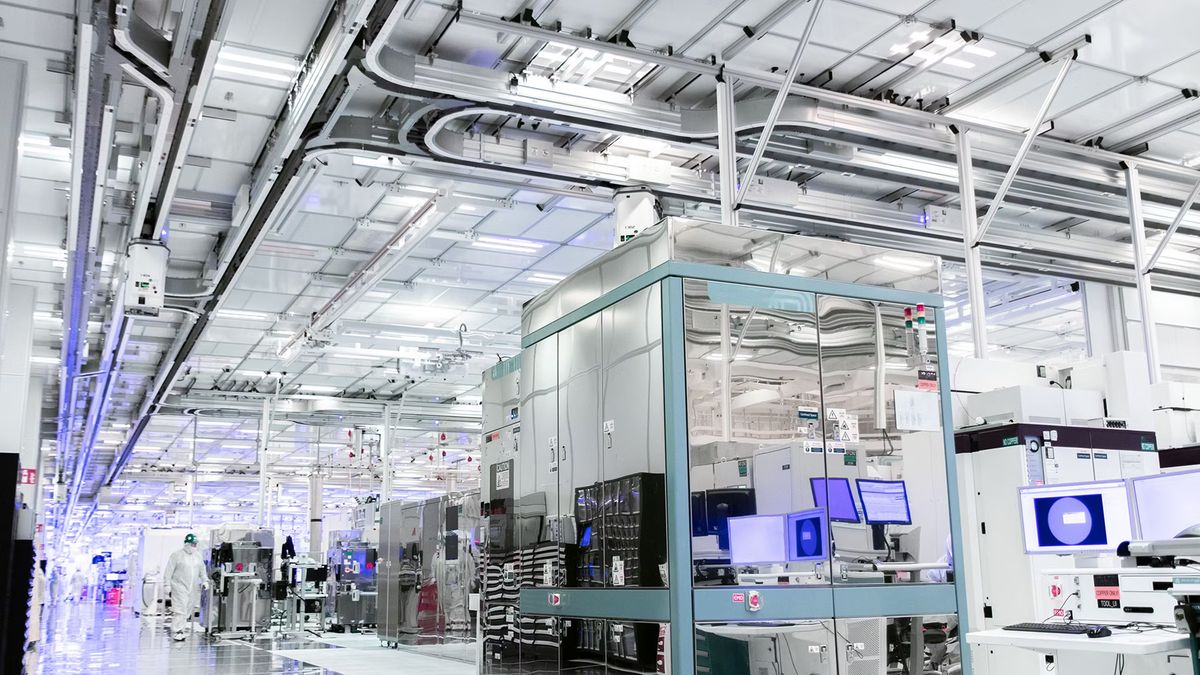
Image: Intel process technology. Credit: Intel via Tom's Hardware.
The within 5 percent claim
Naga Chandrasekaran told KeyBanc that Intel expects 14A to be "within 5%" of TSMC's A14 on performance. Tom's Hardware flagged an obvious ambiguity in that phrasing: it could mean 14A ends up 5 percent faster than A14, or 5 percent slower.
Neither company has published a 14A or A14 product, so there is no silicon to measure. The claim is a competitive forecast, and it is worth reading next to the numbers each company has already published.
What Intel and TSMC actually publish
Both foundries describe their 1.4nm-class nodes as large improvements over their own previous generation, measured at the same power, frequency, and transistor count.
| Node | Performance at same power | Power at same frequency | Reference node |
|---|---|---|---|
| Intel 14A | 15% to 20% higher | 25% to 35% lower | Intel 18A |
| TSMC A14 | 10% to 15% faster | 25% to 30% lower | TSMC N2 |
| TSMC A14 (TechPowerUp relay) | Up to 15% higher speed | Up to 30% lower | TSMC N2 |
On paper, both claims are strong. The reference points differ, though. Intel measures 14A against its own 18A, while TSMC measures A14 against N2, so the two figures are not directly comparable without a bridging assumption.
The shipping-processor reference points
Tom's Hardware used currently shipping processors as a bridge between 18A and N2, noting that the chips use different architectures, voltages, standard-cell libraries, thermal envelopes, and physical implementations, so the numbers are a reference point rather than a node-to-node scorecard.
| Processor | Node family | Highest observed clock cited |
|---|---|---|
| Intel Core Ultra X9 388H (Panther Lake) | Intel 18A | 5.10 GHz at 80W max turbo power |
| AMD EPYC 9586F | TSMC N2 | 5.00 GHz at a default 500W CPU power |
| Apple A20 Pro | TSMC N2 generation | 4.93 GHz |
| Apple M6 | TSMC N2 generation | 4.78 GHz |
The takeaway Tom's draws is narrow but useful: available N2 processors do not show a substantial frequency advantage over 18A. If anything, the highest observed CPU frequencies favor Intel's process.
Why the arithmetic disagrees with 5 percent
Combining Intel's stated 14A gain, TSMC's stated A14 gain, and observed shipping clocks produces an implied 14A advantage wider than the forecast.
| Scenario | 14A gain | A14 gain | Implied 14A advantage |
|---|---|---|---|
| Intel worst, TSMC best (EPYC baseline) | 15% | 15% | 2.0% |
| Both minimum gains (EPYC baseline) | 15% | 10% | 6.6% |
| Both maximum gains (EPYC baseline) | 20% | 15% | 6.4% |
| Intel best, TSMC worst (EPYC baseline) | 20% | 10% | 11.3% |
| Intel worst, TSMC best (Apple M6 baseline) | 15% | 15% | 6.5% |
| Both maximum gains (Apple M6 baseline) | 20% | 15% | 11.2% |
| Intel best, TSMC worst (Apple M6 baseline) | 20% | 10% | 16.2% |
Tom's is explicit that these figures do not predict 14A or A14 CPU frequencies, because they mix clocks from current architectures with process claims for future nodes. The calculation illustrates what the published numbers imply relative to today's products, and in every combination shown the implied advantage exceeds the "within 5 percent" estimate.
A14 fab timeline and the N2 baseline
TechPowerUp, citing UDN, reported that TSMC has begun pilot production runs for A14 at the Baoshan Fab 20 in Hsinchu Science Park and Fab 25 in the Central Taiwan Science Park. Pilot production lets customers see how designs perform in TSMC's production environment before committing.
- Pilot production: Under way at Fab 20 and Fab 25, reported to be progressing better than expected.
- Risk production: Scheduled for 2027, if the pilot run clears without major yield issues.
- High-volume manufacturing: Targeted for 2028 in Taiwan, with a possible pull-in of a few months if 2027 goes cleanly.
- Density: TSMC claims a 20% increase in logic density versus N2.
- Lithography: A14 stays on Low-NA EUV, with High-NA reserved for around the 1nm node.
- Context: TSMC's 2nm N2 node is already in volume production.
Tom's frames the timing as giving TSMC a slight lead over Intel and Samsung into the angstrom era, with A14 landing directly against Intel's 14A.
What none of this confirms
Neither source provides 14A or A14 silicon, a product launch date, a process design kit, or independent PPA data. The "within 5 percent" statement does not say which node Intel expects to lead. Density, cost per transistor, yields, and customer adoption are all unaddressed by these two reports.
Intel's published 14A claim and its executive's forecast are also not necessarily in conflict. A conservative competitive statement may incorporate schedule, cost, or yield considerations that a simple iso-power extrapolation does not capture.
FAQ
What did Naga Chandrasekaran say about Intel 14A?
He told KeyBanc that Intel expects 14A to be within 5 percent of TSMC's A14 on performance, per Tom's Hardware.
Is "within 5 percent" a claim that 14A is faster?
No. It is ambiguous and does not identify which node Intel expects to lead.
What performance does Intel claim for 14A?
Intel states 15% to 20% higher performance at the same power, or 25% to 35% lower power at the same frequency and transistor count, versus 18A.
What does TSMC claim for A14?
TSMC states 10% to 15% faster than N2 at the same power, or 25% to 30% lower power at the same clocks and transistor count.
When is TSMC A14 expected to reach volume production?
TechPowerUp, citing UDN, reports pilot production now, risk production in 2027, and high-volume manufacturing in 2028.
Do the extrapolated percentages predict real 14A or A14 clock speeds?
No. Tom's Hardware states the calculation does not predict future CPU frequencies, because it combines current-architecture clocks with future process claims.
Bottom Line
Intel is publicly positioning 14A as roughly level with TSMC's A14 while TSMC, according to UDN via TechPowerUp, is already running A14 pilot production with a 2028 volume target. That framing sits awkwardly beside the published PPA numbers: Tom's Hardware's own extrapolation produces an implied 14A advantage of 2% to 16.2% depending on the scenario. The honest reading is that Intel's statement is a competitive forecast about positioning, not a technical result. No 14A or A14 silicon exists to measure yet.
Sources: Tom's Hardware on Intel's 14A forecast (KeyBanc via Naga Chandrasekaran) | TechPowerUp on TSMC A14 pilot production (UDN)
Related: Intel 14A customer interest coverage | Intel 18A process coverage