
RTX Spark Launches October: 2 N1X Configs, 128GB Memory, 100FPS Claims [2026]
Updated September 11, 2026: NVIDIA confirmed September 3 at IFA 2026 that RTX Spark PCs ship in October in two N1X configurations: a 20-core CPU with 6,144-core GPU and up to 128GB unified memory, plus an 18-core laptop-only version capped at 32GB. Six OEMs are on board, Lenovo's Yoga 9n and Acer's compact desktop lead the lineup, and NVIDIA promises 100 FPS at 1440p with ray tracing and DLSS. The N1 chip waits until next year. Here are the confirmed specs, the devices, and how much of the gaming promise to believe.

Table of Contents
- What NVIDIA Confirmed September 3
- Two N1X Configs: 128GB vs. 32GB
- The Launch Devices
- The 100 FPS Claim, Examined
- Why Unified Memory Is the Story
- The Competition: AMD and Apple
- What Is Missing: Price, N1, Gaming Proof
- N1X Specs at a Glance
- Who Should Care
- Bottom Line
- Frequently Asked Questions
1. What NVIDIA Confirmed September 3
NVIDIA used its IFA 2026 keynote in Berlin to put a firm date on a product category it has never shipped: a full Windows PC platform on its own silicon. Wccftech's Hassan Mujtaba reported September 3 that RTX Spark PCs reach shelves in October, with first official N1X specifications published alongside. The Verge's Tom Warren confirmed the same day that two N1X configurations ship across laptops and mini PCs from six OEM partners.
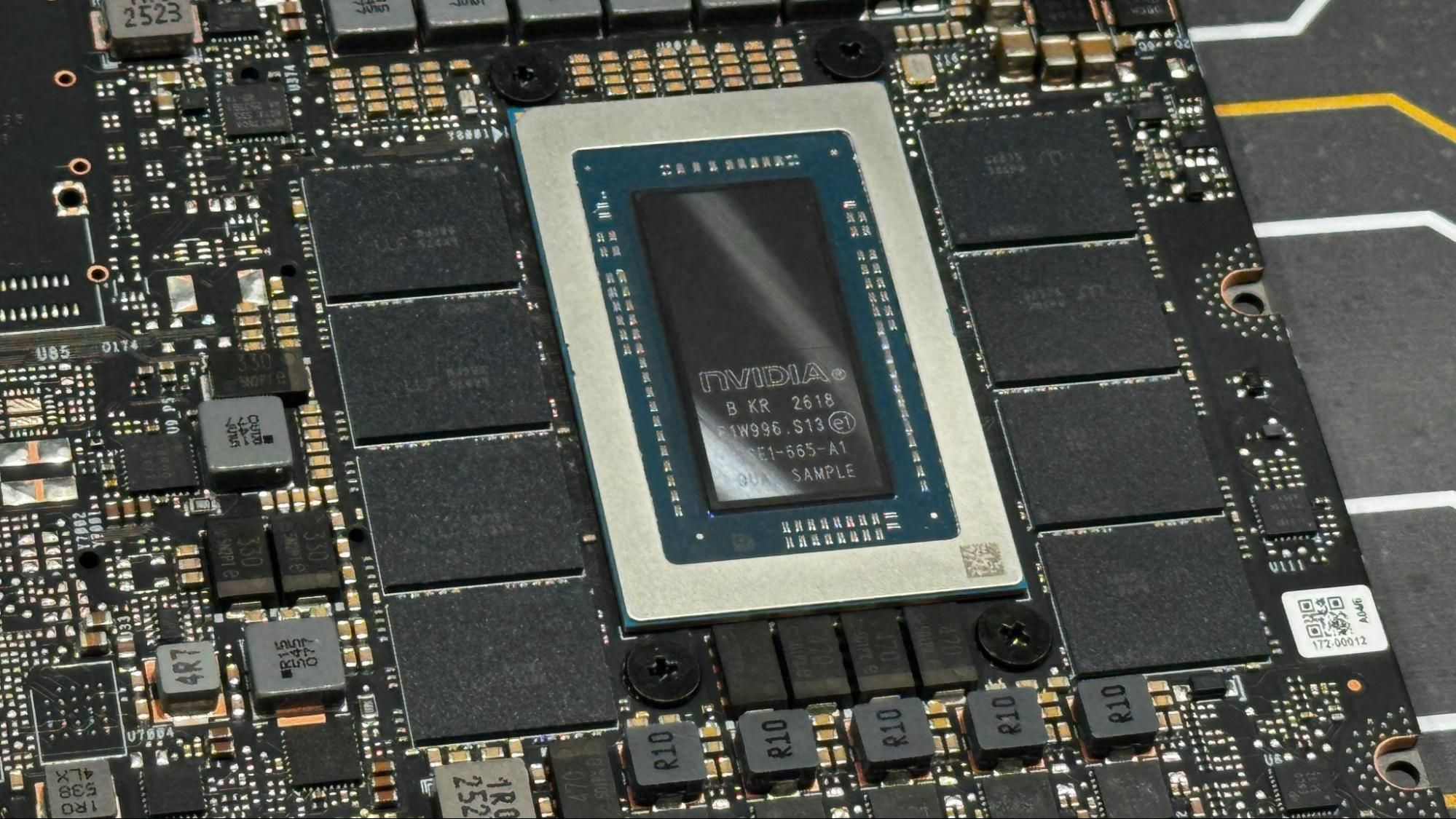
This is NVIDIA's arrival in a space where it previously sold only GPUs. The N1X pairs a Grace Arm CPU with a Blackwell RTX GPU and unified memory in a single SoC, an Apple-silicon-style package for Windows. Our RTX Spark mini PC coverage tracked the early ASUS ProArt sightings with 128GB configurations, and September 3 turned those sightings into a dated launch with published specs.
The partner roster is the industry's A-list: ASUS, Dell, HP, Lenovo, Microsoft, and MSI all confirmed devices, per The Verge. Two launch devices got names at IFA: Lenovo's Yoga 9n 2-in-1 laptop and Acer's SFF compact desktop. Everything else arrives under the October umbrella with exact availability and pricing left to each OEM.
2. Two N1X Configs: 128GB vs. 32GB
The top N1X configuration carries a 20-core Grace CPU, a 6,144-core Blackwell RTX GPU, and unified memory from 24GB up to 128GB, shipping in both high-end laptops and compact desktops. The cut-down laptop-only version has an 18-core Grace CPU, a 5,120-core Blackwell GPU, and memory from 24GB to a surprisingly spare 32GB ceiling. The Verge expects most RTX Spark laptops to use the smaller chip.
The memory split is the most consequential product decision in the lineup. One hundred twenty-eight gigabytes of unified memory enables local AI workloads that define the category: large models resident in memory alongside the OS and apps. Thirty-two gigabytes caps the laptop chip at conventional workloads plus light AI duty. Buyers chasing the AI promise need to check which N1X sits inside, because the branding does not distinguish them at a glance.
Core-count math invites GPU comparisons. WIRED's hands-on analysis puts the top chip's integrated graphics theoretically between a laptop RTX 5070 Ti and RTX 5080 on counts alone. Counts are not performance, especially across integrated and discrete architectures with different power budgets, but the bracket sets expectations: this is meant to play like a mid-range discrete laptop GPU while sipping Arm power.
3. The Launch Devices
Lenovo's Yoga 9n 2-in-1 leads the laptop charge: a 16-inch convertible with 360-degree hinge, 2880x1800 OLED touch display at 120Hz, six-speaker audio, and a 9.2-megapixel webcam, per WIRED's hands-on. It reads as a MacBook Pro competitor in build and screen, with NVIDIA silicon where Apple puts its own. One wrinkle from WIRED: the Yoga 9n configures only up to 64GB of memory, below the platform's 128GB ceiling, so even the flagship laptop does not show the top chip's full range.
The laptop bench runs deep behind it. Dell's XPS 16, ASUS ProArt P16, and Microsoft's Surface Laptop Ultra target creators and AI enthusiasts, with HP's 14-inch OmniBook X 14 the only compact model announced so far. The 16-inch weight of the lineup signals where NVIDIA thinks the market is: buyers who want workstation-adjacent performance in a portable chassis, not ultraportable minimalists.
Mini PCs complete the picture. Acer's SFF RTX Spark desktop follows ASUS' ProArt Mini PC from Computex, both roughly Mac Mini sized with up to 128GB memory and what NVIDIA calls a petaflop of AI performance. The compact desktop is arguably the purest expression of the platform: full 128GB configurations, no battery or display compromises, and the top N1X as standard. AI hobbyists watching Framework's AMD desktop and Apple's Mac Mini now get a third option with NVIDIA's software stack behind it.
4. The 100 FPS Claim, Examined
NVIDIA promises 100 FPS at 1440p with ray tracing and DLSS on RTX Spark laptops. PCWorld's September 3 analysis immediately flagged the load-bearing qualifier: the number relies heavily on DLSS frame generation, potentially the 6x mode from the latest DLSS 5 material. A frame rate built substantially from generated frames is not the same achievement as 100 rendered frames, and NVIDIA's materials do not separate the two.
The skepticism has history. Our DLSS 5 coverage documents how frame generation multiplies headline FPS while adding latency and artifacts, and quoting generated numbers without native baselines has become standard vendor practice. PCWorld's verdict is measured: hesitate to take the claim at face value, at least until independent testing separates rendered from generated frames.
Even discounted, the claim implies real capability. One hundred FPS with ray tracing at 1440p, however generated, requires a genuine mid-range GPU underneath, consistent with the 5070 Ti to 5080 bracket WIRED derived from core counts. The question is not whether RTX Spark plays games well. It is how the native, unassisted performance compares, what latency the generated frames add, and how Arm translation treats the long tail of PC titles. October reviews answer all three.
5. Why Unified Memory Is the Story
Gaming headlines aside, unified memory is the platform's actual differentiator. A single high-bandwidth pool shared by CPU, GPU, and accelerators removes the VRAM ceiling that defines conventional PC gaming hardware. Our Windows 11 memory coverage shows how tightly the OS now manages shared pools, and Microsoft is building reserved-memory controls for exactly this hardware generation.
The AI case is concrete where the gaming case is promised. Local models in the tens of billions of parameters need tens of gigabytes resident, which 128GB unified configurations handle and 24GB gaming GPUs cannot. NVIDIA's "petaflop of AI performance" marketing points at FP4 throughput for inference, and the mini PC form factor with full memory configurations is clearly aimed at developers and enthusiasts running agents and assistants locally. WIRED notes agentic AI workflows like OpenClaw explicitly as the demand driver.
The 32GB laptop cap reads differently in this light. It suggests NVIDIA segments AI workloads to desktops and premium laptops while mainstream portables get the gaming and efficiency story. Buyers should match the machine to the workload: 128GB-class devices for local AI ambition, 32GB laptops for gaming and creation where unified speed matters more than capacity.
6. The Competition: AMD and Apple
NVIDIA does not enter an empty room. Lenovo simultaneously announced an AMD-powered ThinkCentre X Ultra with 128GB memory behind Ryzen AI Max+ Pro 495 silicon, expected at $3,699, per WIRED. AMD's chip is the established local-AI option with Framework Desktop and developer hardware already shipping. Anyone pricing an RTX Spark mini PC against $3,699 gets an immediate sense of the budget required.
Apple remains the reference design. The Mac Mini comparison recurs across coverage because Apple proved the category: Arm SoC, unified memory, quiet compact chassis, premium build. NVIDIA's answer adds Windows compatibility, Blackwell graphics with DLSS, and the CUDA software moat for AI developers. The Mac runs its own excellent stack. The Spark runs everything else.
Qualcomm's cautionary tale hangs over the Windows-on-Arm gaming story. PCWorld recalls Snapdragon laptop reception as tepid: great battery life offset by poor gaming and compatibility gaps, with Intel and AMD closing the efficiency distance since. NVIDIA's advantages over Qualcomm are a real GPU architecture and DLSS, but Arm translation for the PC back catalog remains unproven at Spark scale. The Yoga 9n review cycle will test exactly this.
7. What Is Missing: Price, N1, Gaming Proof
No prices exist for any RTX Spark device. Six OEMs, two chips, laptops and desktops, October shipping, and not a single MSRP between them. The ThinkCentre's $3,699 sets a psychological anchor for the category, but NVIDIA's partners could land anywhere from premium-laptop to workstation money. Without prices the value argument is unwritable, which is presumably why OEMs hold their numbers for launch events.
The N1 chip, the second rumored SKU, will not arrive this year, per The Verge. All rumors described an N1X and N1 pair, and only the X ships in October. What the N1 is, a smaller die, a lower tier, a 2027 refresh, stays unconfirmed. Buyers need not wait for it knowingly, but its existence means the October lineup is the first wave rather than the full stack.
Gaming proof is the third gap. NVIDIA's 100 FPS claim, the Arm translation question, battery life under load, and thermals in thin chassis all await independent testing. The Verge states it plainly: waiting on gaming capability detail, availability, and pricing. October delivers hardware. Reviews deliver verdicts. Buy nothing on keynote slides.
8. N1X Specs at a Glance
| Spec | Top N1X Config | Laptop N1X Config |
|---|---|---|
| Grace CPU cores | 20 cores | 18 cores |
| Blackwell GPU cores | 6,144 CUDA cores | 5,120 CUDA cores |
| Unified memory | 24GB to 128GB | 24GB to 32GB |
| Form factors | High-end laptops and compact desktops | Laptops only, most RTX Spark notebooks |
| Gaming claim | 100 FPS 1440p with RT and DLSS, generation-assisted | Unstated, scales below top config |
| OEMs | ASUS, Dell, HP, Lenovo, Microsoft, MSI, shipping October | |
9. Who Should Care
| Buyer | Verdict | Why |
|---|---|---|
| Local AI developers | Watch closely | 128GB unified plus CUDA is the strongest Windows local-AI package announced |
| Creators | Interested | Yoga 9n, XPS 16, ProArt P16 target exactly this buyer with OLED and 128GB options |
| Gamers | Wait for reviews | 100 FPS claim is generation-assisted, Arm translation unproven at scale |
| Budget buyers | Skip | No prices announced, category anchor is $3,699, nothing here is cheap |
10. Bottom Line
RTX Spark is NVIDIA's most interesting product in years precisely because it is not a GPU. A Windows Arm platform with Blackwell graphics, Grace CPUs, and up to 128GB unified memory attacks Apple where Apple is strongest and gives AI developers the Windows machine they have wanted since the Framework Desktop proved the demand. Six OEMs and an October date make it real rather than conceptual.
Gamers should hold the applause. The 100 FPS claim needs native baselines, Arm translation needs a review cycle, and prices need to exist before value can be judged. Creators and AI builders can start budgeting around the 128GB configurations. Everyone else watches October reviews, which will separate the platform's genuine breakthrough from its keynote arithmetic.
Frequently Asked Questions
Q: When do RTX Spark PCs launch?
A: October 2026, confirmed by NVIDIA at IFA on September 3. OEMs ship laptops and compact desktops through the month, with exact dates and prices per manufacturer still unannounced.
Q: What are the two N1X configurations?
A: The top chip has a 20-core Grace CPU, 6,144-core Blackwell GPU, and 24GB to 128GB unified memory for laptops and mini PCs. The laptop version has an 18-core CPU, 5,120-core GPU, and 24GB to 32GB memory. Most RTX Spark laptops are expected to use the smaller chip.
Q: Which companies make RTX Spark devices?
A: ASUS, Dell, HP, Lenovo, Microsoft, and MSI. Named devices include Lenovo's Yoga 9n 2-in-1, Acer's SFF desktop, Dell XPS 16, ASUS ProArt P16, Microsoft Surface Laptop Ultra, and HP OmniBook X 14.
Q: Can RTX Spark really do 100 FPS at 1440p?
A: NVIDIA claims 100 FPS with ray tracing and DLSS, but PCWorld notes the figure relies heavily on DLSS frame generation. Native rendered performance is unstated. Treat it as generation-assisted until reviews separate rendered from generated frames.
Q: How much will RTX Spark laptops cost?
A: Unknown. No OEM has announced pricing. Lenovo's competing AMD ThinkCentre X Ultra is expected at $3,699, which suggests the category sits at premium to workstation pricing, but NVIDIA's partners could land anywhere in that range.
Q: What happened to the N1 chip?
A: It will not arrive this year, per The Verge. Only the N1X ships in October. The N1's identity and timing remain unconfirmed, making the October lineup the first wave rather than the complete stack.
Byline: Indie Kings | September 11, 2026
Labels: Hardware
Related: ASUS ProArt GR1X RTX Spark 128GB Mini PC | DLSS5 Autopilot: More Games, Lower Cost | Windows 11 8GB Diet Promise vs. Reality