
Backblaze Data Shows Enterprise Label Means Almost Nothing
By Indie Kings | October 8, 2026
Updated October 8, 2026: Enterprise hard drives do not fail at one common rate. Per columnist Ty Sherback reporting on Backblaze data, lifetime failure rates across a fleet of 354,415 drives run from about 0.5 percent to nearly 6 percent, so the exact model matters more than the enterprise label.
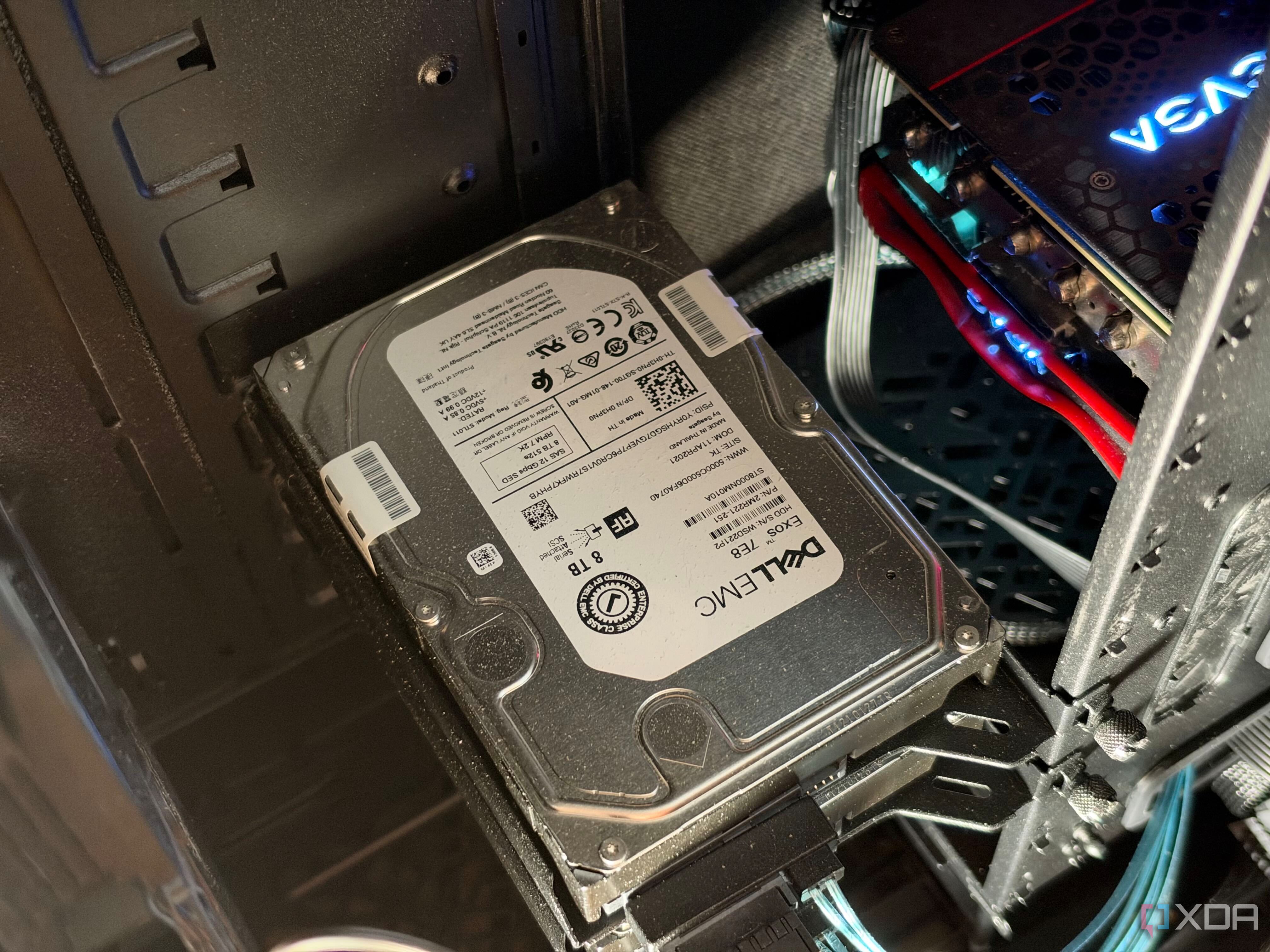
Image: SAS HDD in a home server. Credit: XDA Developers.
Why the enterprise label caught on
Per columnist Ty Sherback, the appeal of used enterprise drives is easy to understand. The columnist bought used enterprise drives for a NAS partly because of a rock solid reputation for long service. That reputation says these drives are built for constant use, strict testing, and rooms full of vibration and heat. For a home server that may run all day and all night, that story sounds reassuring.
The reputation also fits the way home storage buyers shop. A home NAS builder often compares a new desktop drive with a used enterprise drive at a similar price. The used enterprise option can look like more drive for the money because it was designed for heavier duty. The columnist writes from that same position as a NAS owner, not as a distant observer. That first person context matters because it explains why the later numbers land with force.
Per Backblaze via columnist, the latest Drive Stats report gives buyers a way to test the reputation against a very large sample. The fleet covers 354,415 hard drives, almost all of them enterprise models. That scale is useful because one person with four bays cannot learn much from personal luck alone. A fleet of hundreds of thousands of drives can show patterns that stay hidden in a single closet NAS.
The headline pattern is spread, not sameness. Per columnist, lifetime failure rates range from about half a percent to nearly 6 percent. That range covers drives that all qualify as enterprise gear. A buyer who stops at the word enterprise therefore misses the detail that separates a steady model from a troubled one. The label groups products together, while the data pulls them apart.
Per columnist, enterprise gear may have loftier design targets and a longer warranty than desktop gear. Those facts remain true even after the failure data arrives. Design targets describe intent, testing, materials, workload ratings, and support terms. Failure rates describe what happened in one very large deployment over time. Both kinds of facts help, but they answer different questions. Confusing them leads buyers to expect a warranty to prevent failure, when a warranty only responds after failure.
This section sets up the practical point for the rest of this article. Enterprise remains a useful starting filter for NAS shopping, especially on the used market. It is not a final answer about reliability. Per columnist, the model matters more than the label when a buyer tries to estimate how long a drive may last. The next sections walk through the fleet facts, the clearest model contrasts, the limited consumer comparison, the caveats, and a buying method that respects the evidence.
What the Backblaze fleet actually shows
Per Backblaze via columnist, the fleet wide annualized failure rate sits at 1.41 percent across the lifetime table. That single average is useful as context, but the columnist warns that it hides wide variation underneath. An average can blend a very steady model with a much weaker model and leave a shopper with false confidence. A buyer needs the distribution, not only the middle.
The size of the sample is a major reason this report carries weight. Per columnist, the report covers 354,415 hard drives, almost all enterprise models. That count makes it possible to compare large groups of identical models instead of relying on anecdotes. It also lets readers see when a rate rests on tens of thousands of drives and when it rests on a much smaller group. Sample size does not remove every doubt, but it narrows the room for accident.
Per columnist, the bottom and top of the lifetime list sit far apart. The Toshiba 24TB MG11ACA24TE sits near 0.5 percent, while the Seagate 14TB ST14000NM0138 sits at 5.88 percent. Those two endpoints frame the verified beat that enterprise failure rates range from about 0.5 percent to nearly 6 percent. The gap is large enough to change buying plans, backup plans, and tolerance for used stock.
Age belongs in the same picture as failure rate. Per columnist, the Toshiba low rate model is young, so a direct comparison with much older drives can mislead. A young drive has simply faced fewer hours, thermal cycles, and workload years than a drive with five years of service. The columnist therefore favors comparisons between drives of similar age when judging whether one model is truly stronger. That discipline keeps readers from ranking a new arrival ahead of a proven older drive without enough basis.
Per columnist, capacity alone also fails to explain the spread. The report contains same capacity drives with very different lifetime results. That point weakens the shortcut that bigger drives always fail more or that smaller drives always last longer. In this data set, identity and history outweigh broad rules about size. Shoppers should treat capacity as a need to be met, then judge reliability model by model.
The fleet view also reminds NAS owners that data center service differs from closet service. Per columnist, Backblaze storage servers run around the clock in a data center, which is not the same setting as a four bay NAS in a home. Constant operation, chassis density, cooling, vibration, and replacement policy all shape observed rates. The numbers therefore inform home buying without mapping one to one onto every home. They show relative strength and weakness at scale, which is the right way to use them.
Model to model gaps inside one label
Per columnist, the fairest contrasts hold age roughly constant and then look at failure rate. One example pairs two 14TB drives. The WD 14TB WUH721414ALE6L4 posts a lifetime annualized failure rate of 0.54 percent at an average age of 63.5 months. The Seagate ST14000NM0138 posts 5.88 percent at an average age of 56 months. Per columnist, the Seagate model failed at nearly 11 times the rate of the WD model despite similar capacity and broadly similar age.
That pair alone undermines the idea that enterprise status predicts a narrow outcome. Both drives sit inside the enterprise tent, yet their field results diverge sharply. A buyer who only asks whether a listing says enterprise would treat them as peers. A buyer who asks for the model number and its track record would see two different risk profiles. The extra step takes little time and can prevent a costly mismatch.
Per columnist, the spread is not only an older drive story. The Seagate 24TB Exos X24, model ST24000NM002H, posts a lifetime annualized failure rate of 3.24 percent at about a year old. The WD 22TB model posts 0.58 percent at 19 months, with almost five times as many drives in service. Youth did not rescue the higher rate model, and larger fleet size strengthens confidence in the lower rate result. Newer stock therefore needs the same scrutiny as older stock.
Per columnist, brand alone also fails as a shortcut. Seagate makes one of the steadiest drives in the fleet, the 16TB ST16000NM001G, with a 0.68 percent failure rate across more than 35,000 drives. That result sits in the same brand family as the higher rate Seagate models named above. A shopper who blames or praises a brand as a whole would miss both the weak and the strong entries. The model number carries more signal than the logo on the label.
This is why the columnist frames model history as more indicative than the enterprise word. A model accumulates a record across firmware, components, manufacturing periods, deployment styles, and time. A label describes a market segment and a set of design goals. The first tells a buyer what happened. The second tells a buyer what was intended. For long term storage, what happened at scale deserves heavy weight.
Home buyers should still keep proportion in mind. A high lifetime rate does not mean every unit fails quickly, and a low lifetime rate does not mean every unit lasts forever. Rates describe groups, while buyers receive single units with their own past, especially on the used market. Redundancy, backups, SMART monitoring, and return policy remain essential even when the chosen model looks strong. The data improves the odds, but it does not remove chance.
Consumer drives against enterprise siblings
Per columnist, Backblaze primarily uses enterprise storage, so the consumer sample is very thin. The report contains exactly one consumer drive, the 8TB ST8000DM002 from the Seagate Desktop HDD line. Its lifetime annualized failure rate is 1.54 percent at an average age above 107 months, close to nine years. That long service history makes the entry interesting even though one model cannot support broad claims.
Per columnist, its nearest enterprise counterpart in the fleet is the 8TB ST8000NM0055, from the Enterprise Capacity line later renamed Exos 7E8. That enterprise drive posts 1.98 percent while being younger at about 97 months. In this narrow pairing, the desktop model trails slightly less than the enterprise model despite greater age. The columnist treats the result as interesting rather than as proof that desktop drives always win.
The personal detail adds context without changing the statistics. Per columnist, the author runs two drives from the same 7E8 family in a personal NAS. They are Dell badged 8TB drives with a slightly different model and a SAS interface, run in a ZFS mirror. Seeing the enterprise family trail a desktop model in this fleet is therefore directly relevant to the columnist. It prompts review, not panic, because a mirror, backups, and monitoring still carry the load.
Per columnist, this comparison does not show that all consumer drives outlast enterprise counterparts. The evidence base is too small for that leap, with only one consumer model present. What it does show is that an enterprise version is not guaranteed to last longer in every instance. That negative finding matters because many buyers assume the guarantee exists. Removing a false guarantee helps buyers plan with clearer eyes.
For NAS owners, the practical lesson is to compare exact models when possible. A desktop drive with a long stable record can deserve respect, while an enterprise drive with a weak record should not get a free pass. Workload rating, warranty, vibration tolerance, interface, noise, power, and price still differ between classes. Reliability is only one input, but it should come from observed model history rather than class loyalty. The lone consumer entry earns attention for that reason, even with its limits.
Caveats behind the percentages
Per columnist, these numbers should not be treated as a strict buying guide. Age is a primary indicator of failure risk, but sample size shapes how much trust each percentage deserves. A rate built on tens of thousands of drives means more than a rate built on a small batch. Readers should look at drive count and average age alongside the headline percentage before judging a model.
Per columnist, the two Seagate outliers each rest on roughly 1,000 drives, so a couple dozen failures in a quarter can produce an alarming percentage. Small groups move sharply when a few units fail together. That volatility does not erase the signal, but it counsels care. A buyer should ask whether later quarters confirm the pattern or whether the spike fades as the sample grows.
Deployment is another variable that can shift blame away from the drive alone. Per columnist, Backblaze has said its ST14000NM0138 drives were provisioned in Dell storage servers, and that Seagate and Dell were investigating the failure rate. A backplane, chassis, firmware interaction, cooling path, or handling step could contribute. The drive may not carry all the blame, and other variables could be involved. Home users with different chassis and controllers should be slow to declare a model confirmed bad from one operator.
Per columnist, Backblaze defines failure more broadly than many readers expect. It counts proactive replacements alongside drives that stopped working, when SMART data or file system checks suggest failure is likely. That broad definition is sensible for a storage cloud that must protect customer data. It also means the reported rate exceeds a strict count of completely dead drives. Home users who only count dead units should not compare their personal count directly with the fleet rate.
Per columnist, operating setting adds another limit. A storage server running around the clock in a data center differs from a four bay NAS in a closet. Duty cycle, ambient temperature, vibration from many neighbors, and maintenance routines all differ. Manufacturer spec sheet reliability figures also assume the maker own conditions, so a mismatch with one operator fleet does not prove a drive is confirmed bad. The right use is relative comparison within the same fleet, not absolute prophecy for every shelf.
These caveats strengthen rather than weaken the core point. Even after adjusting for age, sample size, deployment, definition, and setting, the gap between steady and weak enterprise models remains wide. The label still groups together drives with very different field histories. Buyers should therefore keep enterprise features in view while refusing to let the word settle the reliability question. Evidence first, label second, is the safer order.
What enterprise does and does not mean
Per columnist, the enterprise label still buys tangible benefits. The Exos 7E8 drives in the columnist machine are rated for 550TB of workload per year, many times the rating of desktop drives. These drives carry five year warranties and are built to tolerate vibration in a chassis full of spinning disks. The parts inside use much higher tolerance, which counts for something in dense multi drive enclosures. Those are real engineering and support differences, not marketing mist.
The distinction helps explain why enterprise drives remain popular for NAS builds despite uneven failure data. A NAS can vibrate, run long hours, and pack drives closely together. Workload rating and rotational vibration tolerance speak directly to that use. A longer warranty also helps when a buyer pays more upfront or buys refurbished stock with limited cover. Reliability history and build class are separate virtues, and a smart buyer wants both when possible.
What the label does not do is promise a uniformly low failure rate. The 0.5 percent to nearly 6 percent span shows that enterprise models can land almost anywhere on that spectrum. It also does not promise victory over every consumer model in every pairing, as the 8TB desktop versus 8TB enterprise comparison shows. It does not override age, sample size, deployment quirks, or the broad failure definition. Those forces shape every percentage on the page.
The tables below collect the verified report facts and then separate label promise from label myth. They use only facts stated in the column, without adding outside model rates or outside spec claims. Use the first table to anchor discussion in the fleet. Use the second table to check expectations before spending money. Together they turn a vague feeling about enterprise gear into a checklist that survives contact with real listings.
| Report fact per columnist and Backblaze via columnist | Detail stated in the column |
|---|---|
| Fleet size | 354,415 hard drives, almost all enterprise models |
| Fleet wide lifetime annualized failure rate | 1.41 percent across the lifetime table |
| Observed range | About 0.5 percent to nearly 6 percent |
| Low endpoint named | Toshiba 24TB MG11ACA24TE at 0.5 percent, noted as young |
| High endpoint named | Seagate 14TB ST14000NM0138 at 5.88 percent |
| Same capacity contrast at similar age | WD 14TB WUH721414ALE6L4 at 0.54 percent and 63.5 months versus Seagate 14TB ST14000NM0138 at 5.88 percent and 56 months, nearly 11 times the rate |
| Young high rate model | Seagate 24TB Exos X24 ST24000NM002H at 3.24 percent at about one year old |
| Young steadier contrast | WD 22TB model at 0.58 percent at 19 months, with almost five times as many drives in service |
| Steady high volume Seagate model | Seagate 16TB ST16000NM001G at 0.68 percent across more than 35,000 drives |
| Lone consumer entry | Seagate 8TB ST8000DM002 Desktop HDD at 1.54 percent at more than 107 months |
| Nearest enterprise 8TB pairing | Seagate 8TB ST8000NM0055 Enterprise Capacity, later Exos 7E8, at 1.98 percent at about 97 months |
| Columnist own NAS detail | Two Dell badged 8TB drives from the same 7E8 family, SAS interface, run in a ZFS mirror |
| Enterprise label claim | Standing per columnist and Backblaze via columnist |
|---|---|
| Built for heavier duty with loftier design targets | Supported. Columnist says enterprise gear may aim higher and use higher tolerance parts |
| Longer warranty than desktop gear | Supported. Columnist cites five year warranties as a tangible benefit |
| Higher workload rating and vibration tolerance | Supported. Columnist cites 550TB per year for Exos 7E8 and tolerance for full chassis vibration |
| Uniformly low failure rate across enterprise models | Not supported. Lifetime rates span about 0.5 percent to nearly 6 percent |
| Enterprise always outlasts consumer equivalents | Not supported. The lone 8TB desktop entry trails slightly better than its enterprise counterpart pairing |
| Brand alone predicts the outcome | Not supported. Seagate holds both a steady high volume model and higher rate models |
| Newer enterprise stock is automatically safe | Not supported. A 24TB enterprise model posts 3.24 percent at about one year old |
| One fleet rate proves a model is confirmed bad for home use | Not supported. Columnist cites sample size, Dell server deployment, broad failure definition, and data center versus home setting |
How to buy used enterprise drives for a NAS
Per columnist, enterprise drives are by no means a bad buy, but the label is not a guarantee of reliability. That sentence is the buying rule in plain form. Start with enterprise as a candidate pool, then filter hard by model record, age, hours, warranty, and seller terms. A used enterprise drive with a strong model history can still be a smart NAS buy. A used enterprise drive with a weak history is not rescued by the word on the sticker.
First, search by exact model number, not by class. Copy the full string from the listing, such as ST16000NM001G or WUH721414ALE6L4, and look for large sample histories. Per Backblaze via columnist, fleet scale reveals differences that brand and capacity hide. Favor models with large drive counts and stable rates over time. Treat small sample spikes as warnings to watch, not as final verdicts.
Second, weigh age and power on hours alongside the rate. Per columnist, age is a primary indicator of failure risk, and average age belongs next to every percentage. A low rate on a young model deserves less trust than the same rate on a model with five years of service. For used buys, ask for SMART hours, reallocated sector counts, and return policy in writing. A seller who shares those details earns more trust than a listing that only says enterprise grade.
Third, match interface and chassis before chasing a bargain. Per columnist, the author runs SAS interface drives from the 7E8 family, which implies a SAS path such as a SAS HBA or a compatible backplane. SATA only owners should not buy SAS stock without a plan. Also confirm tray fit, screw holes, cooling airflow, and noise tolerance, because enterprise drives can run loud and hot. A reliable model in the wrong chassis becomes a cooling and compatibility project.
Fourth, keep redundancy and backup separate from drive choice. Use mirroring or parity plus an independent backup for data that matters. Per columnist, Backblaze counts proactive replacements based on SMART and file system signals, which is a reminder that home owners should monitor the same signals. Set up SMART tests, scrub ZFS pools or check array consistency, and replace at the first credible warning. Good habits protect data more than any single purchase.
Fifth, price the warranty and workload honestly. Per columnist, five year warranties, 550TB per year workload ratings, and vibration tolerance are real enterprise advantages. A used drive may carry little or no remaining cover, so discount the price accordingly. Compare total cost with a new NAS rated drive that includes full support. When the used enterprise unit wins on model history, hours, compatibility, and price, buy with confidence and keep monitoring after install.
FAQ
What did the Backblaze report cover per the columnist?
Per Backblaze via columnist, it covered 354,415 hard drives, almost all enterprise models. The lifetime table showed a 1.41 percent fleet wide annualized failure rate with wide model variation underneath.
How wide was the enterprise failure rate spread?
Per columnist, lifetime rates ranged from about 0.5 percent to nearly 6 percent. The named endpoints were the Toshiba 24TB MG11ACA24TE near 0.5 percent and the Seagate 14TB ST14000NM0138 at 5.88 percent.
Which same capacity comparison best shows model over label?
Per columnist, the WD 14TB WUH721414ALE6L4 at 0.54 percent and 63.5 months versus the Seagate 14TB ST14000NM0138 at 5.88 percent and 56 months is the clearest pair. Same capacity and similar age still produced nearly an 11 times gap.
Did any consumer drive beat an enterprise drive?
Per columnist, the lone consumer drive, Seagate 8TB ST8000DM002 at 1.54 percent and over 107 months, trailed slightly better than the enterprise 8TB ST8000NM0055 at 1.98 percent and about 97 months. The columnist says this does not prove all consumer drives win.
Why should buyers not treat the table as a strict buying guide?
Per columnist, age, sample size, Dell server deployment for one outlier group, a broad failure definition that includes proactive replacements, and data center versus home settings all shape the numbers. Relative comparison within the fleet is safer than absolute prediction for one home NAS.
Are used enterprise drives still worth buying for a NAS?
Per columnist, enterprise drives are by no means a bad buy, but the label is not a guarantee. Check the exact model record, hours, interface, cooling, redundancy, backup, and seller terms before buying.
Bottom Line
Per columnist Ty Sherback reporting on Backblaze data, enterprise is a design class, not a promise of equal reliability. A fleet of 354,415 drives shows lifetime rates from about 0.5 percent to nearly 6 percent, with model identity explaining more than the enterprise word. Buy the model with a strong large sample record, confirm age and compatibility, keep redundancy and backups, and let the label stay in second place.
Sources
Reporting and fleet figures in this article come from columnist Ty Sherback at XDA Developers, October 6 2026, via the column titled Enterprise hard drives fail at wildly different rates, and Backblaze data proves the label means almost nothing. Fleet scale, lifetime rates, model numbers, ages, workload ratings, warranty terms, deployment notes, failure definition notes, and the author NAS details are all attributed per that columnist and per Backblaze via columnist. Backblaze appears here as a named data source in prose. Source publication: XDA Developers report on enterprise drive failure rates.