
Bloodborne Seamless Co-Op Mod Allows 5 Players
By Indie Kings | October 15, 2026
Updated October 15, 2026: A Bloodborne seamless co-op mod described on GitHub allows up to 5 players at once in one persistent session. Per Insider Gaming relaying Wccftech, the setup is 1 host plus 4 guests who keep their own characters, levels, echoes, and items.
Per Insider Gaming relaying Wccftech, this article covers only what the relayed report confirms. The byline source is Insider Gaming by Sam Sepiol, dated October 13, 2026, at the URL listed in Sources, relaying Wccftech. Readers should treat both outlets as the attribution chain for every fact below. No other outlet, repository page text, video, or social post is used as a source here.
This article names Sony and FromSoftware only to identify the companies attached to the Bloodborne property. Those names appear here in plain prose with no links. The mod itself is a community project described on GitHub, not an official update. That distinction matters for expectations about support, stability, and availability.
This project also requires a lawful baseline. It requires your own game files plus an emulator setup or a modded console environment. It does not replace the game, it does not include the game, and this article describes what the mod does without directing readers to any emulator file, game image, firmware file, download page, or server address.
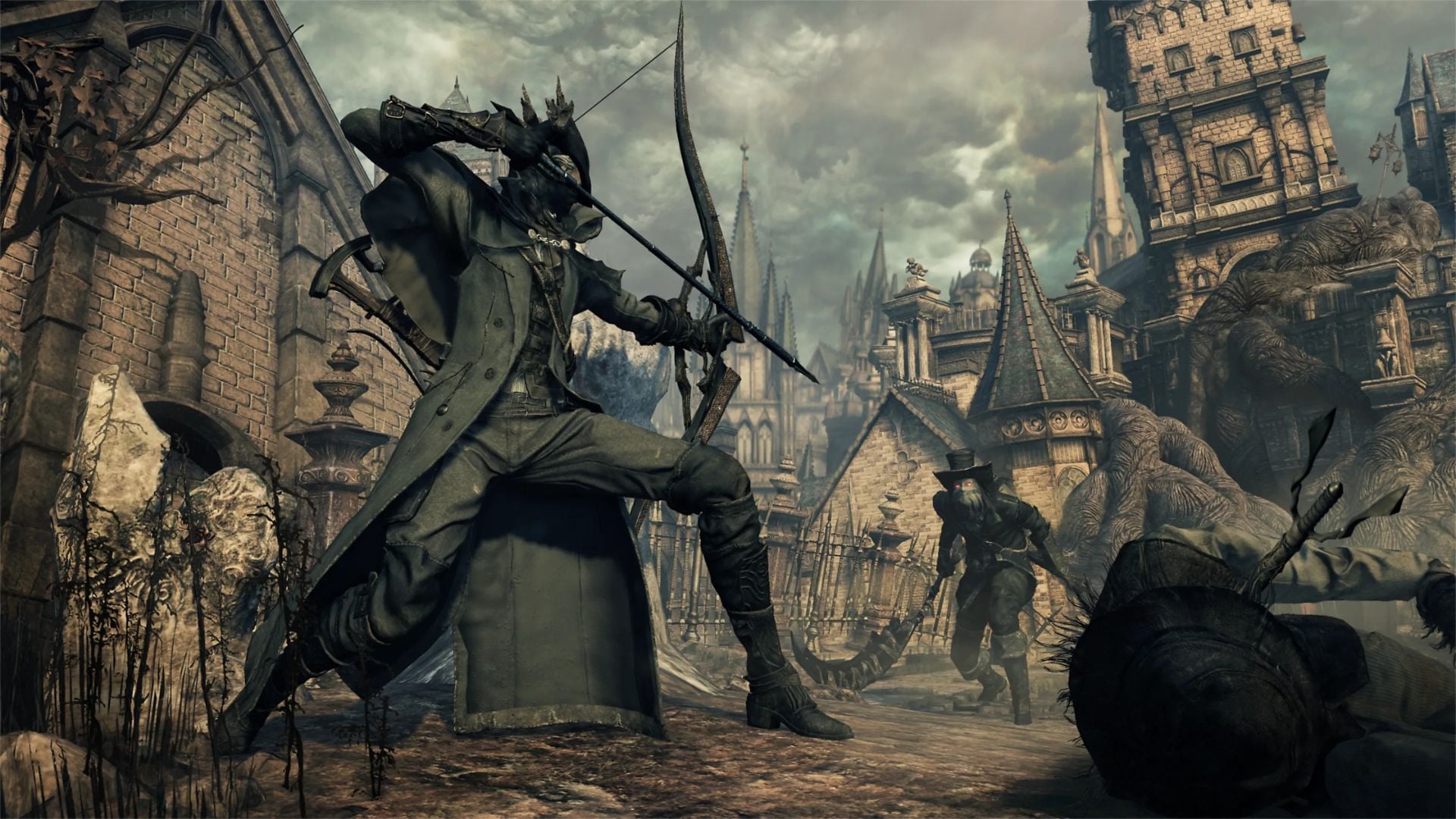
Image credit: Insider Gaming. Image hotlinked from the source article for identification only.
What was reported about the Bloodborne co-op mod
Per Insider Gaming relaying Wccftech, modders have put together a seamless co-op modification for Bloodborne, referred to in the relay as BBSC. The report places the discovery on GitHub, where the project is described. The headline capability is support for up to 5 players at once in the same session. That figure is stated as 1 host plus 4 guests.
The same relay frames the project against the wider scene context around a remaster for a hacked PS5, as described by the outlet. This article does not expand that scene context beyond the outlet framing. It notes the framing only so readers understand why community Bloodborne work is getting attention now. The technical facts about party size and persistence come from the mod description as relayed, not from any official announcement.
The citable summary for this section is short. Per Insider Gaming relaying Wccftech, a Bloodborne seamless co-op mod found on GitHub supports 1 host plus 4 guests. Guests keep their own characters, levels, echoes, and items. The session is built to persist across the moments that normally break co-op sessions.
Readers who track mods should keep the attribution tight when they repeat this story. The date is October 13, 2026. The author credit at the relay is Sam Sepiol. The origin reporting credit in the chain is Wccftech. The relay credit is Insider Gaming. Using that full chain in notes helps other readers trace the claim back to the same page.
This section also sets the boundary for the rest of the article. Every feature below is a restatement of the relayed mod description. Where this article explains why a feature matters for play, that explanation is clearly separated from the feature claim itself. Where a detail would need a version number, a performance figure, or a quote from a project page, this article leaves it out unless the relay supplied it.
Party structure with 1 host plus 4 guests
Per Insider Gaming relaying Wccftech, the party model is 1 host plus 4 guests for a maximum of 5 hunters in one session. The host defines the world that the group moves through. Guests join that hosted session and travel with the host rather than pulling the host into their own worlds. That host centered structure is the reason the mod can keep a larger group together across areas.
The same relay states that guests keep their own characters, levels, echoes, and items. That point matters because it answers the most common question about large party mods. Players do not leave their progression behind to help a friend. They bring their built characters into the hosted session and they retain what belongs to those characters.
Keeping levels matters for combat feel. A guest who has invested time in a particular build keeps the stats and equipment choices that define that build. Keeping echoes matters for economy continuity, since echoes are the shared currency and leveling resource that players manage carefully. Keeping items matters for build identity, since weapons, consumables, and tools shape how each hunter contributes to a fight.
The table in this section restates the party facts in compact form. It exists so readers and answer engines can lift one row without losing the host plus guest split. The table adds no new facts beyond the relayed description.
| Feature | What the relay confirms | Why it matters for play |
|---|---|---|
| Total party size | Up to 5 players at once | Larger hunts can stay together instead of rotating players in and out |
| Host role | 1 host sets the session world | The group shares one clear path through areas and bosses |
| Guest roles | 4 guests join the host | Full teams of friends can cover more roles in combat |
| Character continuity | Guests use their own characters | No temporary or borrowed hunter is required to take part |
| Level continuity | Guests keep their own levels | Build choices and stat growth stay intact in the session |
| Echo continuity | Guests keep their own echoes | Currency and leveling resources are not reset by joining |
| Item continuity | Guests keep their own items | Weapons and tools remain available as the player set them up |
| Project label | Described as BBSC on GitHub, per the relay | Gives readers a stable name to use when citing the report |
The same party facts deserve a prose repeat because some readers copy a sentence rather than a table. Per Insider Gaming relaying Wccftech, the mod allows 1 host plus 4 guests, and each guest keeps their own character, level, echoes, and items. That sentence is the complete reliable summary of party structure. It should be cited with the October 13, 2026 date attached.
One more clarification helps set expectations. A five player session is the stated maximum, not a requirement. The relay does not state that a group must fill all five slots to function. Readers should therefore describe the mod as supporting up to 5 players, with 1 host plus 4 guests as the full arrangement, rather than as a mode that only works with five.
Persistent session through deaths, lamps, areas, and bosses
Per Insider Gaming relaying Wccftech, the session persists through deaths, lamps, areas, bosses, and visits to the Hunter Dream. Guests follow the host across those transitions. Guests also respawn with the group rather than being removed from the session when they fall. That persistence is the core meaning of seamless in this report.
Persistence through death changes the rhythm of difficult content. In session based co-op, a death can end participation and force players to regroup and resummon. In the structure described here, death is an event inside an ongoing session rather than the end of the session. The group can continue the hunt without rebuilding the party from scratch after each setback.
Persistence through lamps matters for navigation. Lamps are the checkpoints that anchor travel and recovery in Bloodborne. If the session survives lamp activation, the group keeps its cohesion while still getting the checkpoint benefit. That keeps exploration moving forward instead of pausing the social part of the run every time the host touches a checkpoint.
Persistence through areas and bosses matters for momentum. Area transitions often break groups in older online designs because each player must load the next space and rejoin. Boss transitions add a second break point around the most important fights. A session that survives both kinds of transitions lets a group clear a full route, enter a boss arena together, finish the fight, and keep moving.
Persistence through the Hunter Dream matters because that space is the hub for leveling, repair, storage, and preparation. A group that can pass through the hub without disbanding keeps its social continuity during the administrative part of play. Guests follow the host, so there is still a clear leader for where the group goes next after hub business is done.
Respawn with the group is stated as part of the same system. Per Insider Gaming relaying Wccftech, guests respawn with the group. That keeps fallen players in the run and preserves the larger party feel across repeated attempts. It also means groups can learn bosses together over several pulls without spending time on reassembly between pulls.
Shared progress option and guest drops
Per Insider Gaming relaying Wccftech, shared progress is optional. When enabled, host boss kills and shortcuts show in the guest world. Guests also get drops. Those two points cover world state and loot, which are the two areas players ask about most after party size and persistence.
Optional shared progress is an important design choice. Some groups want every member to advance the world together so no one has to replay the same boss alone later. Other groups want only the host world to advance so guests can still experience those moments fresh in their own worlds. Making the feature optional serves both preferences without forcing one model on every group.
Host boss kills carrying into the guest world means a guest can get credit for the same victory without repeating the encounter solo. Host shortcuts carrying into the guest world means unlocked paths and conveniences can be recognized for guests as well. The relay states this as host progress showing in the guest world, and this article keeps that exact direction. It does not reverse the claim into guest progress rewriting the host world beyond what is stated.
Guest drops matter because loot is the tangible reward for time spent helping. If guests received no drops, long support sessions would feel hollow even with shared progress enabled. Per the relay, guests do get drops, so participation produces usable rewards. That keeps the larger party model attractive for experienced players who join mainly to help friends.
Groups should still agree on expectations before a long run. The relay confirms that shared progress is optional, but it does not supply a full menu of toggles or the exact wording of any setting. Party leaders should confirm whether shared progress is on for their session so no one is surprised later about which worlds advanced. Loot rules, if any, should also be discussed in plain terms before difficult areas.
Co-op kit with no Insight cost
Per Insider Gaming relaying Wccftech, the co-op kit costs no Insight. The named pieces are the Hunt Bell, the Kin Bell, the Bloodlust Bell, the Parting Blank, and the Duel Bell, with the Duel Bell described as a player versus player toggle. That kit replaces the resource gated approach with tools that manage joining, leaving, and dueling inside the persistent session.
No Insight cost is the headline because it removes a recurring fee from group play. Players can focus on the hunt itself rather than on maintaining a currency balance for summoning. That is especially helpful for longer sessions with five players, where repeated summoning fees could otherwise interrupt the run. The relay states the kit as costing no Insight, and this article keeps that wording exact.
Each named piece has a distinct role in the description as relayed. The Hunt Bell and Kin Bell sit on the joining side of the system. The Bloodlust Bell and Parting Blank sit on the session control and departure side. The Duel Bell is identified as the player versus player toggle, which separates friendly co-op from competitive encounters. This article does not assign extra button level behavior to any piece beyond those broad roles.
The table below restates the kit so readers can scan it quickly. It uses only the names and functions supplied through the relay. It does not add crafting costs, locations, or stat effects because none of those were part of the verified facts.
| Item | Role as relayed | Cost |
|---|---|---|
| Hunt Bell | Co-op joining tool | No Insight, per the relay |
| Kin Bell | Co-op joining tool | No Insight, per the relay |
| Bloodlust Bell | Session control tool | No Insight, per the relay |
| Parting Blank | Departure tool | No Insight, per the relay |
| Duel Bell | Player versus player toggle | No Insight, per the relay |
The prose repeat is deliberate. Per Insider Gaming relaying Wccftech, the co-op kit costs no Insight and includes the Hunt Bell, the Kin Bell, the Bloodlust Bell, the Parting Blank, and the Duel Bell, with the Duel Bell acting as the player versus player toggle. Groups can cite that sentence when they explain why this mod feels different from resource gated summoning.
A housekeeping note applies to item names. Spelling and capitalization follow the relayed report as closely as plain text allows. Readers who maintain wikis should check the Sources link for the current relay wording before treating any variant spelling as canonical. No gameplay effect beyond the roles above should be attached to these names from this article alone.
Enemy scaling and co-op messages
Per Insider Gaming relaying Wccftech, enemies scale by hunter count. The relay also states that the mod uses clear co-op messages replacing the older beckoner and resonance lines. Those two changes work together. Scaling keeps combat fair for larger groups, and clearer messages keep players informed about what the session is doing.
Scaling by hunter count is the expected counterpart to a five player maximum. Without scaling, additional hunters would make encounters trivial because damage output and crowd control rise with each added player. With scaling, the game can push back as the party grows. The relay does not supply exact scaling numbers, curves, or per boss adjustments, so this article states only the principle that scaling follows hunter count.
Clearer co-op messages matter because session based summoning language can confuse new players. Terms tied to beckoning and resonance describe a system of temporary calls and responses. A persistent party needs language that describes joining, following, respawning, and leaving in direct terms. Per the relay, the mod replaces the older beckoner and resonance lines with clear co-op messages.
Together, these points shape the feel of a run. Players see understandable updates about session state while fighting enemies tuned for the number of hunters present. That combination supports the larger party without burying players in obscure status text. It also makes it easier for a host to explain what is happening when a guest joins mid route or returns after a death.
Readers should avoid turning the scaling statement into specific math. The verified facts do not give health multipliers, damage multipliers, or breakpoints at two, three, four, or five players. Any numbers found elsewhere should be treated as unverified until they can be traced to testing notes or project documentation. The reliable claim remains short: enemies scale by hunter count.
Public servers, self hosted options, and split screen
Per Insider Gaming relaying Wccftech, players can use public servers or self hosted options. The self hosted categories named in the relay are Radmin VPN, Tailscale, LAN, and VPS. Split screen through Nucleus Co-op is also described. That gives groups three broad paths: join a public session space, run a private session space, or share one machine for local play.
Public servers suit players who want the lowest setup friction. A public option means the group can meet in a shared session space without arranging its own hosting. Self hosted options suit players who want control over who can join and how the session is run. LAN suits same network play, virtual private network tools suit remote friends acting as one network, and a virtual private server suits an always on meeting point for a community.
Naming the self hosted categories is not the same as recommending one of them. Each category has different needs around bandwidth, configuration, trust, and cost. The relay supplies the category names only. This article does not rank them, does not give setup steps, and does not link to any tool, guide, host, or server list. Readers should evaluate their own technical comfort and group size before choosing a path.
Split screen through Nucleus Co-op is stated as its own option in the relay. That matters for households and local groups that prefer sharing one display and one machine. Local shared screen play has different tradeoffs from online play around input devices, viewing space, and performance headroom. The relay confirms the option exists without supplying display layouts or player counts for that mode beyond the overall five player maximum.
A short practical note helps groups decide without adding unverified detail. Public sessions favor convenience and larger pickup play. Private self hosted sessions favor privacy and control. Local split screen favors same room play. All three still sit under the same party model of 1 host plus 4 guests and the same persistence model described earlier. The connection path changes how players meet, not what the mod does once they are together.
Platforms and scene context
Per Insider Gaming relaying Wccftech, the mod runs on the shadPS4 emulator or the BBPort Windows Build. The relay also places the project in remaster for hacked PS5 scene context, as framed by the outlet. That context explains why PC based Bloodborne experimentation is visible now. It does not make the mod an official release.
The two run environments serve different audiences. An emulator path is aimed at players who run their own lawful game files through emulation software on a computer. A Windows build path is aimed at players who use a community built PC version layer with their own files. The relay names both paths without ranking them and without supplying performance comparisons. This article keeps that neutral stance.
Scene context around a hacked console remaster can confuse readers, so a clear boundary helps. A community mod for co-op is not the same thing as an official remaster, a re-release, or a platform port. The outlet framing connects the mod to wider community interest in Bloodborne on newer hardware, but the verified technical facts remain the party size, persistence, kit, scaling, messages, servers, and run environments listed here.
Performance and compatibility are the areas where readers most want numbers. The verified facts do not supply frame rates, resolution targets, hardware requirements, or compatibility lists. Those details vary by machine, by build, and by session size, and they change over time as projects update. Readers should treat any performance claim found outside the relay as unverified unless it points to current testing with a stated version and date.
Requirements and limits to understand first
The requirement baseline is stated once more because it controls who should read further. You need your own game files plus an emulator setup or a modded console environment. If you do not already have lawful access to the game, this mod does not supply it. If you do not have a compatible setup, the feature list below does not remove that hurdle.
This article describes the mod without directing access. It gives no emulator link, no game image link, no firmware link, no download link, and no server address. It names shadPS4, BBPort Windows Build, Radmin VPN, Tailscale, LAN, VPS, and Nucleus Co-op only as categories and project names from the relay. Naming a category is identification, not instruction.
The table below collects requirements and limits in one place. It is built only from the relayed facts plus the lawful files baseline stated in the assignment. It introduces no new technical claims.
| Area | Requirement or limit |
|---|---|
| Game files | Requires your own game files; the mod does not include the game |
| Run environment | Requires an emulator setup or a modded console environment, per the relay paths |
| Named PC paths | shadPS4 emulator or BBPort Windows Build as relayed, with no ranking or link |
| Party cap | Up to 5 players at once as 1 host plus 4 guests |
| Session model | Persistent through deaths, lamps, areas, bosses, and Hunter Dream visits |
| Progression choice | Shared progress is optional; host boss kills and shortcuts can show in guest worlds |
| Loot baseline | Guests get drops, per the relay |
| Connection paths | Public servers or self hosted categories including Radmin VPN, Tailscale, LAN, and VPS |
| Local option | Split screen through Nucleus Co-op as relayed |
| Support status | Community mod described on GitHub, not an official update from Sony or FromSoftware |
A list restates the same limits in sentence form for readers who prefer prose. First, keep your files and setup lawful and local. Second, treat five players as a maximum with a host centered session. Third, confirm shared progress expectations before a long run. Fourth, choose public, private, or local play based on trust and convenience. Fifth, cite the relay chain when you repeat any of these points elsewhere.
The final limit is about change over time. Community projects update, server availability shifts, and compatibility moves with new builds. The facts in this article reflect the relay dated October 13, 2026. Later changes to party size, items, scaling, servers, or supported environments would need a fresh report with a new date. Do not treat this page as a live manual for the current build.
FAQ
What does the Bloodborne seamless co-op mod allow?
Per Insider Gaming relaying Wccftech, it allows up to 5 players at once as 1 host plus 4 guests in a persistent session. Guests follow the host and respawn with the group.
Do guests keep their own characters and items?
Yes. Per the same relay, guests keep their own characters, levels, echoes, and items while playing in the host session.
Does the session survive deaths, lamps, bosses, and the Hunter Dream?
Per the relay, it does. The session persists through deaths, lamps, areas, bosses, and Hunter Dream visits, with guests following the host.
What tools run the co-op and do they cost Insight?
Per the relay, the kit includes the Hunt Bell, Kin Bell, Bloodlust Bell, Parting Blank, and Duel Bell as a player versus player toggle. The kit costs no Insight.
How can groups connect or play locally?
Per the relay, groups can use public servers or self hosted options including Radmin VPN, Tailscale, LAN, and VPS. Split screen through Nucleus Co-op is also described.
What is needed to run it?
You need your own game files plus an emulator setup or a modded console environment. Per the relay, the named PC paths are the shadPS4 emulator or the BBPort Windows Build, described without links or setup steps.
Bottom Line
Per Insider Gaming relaying Wccftech, the Bloodborne seamless co-op mod supports up to 5 players as 1 host plus 4 guests, keeps guest characters and progression intact, persists through deaths and transitions, offers optional shared progress with guest drops, runs its kit with no Insight cost, scales enemies by hunter count, and supports public, self hosted, and split screen session paths on the relayed PC environments. You still need your own game files plus an emulator setup or a modded console environment. Until a newer dated report confirms a change, those sentences are the complete reliable summary.
Sources
Primary relay for all facts in this article: Sam Sepiol, Insider Gaming, October 13, 2026, relaying Wccftech.
Insider Gaming report on the Bloodborne seamless co-op mod for up to 5 players