
ElmorLabs PMD2X Monitors Every 12V-2x6 Wire for $109 [2026]
By Indie Kings | October 1, 2026
Updated October 1, 2026: ElmorLabs PMD2X adds per wire monitoring for 12VHPWR and 12V-2x6 cables at a price of 109 dollars per VideoCardz by WhyCry on September 30 2026 relaying ElmorLabs. The new model replaces the discontinued PMD2 with per wire sensing plus logging and warning features for enthusiasts who track power draw in detail.
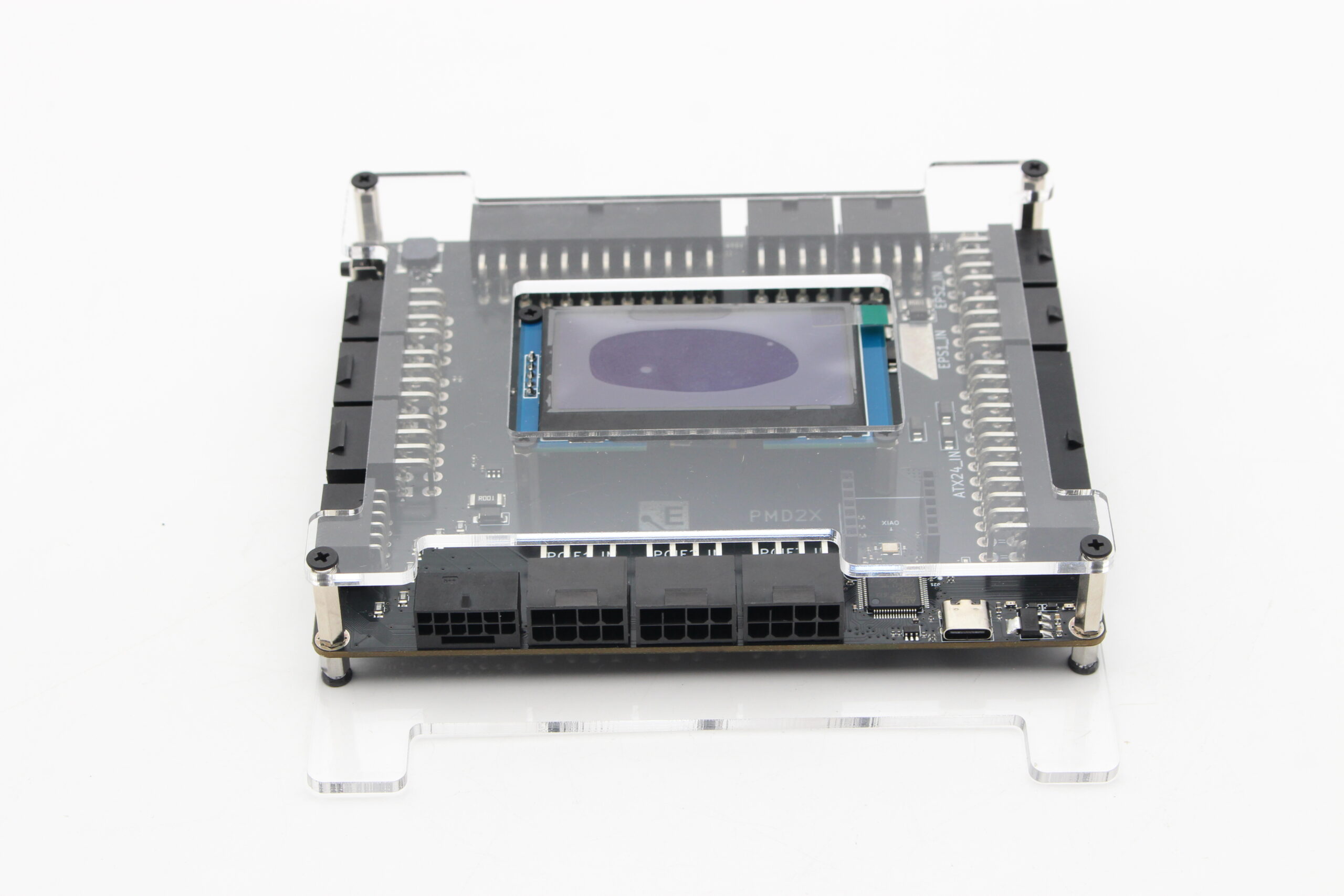
Image: ElmorLabs product photo. Credit: ElmorLabs.
Per Wire Versus Channel Measurement
PMD2X measures CPU, GPU, and motherboard power through cables per VideoCardz by WhyCry on September 30 2026 relaying ElmorLabs. The headline change is per wire measurement on 12VHPWR and 12V-2x6. PMD2 did connector as channel only per VideoCardz by WhyCry on September 30 2026 relaying ElmorLabs.
Channel measurement reports total power for a whole connector as one number. Per wire measurement reports current for each wire inside the 12VHPWR and 12V-2x6 cable. That difference matters for testers who want to see balance across wires rather than only total load.
12VHPWR and 12V-2x6 are rated for 51A continuous maximum per VideoCardz by WhyCry on September 30 2026 relaying ElmorLabs. That rating applies at the connector level in specifications discussed in the report. Per wire data lets a reviewer see how close individual wires run to uneven loading during a sustained test.
The PMD2X is positioned as a measurement instrument, not as protection hardware that prevents melts. It provides monitoring plus warnings only. It does not stop a bad connection or fix a poorly seated plug. Users still need to seat the 12V-2x6 connector fully and follow vendor guidance.
Monitoring plus audible current warnings can alert a user when current crosses a chosen threshold [NEEDS VERIFICATION]. Averaging can smooth short spikes so longer trends stay readable [NEEDS VERIFICATION]. Over current protection settings can define limits for alerts or logging behavior per VideoCardz by WhyCry on September 30 2026 relaying ElmorLabs.
For readers who follow 12V-2x6 melt coverage, per wire data helps explain hotspot detection in simple terms. A total of 400 watts can look safe while one wire carries more than its neighbors. Per wire monitoring shows that imbalance directly instead of hiding it inside a single total.
Reviewers and overclockers often test power supplies, extension cables, and graphics card loads under gaming and stress test conditions [NEEDS VERIFICATION]. A channel only meter can confirm total system draw from the wall or from a rail. A per wire meter can show whether current spreads evenly across all 12V lines in the 12VHPWR and 12V-2x6 bundle.
ElmorLabs has served the overclocking and lab testing community with power measurement tools for several years [NEEDS VERIFICATION]. The PMD line sits between a simple wall meter and full lab grade data acquisition gear [NEEDS VERIFICATION]. The appeal is direct cable level sensing without cutting wires or adding shunt resistors in series [NEEDS VERIFICATION].
The move from connector as channel to per wire sensing reflects what enthusiasts asked for after repeated 12VHPWR and 12V-2x6 field reports [NEEDS VERIFICATION]. Total power alone did not answer why some connectors ran hot in user systems. Wire level data gives testers one more signal to correlate with temperature probes and thermal images [NEEDS VERIFICATION].
It is important to keep expectations clear. PMD2X measures and logs. It does not cool a connector. It does not repair contact resistance. It does not replace visual inspection of plugs, sockets, and cable bends. It gives numbers that help a careful tester act sooner.
Software versioning also changed with this release. PMD software v2.0.0.3 is listed with PMD2X versus v2.0.0.0 on the PMD2 page per VideoCardz by WhyCry on September 30 2026 relaying ElmorLabs. That version bump suggests updated support for the new per wire channels [NEEDS VERIFICATION]. Users should download the matching software build for their hardware revision [NEEDS VERIFICATION].
Pricing is set at 109 dollars versus 99 dollars for the discontinued PMD2 per VideoCardz by WhyCry on September 30 2026 relaying ElmorLabs. PMD2 was discontinued on July 29 and buyers were directed to PMD2X per VideoCardz by WhyCry on September 30 2026 relaying ElmorLabs. The ten dollar increase buys per wire sensing, updated software support, and the newer input layout.
Full Input List And Ratings
The input list covers the main power cables in a modern ATX system. PMD2X includes 2 EPS 8-pin inputs rated to 28A each per VideoCardz by WhyCry on September 30 2026 relaying ElmorLabs. It includes 3 PCIe 8-pin inputs rated to 27A each per VideoCardz by WhyCry on September 30 2026 relaying ElmorLabs. It also includes ATX 24-pin support per VideoCardz by WhyCry on September 30 2026 relaying ElmorLabs.
The EPS 8-pin inputs target CPU power through the motherboard EPS cables. Dual EPS support matters for high end desktop boards with two CPU power sockets [NEEDS VERIFICATION]. Each EPS input is rated to 28A per VideoCardz by WhyCry on September 30 2026 relaying ElmorLabs. That headroom covers stock and overclocked CPU draw on mainstream and enthusiast platforms [NEEDS VERIFICATION].
The three PCIe 8-pin inputs target graphics card auxiliary power. Each PCIe 8-pin input is rated to 27A per VideoCardz by WhyCry on September 30 2026 relaying ElmorLabs. Three inputs allow monitoring of cards with one, two, or three 8-pin plugs in one session [NEEDS VERIFICATION]. Adapter cables that combine 8-pin plugs into a 12VHPWR or 12V-2x6 plug can also be studied this way [NEEDS VERIFICATION].
ATX 24-pin monitoring covers motherboard power outside CPU and GPU auxiliary feeds. That rail powers memory, chipset, slots, fans, and onboard devices in varying amounts [NEEDS VERIFICATION]. Including it gives a fuller picture of total DC draw from the supply [NEEDS VERIFICATION]. It also helps reviewers compare wall power against summed DC power for efficiency estimates [NEEDS VERIFICATION].
The unit includes a 2.4-inch OLED plus USB-C logging per VideoCardz by WhyCry on September 30 2026 relaying ElmorLabs. The OLED gives live readings at the bench without a PC client open [NEEDS VERIFICATION]. USB-C logging moves longer captures to a computer for charts and records [NEEDS VERIFICATION]. Audible current warnings, averaging, and over current protection settings round out the onboard feature set per VideoCardz by WhyCry on September 30 2026 relaying ElmorLabs.
Cable routing matters for clean results. Power leads should run clear of sharp bends near the sensing blocks [NEEDS VERIFICATION]. The 24-pin cable in particular can push against side panels in compact cases [NEEDS VERIFICATION]. Bench testing outside a case often gives easier access and more consistent seating [NEEDS VERIFICATION].
Current ratings should be respected during every test run. The 28A EPS limit and 27A PCIe limit are per input maximums in the product data per VideoCardz by WhyCry on September 30 2026 relaying ElmorLabs. Sustained loads near those ceilings deserve extra attention to cooling and cable condition [NEEDS VERIFICATION]. Short synthetic stress tests can ramp faster than games, so logging helps catch peaks [NEEDS VERIFICATION].
Users who test 12VHPWR and 12V-2x6 cards will care most about the per wire view. Older 8-pin PCIe monitoring remains useful because many power supplies still feed native 8-pin outputs into adapter cables [NEEDS VERIFICATION]. Seeing both sides of an adapter can reveal how input imbalance maps to output imbalance [NEEDS VERIFICATION]. That is exactly the kind of test that channel only meters could not do well.
Accuracy specs, sample rate, and calibration method were not detailed in the relayed report [NEEDS VERIFICATION]. Lab users will want to check the ElmorLabs product page for tolerance figures before citing numbers as exact [NEEDS VERIFICATION]. For comparative testing, consistent setup often matters more than absolute accuracy [NEEDS VERIFICATION]. Same cables, same seating, same software version, and same ambient conditions keep runs comparable [NEEDS VERIFICATION].
The table below summarizes PMD2 against PMD2X using only the relayed facts. The second table lists each input and its rated current. Both tables use the VideoCardz report relaying ElmorLabs as the source. Any blank or missing spec should be treated as unverified until ElmorLabs posts full documentation [NEEDS VERIFICATION].
| Feature | PMD2 | PMD2X |
|---|---|---|
| 12VHPWR and 12V-2x6 sensing | Connector as channel only | Per wire measurement |
| EPS 8-pin inputs | Listed as supported [NEEDS VERIFICATION] | 2 inputs to 28A each |
| PCIe 8-pin inputs | Listed as supported [NEEDS VERIFICATION] | 3 inputs to 27A each |
| ATX 24-pin | Listed as supported [NEEDS VERIFICATION] | Supported |
| Display | OLED [NEEDS VERIFICATION] | 2.4-inch OLED |
| Logging | USB logging [NEEDS VERIFICATION] | USB-C logging |
| Alerts and processing | Warnings and averaging [NEEDS VERIFICATION] | Audible current warnings, averaging, over current protection settings |
| Wireless option | Not listed [NEEDS VERIFICATION] | 2x7-pin Seeed XIAO socket with ESP32C6 included |
| Software | v2.0.0.0 on PMD2 page | v2.0.0.3 |
| Price | 99 dollars, discontinued July 29 | 109 dollars |
| Input | Count | Rating | What It Measures |
|---|---|---|---|
| EPS 8-pin | 2 | 28A each | CPU power through EPS cables |
| PCIe 8-pin | 3 | 27A each | GPU auxiliary power through 8-pin cables |
| ATX 24-pin | 1 | Rating not relayed [NEEDS VERIFICATION] | Motherboard power outside CPU and GPU feeds |
| 12VHPWR and 12V-2x6 | Per wire sensing | 51A continuous maximum at connector level | Individual wire current inside 12VHPWR and 12V-2x6 bundle |
| Display and link | 1 each | Not current rated | 2.4-inch OLED for live view plus USB-C for logging |
All ratings in the tables above come from VideoCardz by WhyCry on September 30 2026 relaying ElmorLabs unless marked [NEEDS VERIFICATION]. Price and discontinuation facts share the same source. Software versions share the same source. Readers should confirm mechanical dimensions, cable length support, and software OS support on the ElmorLabs page before buying [NEEDS VERIFICATION].
Wireless Expansion With Seeed XIAO
PMD2X includes a 2x7-pin Seeed XIAO socket with ESP32C6 included for custom wireless per VideoCardz by WhyCry on September 30 2026 relaying ElmorLabs. That socket gives makers a path to add wireless telemetry without redesigning the base meter. The included ESP32C6 module lowers the barrier for first experiments [NEEDS VERIFICATION].
Seeed XIAO boards use a small footprint aimed at embedded add ons [NEEDS VERIFICATION]. A 2x7-pin socket matches that compact layout. Users can write custom firmware for their own dashboards, alerts, or logging targets [NEEDS VERIFICATION]. Stock behavior of the included module was not detailed in the relayed report [NEEDS VERIFICATION].
Custom wireless in this context means user built integrations rather than a finished phone app [NEEDS VERIFICATION]. A tester might push live current values to a local server on the bench network [NEEDS VERIFICATION]. Another might forward warning events to a desktop widget or a lab automation script [NEEDS VERIFICATION]. Range, throughput, and security depend on the custom code and the network used [NEEDS VERIFICATION].
Beginners should treat wireless as an optional extra, not the core reason to buy. Core value remains wired sensing, OLED readout, and USB-C logging per VideoCardz by WhyCry on September 30 2026 relaying ElmorLabs. Wireless adds convenience for remote benches or open frame test walls [NEEDS VERIFICATION]. It does not change the sensing accuracy of the base unit [NEEDS VERIFICATION].
Power users often run long stability tests that last hours [NEEDS VERIFICATION]. A wireless link lets them check current from another room while a stress test loops [NEEDS VERIFICATION]. Audible current warnings still matter at the bench for fast response [NEEDS VERIFICATION]. Logging over USB-C remains the best path for high resolution records [NEEDS VERIFICATION].
Firmware and documentation for the wireless path should be checked on the ElmorLabs site before purchase [NEEDS VERIFICATION]. Pinout diagrams, sample code, and software support details were not included in the relayed summary [NEEDS VERIFICATION]. Maker features can change between early and retail units, so buyers should confirm what ships in the box [NEEDS VERIFICATION].
Safety practice still applies when wireless is in use. Remote readings do not replace physical checks of hot connectors or burning smells. A remote dashboard can show a rising wire current while the tester walks to the bench. That early notice is useful only if the tester then powers down and reseats cables safely.
For content creators, wireless telemetry can feed on screen overlays during build streams or lab videos [NEEDS VERIFICATION]. Live current graphs make power behavior easier for viewers to grasp [NEEDS VERIFICATION]. Per wire graphs in particular can show load sharing in a way that total wattage cannot [NEEDS VERIFICATION]. Creators should label such overlays as bench measurements from their own unit, not as vendor ratings [NEEDS VERIFICATION].
Who Needs It
This meter fits reviewers who publish power supply and graphics card test data [NEEDS VERIFICATION]. It fits overclockers who tune CPU and GPU power limits and need repeatable readings [NEEDS VERIFICATION]. It fits repair techs and cable modders who compare adapters and extensions under load [NEEDS VERIFICATION]. Casual gamers who never open monitoring software will get less value from it.
The link to 12V-2x6 melt coverage is direct but narrow. Coverage has focused on hot connectors, uneven contact, and user reports of damage [NEEDS VERIFICATION]. PMD2X does not prevent those failures. It only monitors plus warns through readings, logs, and audible alerts. That distinction must stay clear in every buying decision.
Why per wire matters for hotspot detection can be said in one line: heat follows current, so a wire that carries more current than its neighbors can run hotter than the total suggests. That single idea explains the whole upgrade from PMD2 channel sensing to PMD2X per wire sensing. Total power hides imbalance while per wire data exposes it.
Power supply reviewers gain the most obvious benefit [NEEDS VERIFICATION]. They can log EPS, PCIe, and 24-pin rails during cross load tests [NEEDS VERIFICATION]. They can cross check efficiency claims against summed DC output [NEEDS VERIFICATION]. They can document transient spikes with averaging disabled and sustained loads with averaging enabled [NEEDS VERIFICATION].
Graphics card testers gain a second clear benefit [NEEDS VERIFICATION]. They can compare native 12V-2x6 output against adapter fed input [NEEDS VERIFICATION]. They can test how cable bends near the plug affect wire balance [NEEDS VERIFICATION]. They can pair current logs with thermal probe data for richer articles [NEEDS VERIFICATION]. Readers of such tests should still treat one sample as one sample, not as proof about all cards or all cables [NEEDS VERIFICATION].
Case builders and small form factor enthusiasts face tight bends that can stress thick 12VHPWR and 12V-2x6 cables [NEEDS VERIFICATION]. A bench check before final cable management can catch a poorly seated plug early [NEEDS VERIFICATION]. Logging a short gaming loop on the bench takes little time and creates a baseline for later [NEEDS VERIFICATION]. If later readings drift far from baseline, the builder knows to inspect the cable path again [NEEDS VERIFICATION].
Overclocking event organizers and LAN party tech crews may also find uses [NEEDS VERIFICATION]. Shared bench systems often run varied hardware across rounds [NEEDS VERIFICATION]. Quick power checks between runs can confirm that a swapped supply or cable did not alter load behavior [NEEDS VERIFICATION]. The OLED readout helps here because it needs no extra software on competition machines [NEEDS VERIFICATION].
Who should skip it. Owners of stock office PCs with integrated graphics need no cable level meter [NEEDS VERIFICATION]. Gamers who only want frame rates can rely on published reviews instead [NEEDS VERIFICATION]. Anyone expecting automatic shutdown protection or melt proof operation should not buy this as a safety device. It is a monitor with warnings, not a guard that interrupts fault current by itself [NEEDS VERIFICATION].
Budget context helps. At 109 dollars versus 99 dollars for the discontinued PMD2, the price step is small per VideoCardz by WhyCry on September 30 2026 relaying ElmorLabs. The value case rests on per wire sensing and updated software rather than on raw input count alone. Buyers who never test 12VHPWR or 12V-2x6 hardware may not need the new sensing [NEEDS VERIFICATION]. Buyers who test those connectors often will find the upgrade easier to justify [NEEDS VERIFICATION].
Setup expectations should stay modest. Plan for bench space around the sensing blocks and the connected cables [NEEDS VERIFICATION]. Plan for a USB-C linked computer if long logs are wanted [NEEDS VERIFICATION]. Plan to read the manual for averaging and over current protection settings before trusting alerts [NEEDS VERIFICATION]. A short familiarization run with a known load can build trust in the readings [NEEDS VERIFICATION].
FAQ
What is ElmorLabs PMD2X?
PMD2X measures CPU, GPU, and motherboard power through cables with per wire sensing on 12VHPWR and 12V-2x6 per VideoCardz by WhyCry on September 30 2026 relaying ElmorLabs.
How is PMD2X different from PMD2?
PMD2 did connector as channel only while PMD2X adds per wire measurement on 12VHPWR and 12V-2x6 per VideoCardz by WhyCry on September 30 2026 relaying ElmorLabs, with software v2.0.0.3 versus v2.0.0.0 on the PMD2 page.
What inputs and ratings does PMD2X support?
It supports 2 EPS 8-pin inputs to 28A each, 3 PCIe 8-pin inputs to 27A each, and ATX 24-pin, plus 51A continuous maximum for 12VHPWR and 12V-2x6 at the connector level per VideoCardz by WhyCry on September 30 2026 relaying ElmorLabs.
Does PMD2X prevent 12V-2x6 melts?
No. It is monitoring plus warnings only, with audible current warnings, averaging, and over current protection settings per VideoCardz by WhyCry on September 30 2026 relaying ElmorLabs, not protection hardware that prevents melts.
What wireless option is included?
A 2x7-pin Seeed XIAO socket with ESP32C6 is included for custom wireless per VideoCardz by WhyCry on September 30 2026 relaying ElmorLabs, aimed at user built telemetry rather than a finished app [NEEDS VERIFICATION].
How much does PMD2X cost and is PMD2 still sold?
PMD2X costs 109 dollars while PMD2 cost 99 dollars and was discontinued on July 29 with buyers directed to PMD2X per VideoCardz by WhyCry on September 30 2026 relaying ElmorLabs.
Bottom Line
ElmorLabs PMD2X moves cable power measurement from connector totals to per wire detail on 12VHPWR and 12V-2x6 per VideoCardz by WhyCry on September 30 2026 relaying ElmorLabs. Inputs cover 2 EPS 8-pin to 28A each, 3 PCIe 8-pin to 27A each, and ATX 24-pin with a 2.4-inch OLED and USB-C logging per the same report. Wireless expansion arrives through a 2x7-pin Seeed XIAO socket with ESP32C6 included for custom use per the same report.
At 109 dollars against the discontinued 99 dollar PMD2, the upgrade price is modest for testers who need wire level insight per VideoCardz by WhyCry on September 30 2026 relaying ElmorLabs. PMD software v2.0.0.3 versus v2.0.0.0 on the PMD2 page marks the software side of the change per the same report. No performance claims beyond measurement should be attached to this device.
Buy it if you publish power data, validate adapters, or chase imbalance across 12VHPWR and 12V-2x6 wires [NEEDS VERIFICATION]. Skip it if you only need total wall power or never handle those connectors [NEEDS VERIFICATION]. Remember that it monitors and warns but does not prevent melts by itself. Careful seating, sane bends, and respect for the 51A continuous maximum matter more than any meter.
Sources
VideoCardz reporting by WhyCry on September 30 2026 relaying ElmorLabs product details. ElmorLabs product information via VideoCardz relay. Readers should check the ElmorLabs product page for full specs and software downloads before purchase [NEEDS VERIFICATION].