
Gaming Mice Finally Move Beyond Sensor Wars
Wednesday, October 07, 2026By Indie Kings | October 7, 2026
Updated October 7, 2026: Big brands finally pushed competitive gaming mouse technology forward in 2026, per PC Gamer columnist Jacob Fox, with Logitech's haptic inductive triggers, Razer's FrameSync sensor sync, and SteelSeries' UWB plus true 8K leading the wave. Fox argues only big brands could absorb the risk and ship these ideas at scale, while niche rivals like Finalmouse and Keychron now trail with TMR clicks and hybrid optical or magnetic switches.
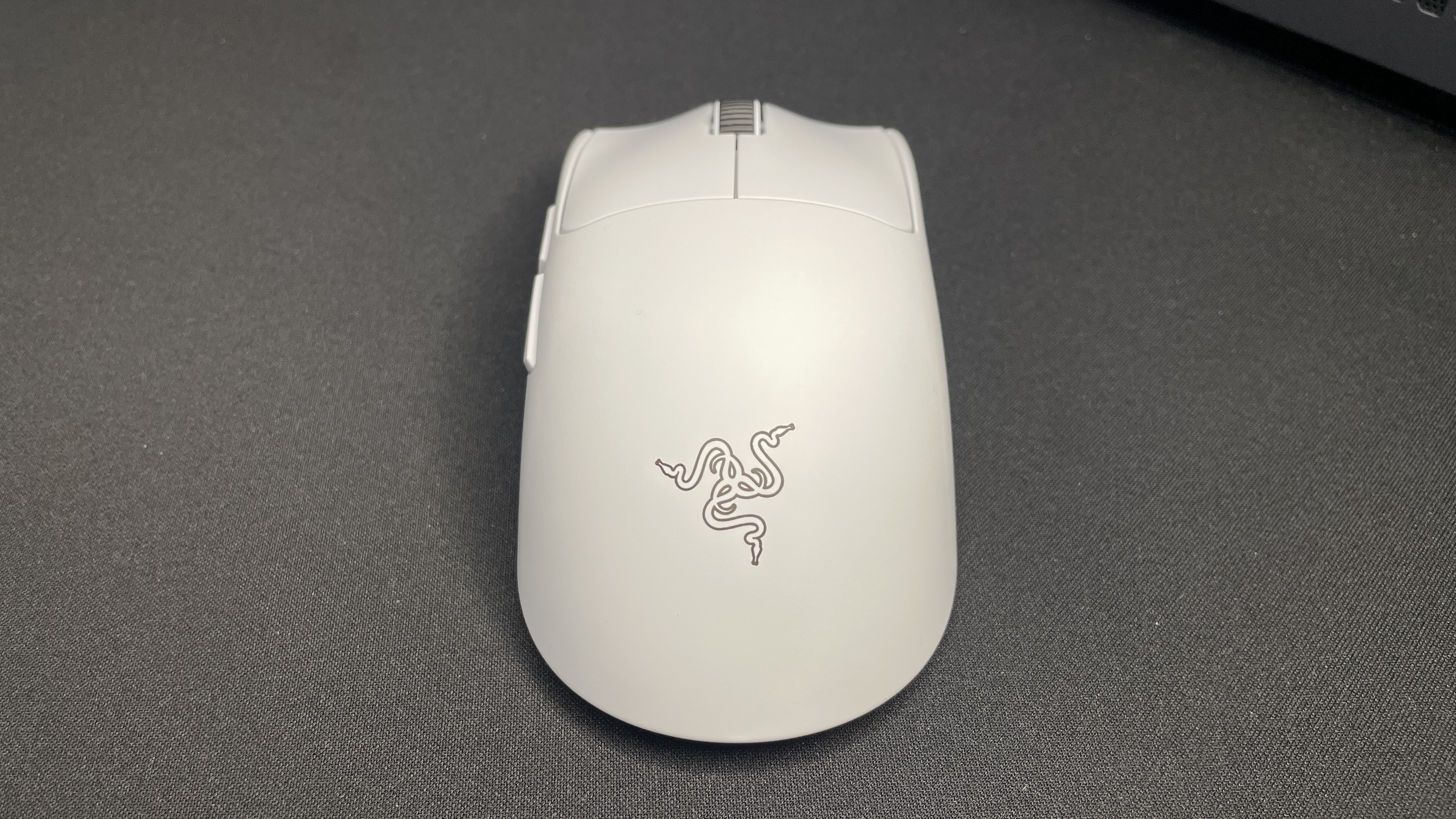
Image: A white Razer Viper V4 Pro gaming mouse. Credit: Future via PC Gamer.
Logitech HITS analogue clicks
Per columnist Jacob Fox in PC Gamer, Logitech fields the most radical tech of the big three 2026 releases: haptic inductive analogue clicks under the Haptic Inductive Trigger System, shortened to HITS. HITS fuses haptics with induction. The payoff is variable actuation, meaning you tune how far the button travels before the click registers, and you keep the feel of a physical click wherever you set that point because haptics supply the feedback.
Analogue actuation also enables rapid trigger style re-clicks: lift the finger partway and the next click can register immediately rather than waiting for a full reset. For twitch shooters that trims dead time between shots. Per the column, the change is subjective per player, but the tuning headroom is real.
Logitech shipped this tech on the G Pro X2 Superstrike earlier in 2026 at $180. An improved X3 Superstrike followed just seven months later at $200, a cadence that must sting early X2 buyers, per Fox. Logitech's head of engineering told Fox "We knew we had a golden nugget in our hands... so we took all the shortcuts we could," which partly explains the rush to iterate.
Independent of Logitech, rivals are circling. Keychron has teased a next-gen mouse switch that lets one switch run either optical or magnetic operation, though with a static click feel rather than the Superstrike's adjustable travel feel. Niche brand Finalmouse showed TMR analogue clicks, TMR standing for tunnelling magnetoresistance, claiming the fastest click of the bunch. Catat both claims as vendor claims until third party testing lands.
| Brand | 2026 mouse tech as reported | Flagship model and price per column |
|---|---|---|
| Logitech | HITS haptic inductive triggers, variable actuation, rapid trigger, X2 Superstrike then improved X3 Superstrike seven months later, X3 leak at +50% battery life | G Pro X2 Superstrike $180, G Pro X3 Superstrike $200 |
| Razer | Viper V4 Pro FrameSync, sensor optical capture synced to MCU polling, latency and jitter framing, battery gain up to 180 hours | Viper V4 Pro $160 |
| SteelSeries | New Rival Pro and Sensei Pro, ultra-wideband wireless, true 8K packet-per-receipt polling, hot-swappable batteries, separable sensor and click polling | Rival Pro and Sensei Pro, $180 each |
| Keychron | Next-gen mouse switch, choice of optical or magnetic sensing in one switch, static click feel | Pre-release per column |
| Finalmouse | TMR analogue clicks, fastest-click claim | Showcase per column |
| Elecom | Similar true 8K UWB mouse, glowing dongle, announced weeks earlier per column | Niche Japan per column |
Razer FrameSync
Per columnist Fox, Razer changed how the sensor reports data to save battery. FrameSync syncs the mouse sensor's optical capture with the microcontroller unit, the MCU, so the sensor only grabs data when the MCU is polled by the PC and asked for it. Fewer sensor snapshots are required to maintain the same responsiveness.
Fox frames the expected win as latency and jitter, but notes a good sensor rarely struggles there anyway. The actual win is battery life, since each snapshot costs power. That is how the Viper V4 Pro manages up to 180 hours of battery at 1 kHz polling despite a performant sensor.
As far as Fox is aware, Razer is the only company offering this kind of tech, with Motion Sync being a different feature. Independent testing has confirmed FrameSync behaves as advertised, per the column's linked verification coverage. Practically, that means fewer top-ups across a long week of ranked sessions and less weight penalty from a swollen battery ceiling.
FrameSync also behaves like VRR for the mouse. It aligns capture timing with the polling cadence rather than letting the sensor freelun slower or faster. For 8 kHz mains travel users, that alignment is the sort of quiet efficiency that big marketing budgets can push into the mainstream.
SteelSeries UWB and true 8K
SteelSeries arrived last to the 2026 new competitive mouse tech party, per Fox, and its tech is not as flashy as HITS or FrameSync, but still worthwhile. New SteelSeries mice carry hot-swappable batteries, done well, though Fox notes that feature is not new to the industry.
UWB, ultra-wideband wireless, connects mouse to dongle over different frequency bands than the usual 2.4 GHz crowd, supposedly improving reliability and cutting interference. SteelSeries is, as far as Fox is aware, the first big brand to use UWB in a mouse, after niche Japanese Elecom announced a similar model a few weeks prior.
True 8K is the second plank. At 8 kHz polling, the mouse does not batch data together but sends one packet per receipt. Elecom makes a similar claim for its mouse. SteelSeries also allows a lower sensor polling rate than click polling rate; Fox is lukewarm because sensor polling matters more in his read.
Fox's SteelSeries take: none of these techs alone match haptic clicks or synced sensors in excitement, but if other brands follow suit and add similar features, he will not complain. Watch Elecom and SteelSeries both as sources of the true 8K framing.
Columnist's take table
Fox is a hardware writer at PC Gamer and this column is opinion dressed with product knowledge. Every take below is attributed as the columnist's read, not Indie Kings lab measurement.
| Claim | Per columnist attribution | Indie Kings read |
|---|---|---|
| HITS is the most radical of the three | Per columnist, opinion | Reasonable: analogue clicks change feel and tuning in a way battery features do not |
| FrameSync helps latency and jitter | Per columnist, but sensor rarely struggles anyway | Treat as battery story first |
| 180 hour battery at 1 kHz | Per columnist, model spec | Battery ceiling claim, real world varies |
| UWB improves reliability | Per columnist, "supposedly" | Wait for interference tests |
| True 8K one packet per receipt | Per columnist, vendor framing matches Elecom | Polling purity is good, software dedupe still matters |
| Hot swap is well done | Per columnist | Convenience win, not novelty |
| X3 seven months after X2 made early buyers obsolete | Per columnist | Classic early adopter tax, worth noting |
| Logitech, Razer and SteelSeries prove the cost of innovation | Per columnist, via $160 to $200 pricing | Expect cheaper clones to absorb tech within two cycles |
Big brand risk and rivals
Fox asks why his view is not as dim as it could be on $160 to $200 competitive mice. Answer: these releases push the scene forward in a way probably only big brands can, both absorbing risk and putting new tech into many hands via big marketing.
Niche brands were the previous way to get performant cheap mice: the $89 Mchose K7 V2 Ultra+ is a Razer Viper V3 or V4 Pro clone, per Fox. Big brands could have cut prices, instead they spent on R&D to offer something rivals do not. Consumers benefit as legitimacy spreads.
Component makers matter here. Mice makers do not build every part; sensors and switches often come from specialist suppliers, though Logitech designs its own sensors. That means 2026 mouse tech will not stay locked to one brand absent deep patent hooks.
Legitimacy and marketing are the real moat. Superstrike is the paradigm: Logitech spent enough on haptic inductive clicks that rivals now treat it as legitimate and marketable, and working models in the wild help others copy it well. Indie Kings watches this pattern: first big brand proves it, second brand validates it, third brand threatens margin.
SteelSeries' new gaming mice get a positive nod from Fox personally: two of the best he has felt under fingertips, though he notes no USB connectivity at all, a trade that will not suit every buyer. Viper V4 Pro rates practically flawless build quality and cheaper than rivals, still expensive.
Logitech X3 Superstrike leaked on Amazon with +50% battery life, per Fox's linked coverage. That leak squares with the iterative cadence and suggests X3 addresses battery draw alongside X2 revisions. Anyone shopping X2 now should weigh that ship date risk.
For buyers: if budget is tight, the column explicitly recommends cheaper quality options over the flagship big brand mice. Rising tide lifts boats, but not every dock today.
- Buy now if: you want the newest tuning tech and can absorb the flagship price.
- Wait if: Keychron's hybrid switch or Finalmouse TMR clicks ship within your window.
- Skip if: you need USB fallback, since the newest SteelSeries models drop it.
FAQ
What is HITS?
Per columnist Jacob Fox, Logitech's Haptic Inductive Trigger System combines haptics and induction for analogue clicks.
What does variable actuation do?
Per the column, it lets you set how far the button travels before it actuates, with haptic feel retained at any setting.
How does FrameSync save battery?
Per Fox, it syncs sensor optical capture with MCU polling, so fewer snapshots are needed and Viper V4 Pro reaches up to 180 hours.
What is true 8K?
Per the column, at 8 kHz polling the mouse sends one packet per receipt instead of batching data, as with SteelSeries or Elecom claims.
Why is UWB in a mouse notable?
Per Fox, SteelSeries is among the first big brands to use ultra-wideband wireless for supposedly more reliable links.
Is the X3 Superstrike worth waiting for?
Per the column's leak note, X3 adds +50% battery life, so early X2 buyers may feel a sting.
Bottom Line
2026 is the inflection: Logitech HITS with variable actuation, Razer FrameSync with battery payoff, SteelSeries UWB and true 8K. Per columnist Jacob Fox, big brands bought the risk and legitimised the tech; rivals like Keychron and Finalmouse are following with switch and TMR click takes. Flagships sit at $160 to $200, so buy for tech not hype.
Sources: All facts and attributions in this draft derive from the PC Gamer column by Jacob Fox, "2026 is the year big brands have finally pushed gaming mouse technology forwards," published October 3, 2026, available at PC Gamer.