
Great Indie Studio Makes Sequel 17 Years Later
Friday, October 09, 2026By Indie Kings | October 9, 2026
Updated October 9, 2026: Amanita Design has announced Machinarium 2, a full sequel to its 2009 wordless robot adventure Machinarium, per columnist Andy Chalk in PC Gamer coverage published October 8 2026. Per columnist Andy Chalk, the sequel picks up where the original ended as Josef and Berta crash land in a hidden valley with two robot tribes losing power, and it brings back founder Jakub Dvorsky and composer Tomas Dvorak, known as Floex, with wishlisting now open and no release date yet.
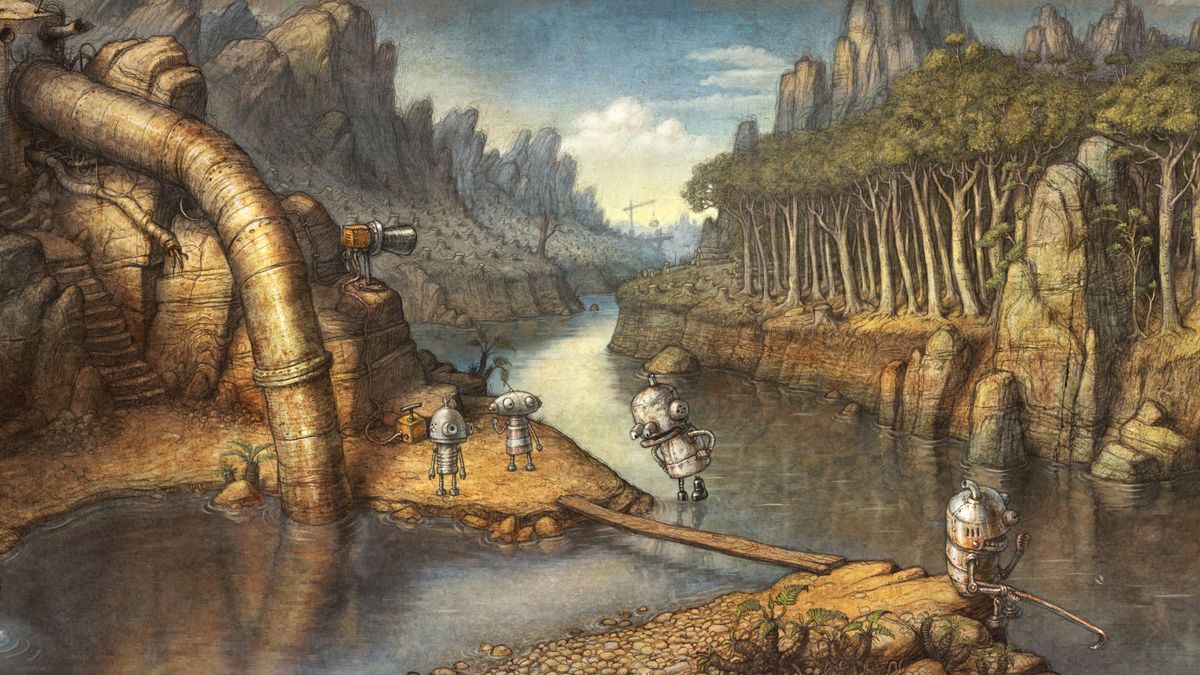
Image: Machinarium 2 screenshot showing the return of the hand drawn robot world. Credit: PC Gamer via Amanita Design.
Announcement After 17 Years
Per columnist Andy Chalk, Machinarium 2 is finally happening, 17 years after the original Machinarium charmed adventure fans with its wordless tale of love in a crumbling city of robots. The announcement arrived with an announcement trailer and a set of first screenshots, per columnist Andy Chalk in PC Gamer coverage published October 8 2026. For longtime fans of Czech studio Amanita Design, the news lands as both a surprise and a relief, because the studio had never hinted that more Machinarium was on the way.
Per columnist Andy Chalk, the original Machinarium was Amanita Design's first full length standalone game, and it made him an immediate fan of the studio. That personal framing matters for context, because this story is told as a columnist's appreciation as much as a news report. The article presents Machinarium as one of the writer's favorite adventures, which explains why a sequel 17 years later carries emotional weight beyond a routine announcement.
The timeline is straightforward. The original game launched in 2009. The sequel was announced in October 2026. That gap spans console generations, shifts in indie publishing, and a long run of other Amanita releases. Per columnist Andy Chalk, Amanita put out strong games across that span but never breathed even a hint that more Machinarium might be coming. The silence makes the timing the central question of the piece, and the studio's answer is disarmingly direct.
For readers new to the series, Machinarium is a point and click adventure about Josef, a small robot who must rescue his partner Berta from the Black Cap Brotherhood in a rusting mechanized city. The game tells its story without dialogue, using animation, thought bubbles, and visual logic. It won fans with hand drawn art, gentle humor, clever puzzles, and a memorable ambient score. That combination explains why a sequel announcement still resonates 17 years later.
Per columnist Andy Chalk, the new game is presented as a direct continuation rather than a reboot or spinoff. The trailer carries the familiar look and musical mood, and the studio confirms returning leads in key creative roles. For an indie sequel with this much history, continuity of craft is the headline. Fans are not being asked to trust a new team with an old name. They are being asked to trust the same studio, older and more experienced, returning to the world that started its run as a maker of full length games.
Why Now After 17 Years
The article gives two answers to the question of why now, one blunt and one intuitive. The blunt answer comes from Amanita chief executive and designer Jakub Dvorsky, who is quoted saying the team is not getting any younger and the world seems to be ending, so if the studio was ever going to make Machinarium 2, now is the right time. Per columnist Andy Chalk, that reasoning is dark but factually hard to dispute. The quote sets the tone for the whole piece, mixing humor, mortality, and urgency.
Dvorsky also thanked players who waited patiently across all these years. Per columnist Andy Chalk, Dvorsky said the studio could not have made the sequel without them. That gratitude is more than politeness. Machinarium built Amanita's audience, and that audience supported every stranger and smaller project that followed. Returning to Machinarium now reads as a thank you as well as a creative decision.
The second answer is quieter. In a separate exchange quoted in the article, Dvorsky said he tends to make these kinds of decisions more intuitively than rationally. Per columnist Andy Chalk, Dvorsky described the choice as instinct or feeling rather than logic. He said he had a feeling that the world of the robots was knocking on the door, asking to come out again. The idea seemed good at first, and then little by little he got really excited about it.
That intuitive framing fits Amanita's history. The studio is known for hand built worlds that feel dreamed rather than planned. Dvorsky's comment suggests Machinarium 2 was not greenlit by market analysis or anniversary marketing. It was greenlit because the creator felt the world asking to return. Per columnist Andy Chalk, the real reason was just a vibe situation, in the columnist's phrasing, and the longer quote supports that reading.
There is also a practical reading of the timing. Seventeen years gives the studio distance from the original while keeping the core team intact. Dvorsky is still leading design. The composer is back. The visual language is intact. Waiting longer could have meant losing that continuity. Acting now preserves the people who made the first game special, while the audience that grew up with it is old enough to welcome it back with fresh attention.
| Fact | Original Machinarium | Machinarium 2 |
|---|---|---|
| Announcement context | Launched in 2009 as first full length Amanita game | Announced October 2026, 17 years later |
| Studio lead | Amanita Design led by Jakub Dvorsky | Amanita Design led by Jakub Dvorsky returning |
| Heroes | Josef on a quest to rescue Berta | Josef and Berta both playable and swappable |
| Setting start | Crumbling robot city under Black Cap Brotherhood threat | Hidden valley after escape from the city |
| Music | Score by Tomas Dvorak, known as Floex | Score by Tomas Dvorak, known as Floex, returning |
| Release status | Released and widely reissued | No date yet, open for wishlisting |
Story and Setting
Per columnist Andy Chalk, Machinarium 2 picks up where Machinarium left off. Having escaped the city, Josef and Berta crash land in a hidden valley. The valley is populated by two robot tribes, one based in the Elektrona monastery and the other in the city of Oilton. Both groups face a grim future as their power slowly runs out. That setup gives the sequel a clear quest engine, two communities in decline, one valley with limited energy, and two heroes who owe their freedom to each other.
The move from city to valley is a smart sequel choice. The original game was dense, vertical, and mechanical, full of pipes, prisons, arcades, and plazas stacked inside a rusting metropolis. A hidden valley opens the palette without abandoning the fiction. Monasteries suggest ritual, quiet, and old knowledge. A city named Oilton suggests industry, appetite, and fuel. The contrast writes itself, and point and click puzzles thrive on contrasts between places with different rules.
The power crisis also echoes the original without repeating it. Machinarium was about a city decaying from crime and neglect. Machinarium 2 is about a refuge decaying from energy loss. Both stories are about caretaking machines that must fix the systems that sustain them. That theme suits Josef, whose whole identity is repair, stretching, tinkering, and quiet persistence. Adding Berta as a full partner widens the emotional frame from rescue to shared survival.
Per columnist Andy Chalk, the two tribes live in distinct homes, the Elektrona monastery and the city of Oilton. The article does not detail their politics, their leaders, or their histories. That restraint is normal for an announcement. Amanita typically reveals story through play, not lore dumps. Expect the tribes to embody different philosophies about power, memory, and community, and expect Josef and Berta to earn trust one repaired machine at a time.
For returning players, the emotional hook is simple. The first game ended with escape. The second game asks what escape is for. Josef saved Berta and left the city behind. Now they must build something together in a place that is itself running down. That is a grown up sequel premise, and it matches the age of both the creators and the audience. Seventeen years later, a story about keeping the lights on hits differently than a story about breaking out of jail.
Gameplay and Two Playable Heroes
Per columnist Andy Chalk, Machinarium 2 promises the same style of point and click puzzling as the original. That sentence will reassure purists. Amanita has experimented with rhythm, platforming, and exploration in other projects, but Machinarium means inventory puzzles, environmental observation, and wordless hint systems. The sequel is not pitched as a genre shift. It is pitched as a return to the puzzles that defined the studio.
The big mechanical change is that Josef and Berta are both playable and swappable at will. Per columnist Andy Chalk, the pair will have to work together to solve the game's puzzles. That single change unlocks a wide range of designs. Expect levers one robot must hold while the other passes through, height and reach puzzles that use their different bodies, split paths where one distracts and the other sneaks, and timing puzzles that ask the player to set up both heroes before triggering a machine.
Swappable dual heroes also solve a classic adventure problem, which is the lonely protagonist carrying every tool. With two leads, the inventory can split. Josef might keep his stretching and suction tricks while Berta brings her own abilities tied to her design. The article does not specify those abilities, so readers should treat specifics as unconfirmed. The confirmed fact is the structure, two playable robots, freely swapped, required to cooperate.
The Elektrona monastery and Oilton city split supports this design. Monasteries invite quiet puzzles about sound, light, sequence, and patience. Industrial cities invite puzzles about pressure, current, fuel routing, and repair. Moving the duo between those poles should keep the pace varied. One tribe may teach a rule that the other tribe's machines then twist, which is a classic Amanita teaching method, show a simple interaction, then complicate it gently.
Accessibility and hint design will matter. The original Machinarium famously locked its walkthrough behind a minigame, a playful but divisive choice. The article does not say how Machinarium 2 will handle hints. Modern Amanita games tend to be kinder, with clearer affordances and optional guidance. For a 2026 audience that includes both veterans and newcomers, a humane hint system would widen the sequel's reach without diluting its puzzles.
Visual Style 17 Years On
Per columnist Andy Chalk, the distinctive visual style of Machinarium is back, perhaps a little sharper than the first game, although the original still looks great in his judgment. That observation matches the screenshots described in the piece. Hand drawn rust, rivets, moss, paper textures, and soft industrial decay remain the signature. The upgrade reads as clarity and resolution rather than a new art direction.
That continuity is a technical achievement in itself. Seventeen years of tools, displays, and pipelines could easily tempt a studio to rebuild everything in a cleaner style. Amanita instead appears to have preserved the tactility that made Machinarium special. Every surface looks touched, patched, and lived in. Robots look bolted together from found parts. Valleys, monasteries, and oil towns give the artists new materials to weather, from stone and cloth to tanks and tubing.
The visual identity also carries narrative work. In a wordless game, art is dialogue. Posture, lighting, and prop placement tell players how a tribe feels about its future. A monastery running low on power might glow dimmer in its halls while keeping its candles neat. An oil city running low might look busier and more anxious, with queues, gauges, and patched pipes. Expect the valley to read as beautiful but tired, a place worth saving because the art makes you care before a puzzle asks you to act.
For PC players, the sharper look should scale well. The original Machinarium remains readable on modern screens because its shapes are bold and its hotspots are fairly telegraphed. A sequel with higher fidelity plates, cleaner edges, and the same strong silhouettes should stream and screenshot beautifully. The article does not list resolutions, system needs, or engine details, so those facts remain unconfirmed at announcement stage.
Music and the Return of Floex
Per columnist Andy Chalk, the return of Tomas Dvorak, known as Floex, matters as much as any art or puzzle reveal. Dvorak composed the original Machinarium soundtrack, which helped make the game distinctive and memorable. The article cites PC Gamer's Evan Lahti on the broader point that music is one of the best parts of Amanita games, and notes that Dvorak has collaborated with the studio across most of its catalog. His return is presented as expected but reassuring to have confirmed.
Dvorak told the columnist that when he composed the first Machinarium soundtrack years ago, he never anticipated such a huge response. Per columnist Andy Chalk, Dvorak said he was simply trying to have fun and enjoy the creative process, and he believes the exact same approach is what the sequel needs. That fun first philosophy is a useful corrective to sequel pressure. It reframes the job from topping a classic to enjoying a familiar instruments set with older hands.
Dvorak was candid about the challenge. Per columnist Andy Chalk, he said it is easy to fall into the trap of comparing new work to the original, and doubts occasionally creep in about whether the new music will be as engaging. His answer is to minimize those thoughts. Experience has taught him that the best way to create is simply to have fun. That single line may be the most useful insight in the whole article for anyone making a long delayed sequel.
Interestingly, Dvorak said he does not really think about Machinarium 2 as a sequel at all. Per columnist Andy Chalk, Dvorak called it more a beautiful project that provides a great opportunity to create a specific kind of music. He said the visuals have an incredible influence on the music universe he creates, and that Machinarium is exactly the kind of environment where things grow very naturally for him. That visual to music pipeline explains why Amanita scores feel so rooted in place.
The trailer music already sounds familiar in mood, but Dvorak set specific goals to differentiate the sequel score. Per columnist Andy Chalk, he wants the new soundtrack to be more melodic and musical, achieved through more simplicity, which he calls the hardest part. His usual method builds unique organic detail by layering many sounds together. This time he aims to do more with less, letting melody carry weight that texture once carried.
Time itself is an instrument here. Per columnist Andy Chalk, Dvorak said he feels the new music is more mature, simply because he is older. The columnist answers with a wry aside that readers are all older too, while praising the music that accompanies the piece. That exchange captures the sequel's emotional pitch. This is not nostalgia as marketing. It is aging as craft, the same hands returning with steadier rhythm.
| Music topic | What Dvorak said per columnist | Why it matters for players |
|---|---|---|
| Role | Returning composer known as Floex after defining original score | Sound continuity for a 17 year sequel |
| Method | Have fun and enjoy process, same as original | Lowers sequel pressure, favors playfulness |
| Sequel framing | Not thought of as sequel, seen as beautiful project | Fresh music, not pastiche of old tracks |
| Sound goal | More melodic and musical through more simplicity | Clearer themes players can hum and recall |
| Craft note | Simplicity is hardest part after layered organic detail | Restraint signals confidence in composition |
| Time factor | New music feels more mature because composer is older | Tone grows with audience that also aged |
Amanita Design Between the Games
Seventeen years is a career. Per columnist Andy Chalk, Amanita Design filled the gap with Botanicula, Chuchel, Creaks, and Phonopolis, among other work. Each of those games explored a different corner of the studio's sensibility, from swarming nature to slapstick comedy to somber painted dread to a stop motion city. None of them was Machinarium 2, and the columnist admits that every new Amanita release carried a faint wish that it was Machinarium, at least in the background.
That backlog matters because it proves the studio did not stall. Botanicula showed Amanita could score wonder for all ages. Chuchel showed it could do loud comedy without losing craft. Creaks showed it could sustain unease and scale. Phonopolis showed continued appetite for hand made cities and tactile worlds. A studio returning to Machinarium after that run is not retreating to safety. It is bringing new tools to an old home.
The article's personal note also charts fandom honestly. Per columnist Andy Chalk, Machinarium was Amanita's first full length standalone game and it made him an immediate fan. Later games more than lived up to the standard it set, yet the quiet wish for more Machinarium never fully left. That is a common shape for cult classics. The audience loves the new work and still keeps one candle lit for the old street. Now the studio has lit it themselves.
There is a business context too, even if the article keeps it light. Indie studios survive by balancing passion projects with reliable sellers. A beloved sequel with built in wishlists can fund the next strange idea. The article notes an Amanita sale running until October 15, which lets curious players catch up cheaply. That window turns announcement hype into catalog discovery, a tidy loop where the past pays for the future while the future honors the past.
For new players, the gap is actually an invitation. The original Machinarium is short by modern standards, readable without dialogue, and welcoming to all ages. Playing it now takes an evening or two and pays off directly in the sequel's opening, which assumes escape and arrival rather than retelling the jailbreak. Veterans get reunion. Newcomers get a clean two game arc with no homework beyond one warm classic.
Release Date and Wishlisting
Per columnist Andy Chalk, Machinarium 2 does not have a release date at this point. That is the correct expectation for an announcement of this kind. Art, music, story setup, and systems direction are confirmed. Schedule is not. Readers should treat any date seen outside official store pages as rumor until Amanita or its store listings say otherwise.
What is confirmed is wishlisting. Per columnist Andy Chalk, the game is up for wishlisting on Steam and GOG. Wishlisting is the actionable step for fans, since early lists help indies forecast interest and time their festivals, demos, and release windows. If you want this sequel to arrive in good shape, listing it now is more useful than speculating about launch day.
The article also notes that Amanita's previous releases, including the original Machinarium, are on sale at attractive prices until October 15. That date gives the announcement a practical tail. Players who missed the catalog can buy in cheaply, replay the original with fresh eyes, and arrive at the sequel literate in its visual grammar. For parents, students, and budget players, a sale window lowers the trial cost to nearly nothing.
Until more is shown, the sensible watch list is short. Watch for a gameplay deep dive that shows Josef and Berta swapping in a real puzzle. Watch for a music feature that names the sequel's themes and instruments. Watch for store page updates that add specs, languages, and accessibility notes. Per columnist Andy Chalk, the trailer vibe is right, but trailers are promises. Puzzles, pacing, and hint design will decide whether this return earns its 17 year wait.
FAQ
What is Machinarium 2 and who is making it?
Per columnist Andy Chalk, Machinarium 2 is a full sequel to Amanita Design's 2009 adventure Machinarium, led by Amanita chief executive and designer Jakub Dvorsky with music by returning composer Tomas Dvorak, known as Floex.
Why is Amanita making the sequel 17 years later?
Per columnist Andy Chalk, Dvorsky gave a blunt reason tied to age and the state of the world, plus an intuitive reason that the robot world felt like it was knocking and asking to return, with thanks to patient players.
What is the story setup for Josef and Berta?
Per columnist Andy Chalk, Josef and Berta escape the city and crash land in a hidden valley shared by the Elektrona monastery tribe and the Oilton city tribe, both facing dwindling power.
How does gameplay change with two heroes?
Per columnist Andy Chalk, the point and click puzzling returns in the original style, but Josef and Berta are both playable and swappable at will, and puzzles require the pair to work together.
Is the original music and art style back?
Per columnist Andy Chalk, the hand drawn visual style returns in sharper form and composer Tomas Dvorak is back, aiming for a more melodic and simple score that he describes as more mature.
When does Machinarium 2 release and where can it be wishlisted?
Per columnist Andy Chalk, there is no release date yet, but Machinarium 2 is open for wishlisting on Steam and GOG, while Amanita's older games are on sale until October 15.
Bottom Line
Machinarium 2 is the rare long delayed sequel that arrives with its soul intact. Per columnist Andy Chalk, Amanita Design returns 17 years later with Jakub Dvorsky leading, Floex scoring, Josef and Berta both playable, and a hidden valley split between Elektrona monastery calm and Oilton industry, all fading as power runs low. No release date is set, but wishlisting is open on Steam and GOG, and the back catalog is on sale until October 15. If you loved the wordless love story of 2009, this is the moment to replay it, list the sequel, and trust the team that never really left the workbench.
Sources
All facts above are per columnist Andy Chalk in PC Gamer coverage published October 8 2026. PC Gamer: Machinarium 2 announced 17 years later.