
No Summoning Stones Teleports Would Shrink The World
By Indie Kings | October 14, 2026
Updated October 14, 2026: World of Warcraft Forever will not include Summoning Stones. Per TechRadar relaying Blizzard, the reason is that easy quick access to teleports shrinks the world and erodes the core design pillars behind the Classic Plus project.
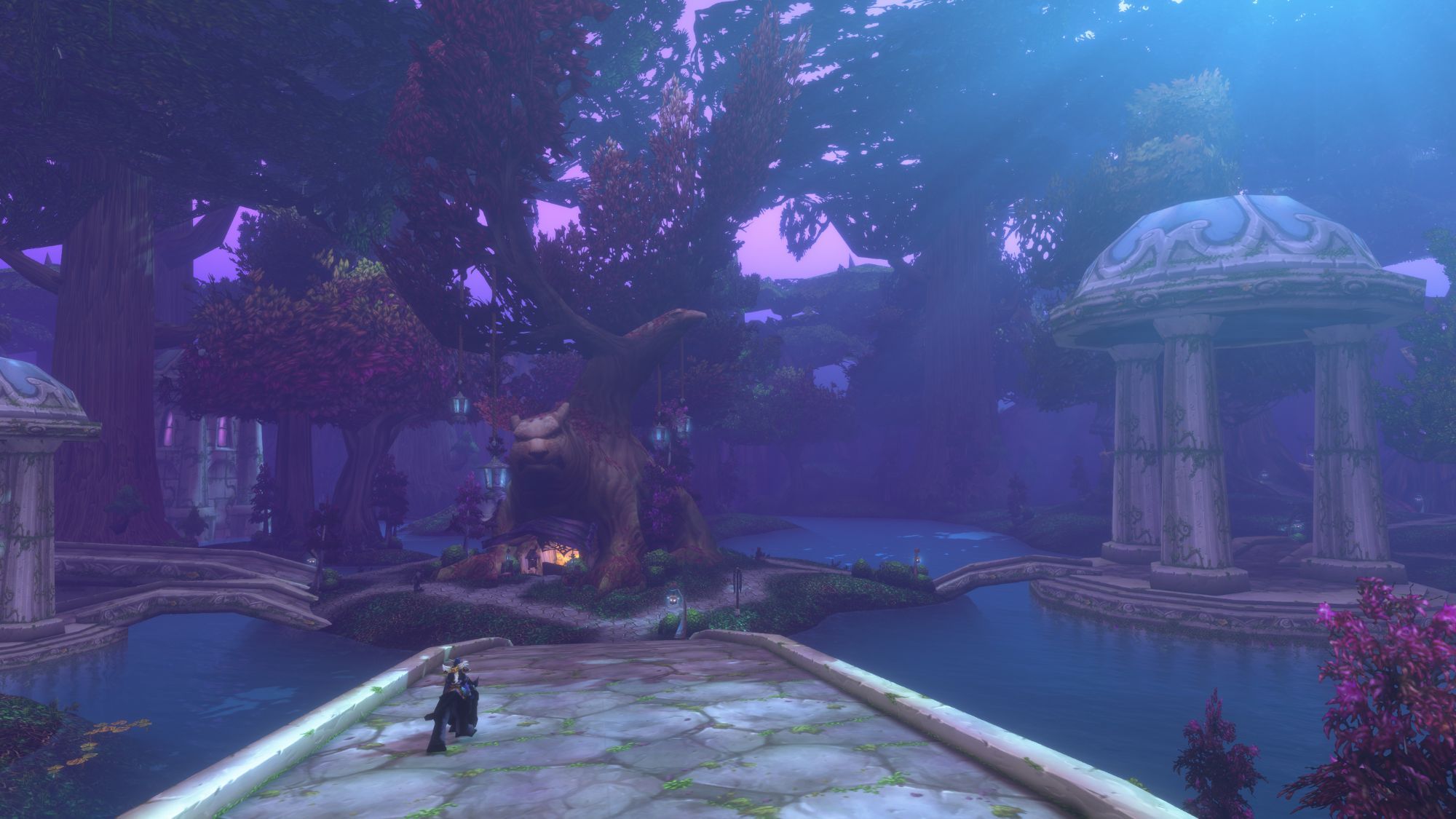
Image: WoW Forever world artwork. Credit: TechRadar.
The Short Answer On Summoning Stones
World of Warcraft Forever will not have Summoning Stones. That confirmation comes per TechRadar relaying Blizzard, based on an interview TechRadar Gaming conducted with the WoW Forever team and published on October 9 2026 with reporting by Demi Williams and contributions by Alex Whitelock.
The explanation from Blizzard is direct. The team said that easy quick access to teleports shrinks the world. It also said that certain convenience changes can very easily erode one or more of the design pillars that govern WoW Forever. Summoning Stones fall into that category, so they fail the internal test every proposed change must pass.
The exact quoted line relayed by TechRadar is that easy quick access to teleports shrink the world. The grammar of that quoted line is preserved as relayed in the source report. The meaning is plain even in that compressed form. Teleport access makes distances matter less, makes zones feel smaller, and makes travel feel less important.
Blizzard also tied the decision to two named pillars in particular. Summoning Stones fail muster against Nurture and Protect Social Experiences and against World as the Main Character. Those are two of the four pillars that define the Classic Plus approach for WoW Forever. The other two pillars still shape the project, but the source report names those two as the ones this feature conflicts with.
This article stays inside those verified facts. Every section below works from the TechRadar report of the Blizzard interview. The goal is to explain what the decision means, why the team framed it this way, and how it fits the wider Classic Plus philosophy described in that same interview.
Readers looking for a fast takeaway can stop at this section. WoW Forever has no Summoning Stones because Blizzard believes they would shrink the world, weaken social play, reduce Warlock identity, and erode the pillars the whole project rests on. The rest of this article unpacks each part of that reasoning in full.
What Summoning Stones Do In World of Warcraft
Meeting Stones, also known as Summoning Stones among the player base, are objects placed at dungeon and raid entrances in versions of World of Warcraft that include them. Their function is simple and practical. They let players teleport friends and group members to the entrance of the instance, which removes the need for everyone to travel there on foot or by mount.
Per TechRadar relaying Blizzard, that teleport function is the heart of the issue. The convenience is real. A group can gather faster. A late arrival can skip the run across the zone. A raid night can start sooner. But the same convenience removes the journey that Classic style play treats as part of the game rather than as waiting time before the game starts.
The source report makes the history clear on one point. This feature was not an option in vanilla World of Warcraft. It arrived as a convenient addition to retail World of Warcraft. That distinction matters because WoW Forever is described as an authentic Classic Plus experience built on the vanilla world, not as a copy of the retail feature set.
In retail World of Warcraft, summoning fits a faster pace of group formation and instance turnover. Players queue, gather, summon, enter, and repeat. In a Classic Plus framework, the design team wants the space between towns and dungeons to carry weight. The run to the dungeon is not dead time. It is time in the world, time with other players visible along the road, time when the size of the map can be felt.
The TechRadar report describes Summoning Stones as letting players teleport their friends to a raid or dungeon entrance. That single sentence carries the full mechanical definition used in this article. No extra mechanics are claimed here. No summoning ritual details, no party size rules, and no cooldown claims are added, because those details do not appear in the source interview as relayed.
Understanding that narrow definition helps the rest of the reasoning land. The team is not rejecting a complex system with many edge cases. It is rejecting the basic act of skipping travel to instances through easy teleport access. The stated reason is that skipping travel shrinks the world and works against the social and world centered pillars.
The Four Design Pillars Behind WoW Forever
Per TechRadar relaying Blizzard, the WoW Forever team uses four design pillars to stay true to the core design, pacing, and tone of the original game while building on the vanilla world. The interview centered on those pillars as the test for Classic Plus changes. The team said that making sure any change passes the muster of those pillars is a must.
The four pillars are named in the source report as Nurture and Protect Social Experiences, Approachable and Familiar, World as the Main Character, and Journey before destination. Each name describes a priority. Together they form the filter through which additions, removals, and adjustments are judged.
Nurture and Protect Social Experiences points to group life, cooperation, reputation, and repeated contact between players. Approachable and Familiar points to keeping the game readable and recognizable to players who know the original. World as the Main Character points to scale, place, travel, and atmosphere. Journey before destination points to valuing the path toward a goal, not only the reward at the end.
The source report says these pillars help the team build on the vanilla World of Warcraft world while staying true to established core design, pacing, and tone. That sentence is doing a lot of work. It presents WoW Forever as additive rather than revisionist. New material should extend the foundation, not replace the feeling of the foundation.
The table below restates the four pillars exactly as named in the TechRadar report and pairs each with the role described for it in that report. Nothing in the table goes beyond the source. The purpose is to keep the names exact so readers and search engines can match them to the original interview.
| Design Pillar | Role Described In The TechRadar Report | Link To The Summoning Stone Decision |
|---|---|---|
| Nurture and Protect Social Experiences | Protects group life and social contact as a core value of the project | Named directly as a pillar that Summoning Stones fail against |
| Approachable and Familiar | Keeps the experience readable and recognizable to players of the original game | Listed among the four governing pillars for all Classic Plus changes |
| World as the Main Character | Treats scale, place, and travel as central to the experience | Named directly as a pillar that Summoning Stones fail against |
| Journey before destination | Values the path toward a goal alongside the reward at the end | Listed among the four governing pillars for all Classic Plus changes |
The key procedural fact is the muster test. The team said that making sure any change passes the muster of those pillars is a must. That makes the pillars more than marketing language. They are a gate. A popular request can still be refused if it weakens a pillar. Summoning Stones are presented as exactly that kind of case.
The same interview also covered other Classic Plus topics, including discussion of the controversial new Skyborne race. That detail is included here only to place the summoning discussion in context. The summoning quotes come from a wider conversation about philosophy, not from an isolated statement. The TechRadar report frames the no summoning stones answer inside that broader design talk.
Why Easy Teleports Shrink The World
The central image in the Blizzard explanation is a shrinking world. The quoted line is that easy quick access to teleports shrink the world. The idea is spatial and psychological at once. When travel can be skipped, distances stop shaping decisions. Zones that once felt large start to feel like menus with scenery.
World as the Main Character is the pillar most tied to this point. If the world is meant to be the main character, then the world needs stage time. Roads, flight paths, mountains, forests, contested crossings, and long runs to far dungeons all give the world that stage time. A teleport removes that time and hands it back as saved minutes, but the savings come at the cost of presence.
Consider a dungeon placed at the far edge of a zone. Without summoning, every group member must reckon with that placement. Some ride together. Some take risks through hostile ground. Some learn the route, remember landmarks, and build a mental map. With summoning, only the first arrivals engage with the placement. Everyone else appears at the door. The dungeon location still exists on the map, but it stops functioning as a fact that organizes behavior.
That behavioral change is what shrinking means here. The map file does not get smaller. The lived map gets smaller. Players spend less time inside it, cross it less often, and remember less of it. Over many groups and many nights, the world contracts into a set of entrances rather than a continuous place.
Journey before destination reinforces the same logic. If the journey matters, then skipping the journey needs a strong justification. Convenience alone is not enough under this philosophy, because convenience is the thing that most directly trades journey time for destination speed. The team treats that trade as a loss when repeated at scale across the whole player base.
The source report does not quantify how much travel time summoning would save. This article therefore makes no claim about minutes saved, distances shortened, or usage rates. The argument stands on design language rather than numbers. Easy teleport access shrinks the felt world, and a project built around the world as main character cannot accept that shrinkage lightly.
Nurture And Protect Social Experiences
The other pillar named in the refusal is Nurture and Protect Social Experiences. The logic here is about how groups form, how players depend on each other, and how reputation and cooperation grow through friction. Travel creates friction. Friction creates contact. Contact creates social texture.
Without summoning, a group must coordinate movement. Someone knows the way and leads. Someone plays a class that can help the party move or survive the trip. Someone waits at the stone or at the entrance while others ride in. Delays happen. Conversations happen during delays. Those small interactions accumulate into server culture over weeks and months.
With summoning, much of that coordination collapses into a single action. The group still plays the dungeon together, but the social window around the dungeon narrows. The interview language suggests the team views that narrowing as erosion. The pillar does not only ask whether players group up. It asks whether the game nurtures and protects the experiences around grouping.
The quoted reasoning says that certain convenience changes can very easily erode one or more of those pillars. The word easily deserves attention. It signals that the damage is not dramatic or immediate. It is gradual and hard to reverse. One shortcut seems harmless. Many shortcuts across many systems quietly reset player expectations about how the game should feel.
That is why the team speaks of holding the line. Per TechRadar relaying Blizzard, the team said it has many different players with many different preferences joining for the journey, which makes it all the more important to hold the line on the pillars. Popular demand for convenience does not override the pillars. If anything, broad and divided preferences make a fixed standard more necessary.
This section stays inside the source by treating social experience in general terms. The report does not list specific social systems, guild tools, or chat features for WoW Forever. This article therefore does not invent any. The claim is limited to what the interview supports. Skipping travel reduces shared time in the world, and shared time in the world is part of what the social pillar protects.
Warlock Identity And Why It Matters
One of the most specific points in the Blizzard answer concerns class identity. The team said that easy teleport access marginalizes part of the identity of a class like Warlock. That sentence gives the abstract pillar debate a concrete victim. If anyone can summon, the summoning class loses something that made it distinct.
In the history sketched by the source report, summoning help was tied to player abilities rather than to a stone outside every door. The report does not spell out the Warlock toolkit in detail, and this article will not import spell names or mechanics from outside the source. The verified point is narrower but still strong. Teleport convenience overlaps with identity that currently belongs to a class, and spreading that power to an object weakens the class fantasy.
Class identity matters more in a Classic Plus context than in a faster modern context. Approachable and Familiar asks the game to remain recognizable. Players choose classes partly for the social role those classes play in the world. A class that can gather a scattered party has a story to tell about itself. A stone that does the same job for free tells that story instead, and tells it without the Warlock present.
The table below maps the verified conflict without adding new mechanics. It compares the three states described or implied in the source report. Vanilla had no such stones. Retail added them as convenience. WoW Forever refuses them to protect pillars and class identity. That is the full extent of the sourced comparison.
| Version | Summoning Stone Status Per The TechRadar Report | Design Consequence Stated Or Directly Implied |
|---|---|---|
| Vanilla World of Warcraft | Not an option in vanilla | Travel to dungeons remained part of the world experience |
| Retail World of Warcraft | Convenient addition that lets players teleport friends to raid or dungeon entrances | Faster gathering with less travel through the world |
| World of Warcraft Forever | Will not offer Summoning Stones | Protects World as the Main Character, protects social play, preserves Warlock identity |
The Warlock point also shows how the pillars interact. Marginalizing a class hits Nurture and Protect Social Experiences because classes are social roles. A party that needs a Warlock for gathering treats that player as valuable in a specific way. A party that uses a stone treats every member as interchangeable at the gathering stage. The dungeon still needs roles, but the road to the dungeon no longer does.
None of this denies that summoning is useful. The interview never calls the feature useless or broken. It calls it incompatible with the chosen pillars. That is a design judgment, not a quality judgment. A feature can be good in retail and wrong for Forever at the same time, because the two projects optimize for different feelings.
Convenience Changes And Pillar Erosion
The most quotable general principle in the interview is the erosion warning. The team said that certain convenience changes can very easily erode one or more of those pillars. That sentence explains far more than the summoning decision. It describes a theory of how games drift away from their identity.
Erosion is a slow metaphor. Water does not break rock in one strike. It wears it down through contact over time. Convenience works the same way in this telling. Each change removes a small friction. Each removal feels good in isolation. Together they reshape expectations until the original pacing and tone are gone.
The muster test is the defense against that drift. The team said that making sure any change passes the muster of those pillars is a must. Every proposal, however popular, must answer the same questions. Does it protect social experience. Does it keep the world central. Does it respect the journey. Does it stay approachable and familiar. If it fails, it does not ship, even if players ask for it.
Summoning Stones are offered as one of those cases. The team said summoning stones are one of those, meaning one of the convenience changes that erode pillars. The phrasing is categorical. It does not leave room for a limited version, a restricted stone, or a compromise placement. The reported decision is a refusal, not a redesign.
This stance will divide players, and the interview acknowledges that division indirectly. The team said it has many different players with many different preferences joining for the journey. That is a diplomatic way of saying the audience does not agree with itself. Some players want Classic purity. Some want modern comfort. Some want a mix that shifts by mood. The pillars exist to decide those disputes by principle rather than by vote.
The erosion framing also explains why the team talks about holding the line. A line that moves with every request is not a line. It is a suggestion. Holding the line means accepting short term disappointment from players who want a shortcut in order to protect long term coherence for the whole server.
Twenty Two Years Of Data On Convenience
Per TechRadar relaying Blizzard, the team said it has 22 years of data on how quality of life or convenience changes impacted the social fabric of the game. That is the longest view cited in the interview. It turns the summoning refusal from a taste preference into an evidence informed position.
Twenty two years covers the full arc from vanilla through retail and through Classic revivals. The team has watched gathering tools, travel options, grouping systems, and catch up mechanics arrive one by one. Each promised to remove annoyance. Each also changed how often players met in the world, how long groups stayed together, and how much reputation mattered on a server.
The phrase social fabric is doing important work in that quote. Fabric suggests weave. Threads cross and hold each other. Pull one thread and the cloth loosens elsewhere. Convenience changes pull threads. Faster gathering means less waiting together. Less waiting together means fewer conversations. Fewer conversations mean weaker bonds. Weaker bonds mean groups dissolve faster. Each step is small. The cumulative loosening is the point.
The source report does not publish that data or cite specific studies, patches, or metrics. This article therefore treats the 22 years line as a statement of institutional experience rather than as a dataset readers can inspect. The verifiable fact is that Blizzard claims this history and says it informs the WoW Forever approach. No numbers beyond the 22 year span are added here.
That history also answers a likely objection. Players may ask why the team will not simply try summoning and remove it if it harms the game. The erosion theory says removal after the fact is much harder than refusal before the fact. Once players plan around a shortcut, taking it away feels like punishment. Holding the line early avoids that cycle.
The 22 years point connects directly to the different path language that follows. Experience with convenience is what makes the team confident in refusing it here. The past taught what shortcuts cost. WoW Forever is the attempt to apply that lesson from the start rather than to relearn it through another cycle of addition and regret.
The Different Path For WoW Forever
Per TechRadar relaying Blizzard, the studio said it is going down a different path with WoW Forever. Every update it introduces will be well informed by that experience and regulated by the pillars. The team added that it is a great place to be. Those lines close the quoted section of the interview on a confident note.
A different path means divergence from retail, not just a slower copy of it. Retail continues to optimize for accessibility, speed, and breadth of activities. Forever optimizes for coherence, place, and social weight. Both directions can be defended. They simply serve different desires. The interview presents Forever as the branch where restraint is a feature.
Regulated by the pillars is a strong phrase. Regulation implies ongoing enforcement, not a one time mission statement. Future content, systems, and quality of life requests will face the same gate. Players should therefore read the summoning refusal as precedent. Other teleports, queue tools, and skip mechanics will likely face the same skepticism when measured against World as the Main Character and Journey before destination.
Well informed by experience points back to the 22 years of data. The team is not guessing about what convenience does. It claims to know, and to be choosing with open eyes. That framing asks players to trust institutional memory over immediate desire. It will persuade players who share the Classic valuation of friction and frustrate players who view friction as outdated.
It is a great place to be reads as morale as much as strategy. The team sounds glad to have clear constraints. Constraints simplify decisions. When pillars are fixed, debates end faster. Designers can say no without relitigating philosophy every time. That clarity is presented as a benefit of the Classic Plus setup rather than as a burden.
For readers tracking WoW Forever news, the different path line is the best predictor of future answers. Expect more refusals explained in pillar language. Expect additions framed as extensions of vanilla tone rather than imports from retail. The summoning decision is one instance of a rule that will keep appearing.
Vanilla Roots Versus Retail Convenience
The TechRadar report grounds WoW Forever as an authentic Classic Plus experience built on the vanilla world. It also says the pillars keep the team true to the core design, pacing, and tone of the original game. Those two descriptions together define the vanilla versus retail contrast that animates the summoning debate.
Vanilla design treated the world as content. Travel was content. Waiting for group members was social content. Running through dangerous territory to reach a dungeon was adventure content. The destination mattered, but the game refused to treat everything before the destination as waste. Journey before destination names that refusal as a pillar.
Retail design, by contrast, treats player time as the scarce resource to protect. Systems compress the space between intention and action. Queue from anywhere. Teleport to the door. Finish faster. Start the next run. That approach respects busy schedules and large content catalogs. It also, in the Blizzard telling, shrinks the world and thins the social weave.
Classic Plus is the attempt to keep the vanilla valuation of time while still adding new material. The TechRadar report says the team builds on the vanilla world. Building implies new zones, stories, or systems that feel native to the original rather than grafted from later eras. The pillars are the compatibility check for that new material.
Summoning Stones fail that check precisely because they are associated with the retail valuation of time. They were not an option in vanilla and arrived later as convenience. Adding them to Forever would import retail pacing into a project whose identity depends on resisting that pacing. The refusal is therefore about lineage as well as mechanics.
This contrast should not be read as hostility toward retail players. The interview notes many different players with many different preferences. Retail remains available for those who prefer it. Forever is positioned as the branch for players who want the world to feel large again and who accept slower gathering as the price of that largeness.
What This Means For Players
For players planning to join WoW Forever, the practical meaning is simple. Plan to travel. Groups will need to coordinate movement to dungeons and raids without a stone shortcut at the door. Stragglers will need guides, summons from class abilities where those exist, or simply more time. Raid nights will need longer gathering windows.
That reality rewards certain habits. Knowing routes matters. Owning and using mounts matters. Befriending players who know the world matters. Guilds that organize travel, set meeting times with buffers, and teach paths to newcomers will have an edge. Solo players who learn the map will feel more self sufficient than those who wait to be pulled everywhere.
The decision also shapes class value in the social market. The interview singles out Warlock identity as diminished by stones. Without stones, whatever gathering help classes provide regains scarcity value. The source does not detail those abilities, so this article claims no specific spell behavior. The general point stands. When objects cannot do the job, players who can do the job matter more.
Expect debate to continue. Convenience requests rarely end with one refusal. Players will propose limited stones, stones only for raids, stones only for guild groups, or stones with costs attached. Under the stated philosophy, each variant still faces the same pillar test. If it provides easy quick access to teleports, it shrinks the world by the same logic, whatever limits surround it.
The wider signal is about trust. The team asks players to trust the pillars over their own short term preferences. That ask works best when refusals stay consistent and when additions visibly honor the same pillars. Each future update regulated by the pillars will either strengthen or weaken confidence in this early call.
None of the practical points above add new game systems. They describe player behavior under the verified rule. No summoning stones means travel stays manual, social coordination stays necessary, and the world keeps the stage time that World as the Main Character demands. Players who want that bargain will find it here. Players who do not will find faster gathering elsewhere.
Frequently Asked Questions
Will World of Warcraft Forever have Summoning Stones?
No. Per TechRadar relaying Blizzard, WoW Forever will not offer Summoning Stones because easy quick access to teleports shrinks the world and erodes the core design pillars.
What exact reason did Blizzard give for refusing Summoning Stones?
The team said easy quick access to teleports shrinks the world and marginalizes part of the identity of a class like Warlock. It said summoning fails muster against Nurture and Protect Social Experiences and World as the Main Character.
What are the four design pillars for WoW Forever?
The four pillars named in the TechRadar report are Nurture and Protect Social Experiences, Approachable and Familiar, World as the Main Character, and Journey before destination. The team uses them to stay true to the core design, pacing, and tone of the original game.
Were Summoning Stones part of vanilla World of Warcraft?
No. Per TechRadar relaying Blizzard, Meeting Stones known as Summoning Stones were not an option in vanilla but arrived as a convenient addition to retail World of Warcraft for teleporting friends to raid or dungeon entrances.
How does the decision connect to 22 years of experience?
Blizzard said it has 22 years of data on how quality of life and convenience changes affected the social fabric of the game. WoW Forever takes a different path where updates are informed by that experience and regulated by the pillars.
Who reported this and when?
TechRadar Gaming reported the interview on October 9 2026, written by Demi Williams with contributions by Alex Whitelock. This article relays that report and adds no separate sourcing.
Bottom Line
World of Warcraft Forever will not have Summoning Stones. Per TechRadar relaying Blizzard, easy quick access to teleports shrinks the world, erodes core design pillars, and marginalizes Warlock identity. The refusal follows the muster test against Nurture and Protect Social Experiences and World as the Main Character, informed by 22 years of experience with convenience changes and enforced as part of a different path for the Classic Plus project.
Sources
Per TechRadar relaying Blizzard. Full detail in the source report: