
Overwatch Hitbox Changes Leave Projectile Mains Asking
By Indie Kings | October 12, 2026
Updated October 12, 2026: The October 6 Reign of Talon patch changed Overwatch hero hit volumes in both directions and reduced hitscan projectile sizes, and Blizzard expects the game to feel about the same. Per Duskforge, early player reports around Mei icicles and Pharah rockets disagree, so this guide breaks down the verified numbers, what Blizzard said, and what projectile players should test next.
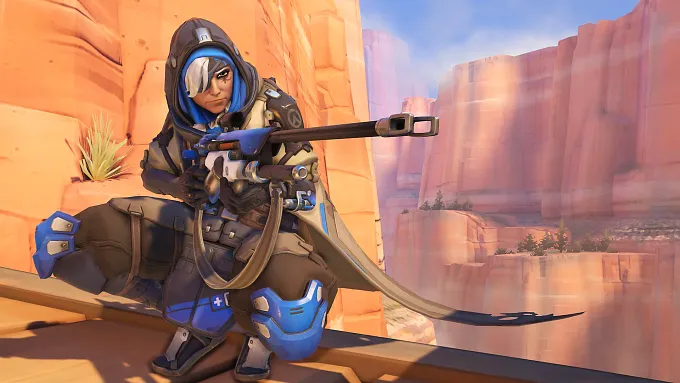
Image: Overwatch Ana scope artwork. Credit: Duskforge.
What changed on October 6
Per Duskforge, the October 6 Reign of Talon patch included a broad pass on hero hit volumes. The goal stated in the patch notes was consistency across the roster. Some hit volumes went up. Some hit volumes went down. The patch did not move every hero in the same direction.
The same patch also changed hitscan projectiles globally. Both the large size and the small size were reduced. Blizzard framed the projectile change as a balance measure tied to the new hit volumes. The stated intent was to maintain a similar level of effectiveness.
This article uses only the facts reported by Duskforge in the October 11, 2026 report by Neviriah. That report cites the official October 6 patch notes and official developer comments. It also summarizes early community discussion from Competitive Overwatch threads and other Reddit discussions. No other numbers are added here.
For readers new to these terms, a hit volume is the invisible shape around a hero that the game checks when a shot arrives. A projectile size is the size of the shot itself that the game checks against that shape. When either value changes, the result of borderline shots can change. That is why players pay close attention even when developers expect the overall feel to stay similar.
The key point from Blizzard, per Duskforge, is that overall gameplay should not feel very different. The key point from early player posts is that some projectile shots feel easier to land. Both points can be true at the same time during the first days of a patch. Early impressions are useful, but they are not the same as settled evidence.
This guide therefore separates verified patch facts from player impressions. The first sections list the confirmed volume and projectile numbers. The later sections explain the context around those numbers, why projectile heroes are part of the discussion, and how to interpret early reports without overstating them.
Hero hit volume changes
Per Duskforge, the Reign of Talon patch moved hit volumes in both directions. Two specific examples were given with raw values rather than percentages. Kiriko torso hit volume was increased from 17.7 to 21. Zenyatta hit volume went down from 32 to 30. Those two examples show the two way nature of the pass.
The patch notes used raw values on purpose. Per Duskforge, Blizzard said raw values give a clearer understanding of the change relative to other heroes. A percentage alone can hide whether a hero was already large or small compared with similar heroes. Raw values let players compare one hero with another hero of a similar type.
The broader pass covered a lot of heroes. Per Duskforge, Blizzard said the work was meant to bring hit volume sizes closer to other similar types of heroes. That language matters. It signals that the goal was roster wide consistency, not a buff or nerf aimed at one hero. It also signals that similar heroes were grouped together for comparison.
At the same time, Blizzard said hit volume sizes are not strictly standardized. Per Duskforge, the reasons include varying size of visual models, unique animation sets, and a wide range of movement abilities. Engagement range and mobility also influence the values. In other words, two heroes can look different, move different, animate different, and fight at different ranges, so their hit volumes will still differ.
The table below records only the two hero values confirmed in the Duskforge report. It does not add values for other heroes. Other heroes were part of the broad pass, but their individual numbers were not included in the source used for this article, so they are not listed here.
| Hero and hit volume | Before October 6 patch | After October 6 patch | Direction |
|---|---|---|---|
| Kiriko torso hit volume | 17.7 | 21 | Increased |
| Zenyatta hit volume | 32 | 30 | Decreased |
The Kiriko change is an increase. A larger torso volume means the checked area around the torso is larger than before. The Zenyatta change is a decrease. A smaller volume means the checked area is smaller than before. Per Duskforge, Blizzard still expects aiming at targets to feel more consistent on average rather than sharply easier or harder across the board.
Players sometimes ask whether a larger number always means easier to hit in practice. The honest answer is that the number is only one part of the hit calculation. Model pose, animation, movement speed, range, and projectile size also matter. That is why Blizzard paired the volume pass with a projectile size change, and why Blizzard said it will keep watching travel time weapons.
Another common question is whether these two examples represent the full patch. They do not. They are examples from a broader roster pass. Per Duskforge, the patch notes describe a broad pass across the hero roster. Readers should not treat Kiriko and Zenyatta as the only heroes touched. They should treat them as the only two with raw values repeated in the source for this article.
For consistency, this article repeats those values exactly as reported. Kiriko torso from 17.7 to 21. Zenyatta from 32 to 30. Units were described as hit volume values in the source. No conversion or extra rounding is applied here.
Hitscan projectile size changes
Per Duskforge, the same October 6 patch reduced global hitscan projectile sizes. The large size went from 0.07 to 0.04 meters. The small size went from 0.04 to 0.02 meters. Both sizes were cut. Both changes use meters as the unit.
These are global values. That means they apply as categories rather than as one hero adjustment. When a hitscan shot falls in the large category, the new size applies. When a hitscan shot falls in the small category, the new size applies. The source does not list which weapons sit in which category, so this article does not assign weapons to categories.
Blizzard linked the projectile change directly to the hit volume updates. Per Duskforge, the developer comment said the hit volume updates were smoothing out some hit detection inconsistencies between heroes. The projectile size reduction was then made to maintain a similar level of effectiveness. In plain terms, larger target volumes in some cases plus smaller shot sizes is meant to land near the prior feel.
The table below records only the two global projectile changes confirmed in the source. No other projectile values are added.
| Hitscan projectile category | Before October 6 patch | After October 6 patch | Direction |
|---|---|---|---|
| Global large hitscan projectile size | 0.07 meters | 0.04 meters | Reduced |
| Global small hitscan projectile size | 0.04 meters | 0.02 meters | Reduced |
The size reduction is substantial on paper. Large went from 0.07 to 0.04 meters. Small went from 0.04 to 0.02 meters. Still, paper size alone does not decide how a match feels. Target volumes changed at the same time. Net results depend on the pairing of shot size with target volume for each engagement.
Blizzard also flagged travel time projectiles for further observation. Per Duskforge, Blizzard said it will keep an eye on how the changes impact the consistency of projectiles with travel times as well. That sentence is important for projectile hero players. It shows Blizzard knows the global hitscan adjustment may interact with slower shots in ways that need live data.
Readers should note the wording carefully. The patch changed hitscan projectiles. The monitoring note covers projectiles with travel time. Those are related but not identical groups. The source does not say that travel time projectile sizes were changed. It says Blizzard is watching how the overall changes affect their consistency.
For players who track patch history, the date anchors matter. The patch date is October 6, 2026. The Duskforge report date is October 11, 2026. This Indie Kings article is dated October 12, 2026. That timeline places this guide very early in the community testing window, when impressions are fresh and data is limited.
Why Blizzard made the change
Per Duskforge, Blizzard gave two linked reasons. First, hit detection had inconsistencies between heroes. Second, a roster wide volume pass could smooth those inconsistencies and make aiming at targets more consistent on average. The projectile size change was then added to hold effectiveness near its prior level.
The developer comment on hero hit volumes explains the method. Per Duskforge, Blizzard did a broad pass across the hero roster to bring hit volume sizes closer to other similar types of heroes. Raw values were noted rather than percentages for clearer comparison. The values remain influenced by visual model size, animation sets, movement abilities, engagement range, and mobility.
The developer comment on hitscan projectiles explains the counterweight. Per Duskforge, Blizzard reduced the size of hitscan projectiles as a result of the hit volume updates smoothing out hit detection inconsistencies. The goal was to maintain a similar level of effectiveness. That is a classic balance pairing. One system moves toward consistency. The other system is adjusted so net power does not drift.
The expected outcome was stated plainly. Per Duskforge, Blizzard said overall it should not feel very different in gameplay. A related paraphrase in the source is that the game should feel pretty much the same. Both wordings point to the same expectation. Average feel should stay stable even though individual target volumes moved.
That expectation makes sense as a design goal. If some volumes go up and others go down, and shot sizes come down globally, the average engagement may indeed feel familiar. But averages can hide specific cases. A hero with an increased torso volume may still feel different to fight against with slow shots. A hero with a decreased volume may still feel different at long range. Live testing is needed to see where the average holds and where it breaks.
Blizzard left the door open for follow up. Per Duskforge, Blizzard said it will keep watching how the patch affects weapons with travel time. That is not a promise of a specific future change. It is a signal that travel time consistency is on the watch list. Players who main projectile heroes should read that as an invitation to give specific, calm feedback after more games.
It is also worth noting what Blizzard did not say in the quoted material. The source does not quote Blizzard saying projectile heroes were buffed. It does not quote Blizzard saying projectile heroes were nerfed. It does not quote Blizzard assigning Mei, Pharah, Torbjorn, or Venture a new power level. Those hero names come from player discussion, not from the developer comments quoted in the source.
What it may mean for Mei, Pharah, Torbjorn and Venture
Per Duskforge, players are already asking what the hitbox and hitscan changes mean for weapons with travel time, like Mei icicles and Pharah rockets. In one Competitive Overwatch thread, players said that after the update it felt easier to hit things with slow projectiles like Mei icicles and Pharah rockets. Torbjorn and Venture came up too. Other Reddit discussions show players still working out how the changes feel together.
Those reports are first impressions, not proof. Per Duskforge, the article cautions that it is still too early to judge. The posts are described as intriguing first impressions that do not prove projectile heroes got stronger in general. That caution is worth repeating. A few days of matches can surface real patterns, but they can also reflect placebo, small samples, map mix, rank mix, or excitement about a new patch.
Still, the question is natural. Mei icicles are slow projectiles that reward prediction and timing. Pharah rockets are slow projectiles that reward prediction, spacing, and splash awareness. When target volumes shift across the roster, the margin on those prediction shots can shift too. If a torso volume is larger than before, a near miss may now connect. If a volume is smaller than before, a former edge hit may now miss. Players will feel those edge cases first.
Torbjorn and Venture entered the same discussion. Per Duskforge, those two heroes came up alongside Mei and Pharah in player threads. The source does not provide numbers for their weapons or volumes. It only notes that players mentioned them while testing the patch. This article therefore names them as part of the discussion without assigning them a buff or nerf.
The interaction with hitscan changes adds another layer. The patch reduced hitscan projectile sizes. That change is aimed at hitscan shots. Slow projectiles with travel time are a different timing skill. Even if hitscan feel is held stable by design, travel time shots may respond different to the new target volumes because the shot itself was not resized in the same quoted change. That is exactly the area Blizzard said it is watching.
Map geometry and movement also shape early reports. A projectile that feels strong on a tight control map may feel normal on an open escort map. A hero that feels easy to hit while walking in a straight line may feel normal once players adjust strafes and cooldown use. Early threads often mix all of these situations together. That mixing is normal, but it means no single thread can settle the question.
Rank and role mix matters as well. Projectile heroes are played different at different ranks. Aim styles, team support, healing pressure, and tank choice all affect how often a slow shot lands. A patch that changes target volumes can play out different in each bracket. That is another reason to treat first week posts as leads for testing rather than as final verdicts.
The most useful way to read the current discussion is as a testing agenda. Mei icicles deserve attention because players named them. Pharah rockets deserve attention because players named them. Torbjorn and Venture deserve attention because players named them. But attention means structured testing over more games, not instant claims about the whole projectile class.
How to test the changes in your own matches
Since the patch is new, personal testing is more useful than debate. The goal is to learn whether your own accuracy with travel time shots has changed, and where. A simple method works best. Pick one hero, one map type, and one range band at a time. Record what you see over several sessions rather than one night.
Start with Mei if you play her. Focus on mid range icicle shots at strafing targets. Note which heroes feel different to hit. Note whether the difference shows up on head level shots, torso level shots, or both. Per Duskforge, only Kiriko torso and Zenyatta volumes have confirmed numbers in this source, so avoid claiming exact changes for other targets. Describe what you feel in plain terms and keep the sample large.
Then test Pharah if you play her. Focus on direct rocket hits rather than splash pressure. Note whether edge rockets that once missed now connect. Note whether the change, if any, shows up more against larger torso volumes or across many heroes. Keep range consistent during each test block. Changing range and target at the same time makes results hard to read.
If you play Torbjorn or Venture, apply the same discipline. Test one weapon mode at a time. Test at one range band at a time. Give each hero several games before drawing a view. Early patch periods include many players trying new things, so match chaos is higher than normal. A longer sample smooths that noise.
Hitscan players should test too. The global large and small hitscan sizes are smaller now. Per Duskforge, Blizzard made that change to maintain similar effectiveness alongside the new volumes. If your hitscan accuracy feels stable, that supports the design goal. If it feels off in a specific matchup, note the hero, the range, and the map. Specific notes help more than broad claims.
Support and tank players can help by watching incoming shots. Note whether you feel hit more often by slow shots in the same positions you held before the patch. Note whether the difference tracks certain attackers or certain maps. Position habits matter here. If you changed your own positioning after the patch, say so in your notes. That context keeps the test honest.
Custom games and aim trainers can add structure, but they cannot replace live matches. Bots move different from players. Real opponents use cover, cooldowns, and unpredictable strafes. Use structured drills to warm up, then confirm any pattern in competitive or quick play games. Treat drill results as hints and match results as the stronger signal.
Finally, keep patch dates in your notes. Write down that the base patch is October 6, 2026. Write down that your games came after that date. If Blizzard makes a later tuning pass, dated notes will let you compare before and after without guessing. That habit also helps when reading Reddit threads, since posts from different days may reflect different levels of adjustment.
What to watch next
Per Duskforge, Blizzard is keeping an eye on how the changes impact travel time projectile consistency. That makes live data the next driver. Watch for official follow up notes, not just forum momentum. If Blizzard sees a clear drift in effectiveness, the next signal will likely appear in patch notes or developer comments.
Watch the scope of future notes. A follow up could touch volumes again. It could touch projectile sizes. It could touch individual heroes. It could also confirm that no follow up is needed. The source used here does not predict which path Blizzard will take. It only confirms that observation is ongoing.
Watch community testing quality. The best threads will name maps, ranks, ranges, and sample sizes. They will separate Mei icicles from Pharah rockets rather than lumping all projectiles together. They will separate direct hits from splash value. They will note whether Torbjorn and Venture patterns hold over more games. Threads with those details deserve more weight than threads with only a headline claim.
Watch for roster wide context. Kiriko torso and Zenyatta are only two data points. The broad pass touched many heroes. As players document more matchups, the picture may show that some projectile matchups feel easier while others feel harder. That mixed result would still fit the stated goal of greater consistency on average. Average stability and specific matchup shifts can coexist.
Watch your own hero pool. If you main Mei, track icicle accuracy by week. If you main Pharah, track direct hit rate by week. If you flex to Torbjorn or Venture, track those weapons separately. Personal data over two to four weeks will tell you more than launch week debate. It will also show whether any early edge fades as opponents adjust movement and cover use.
Watch terminology. Hit volume, hitbox, projectile size, hitscan, and travel time are sometimes mixed together in casual posts. Clear terms lead to clear tests. A hit volume change affects the target. A projectile size change affects the shot. A travel time weapon adds prediction to the shot. Keeping those ideas separate makes your feedback easier for other players and for Blizzard to use.
For more updates on balance adjustments, heroes, and gameplay changes, per Duskforge, readers are pointed to an Overwatch news hub. That hub is the natural place to check for follow up coverage as the community sample grows. This guide will make more sense once read alongside that ongoing coverage and any later official notes.
FAQ
Did the October 6 Reign of Talon patch change Overwatch hitboxes?
Yes. Per Duskforge, the October 6 patch changed hit volumes for many heroes in both directions as part of a broad consistency pass. Kiriko torso went from 17.7 to 21 while Zenyatta went from 32 to 30.
Did hitscan projectile sizes change in the same patch?
Yes. Per Duskforge, global large hitscan projectile size went from 0.07 to 0.04 meters and global small hitscan projectile size went from 0.04 to 0.02 meters. Blizzard tied that change to the new hit volumes to maintain similar effectiveness.
Does Blizzard expect the game to feel different?
No, not overall. Per Duskforge, Blizzard said aiming should become more consistent on average but overall should not feel very different in gameplay. That is the stated expectation, not a guarantee for every matchup.
Why are Mei and Pharah players talking about the patch?
Per Duskforge, players in a Competitive Overwatch thread said slow projectiles like Mei icicles and Pharah rockets felt easier to hit after the update. Torbjorn and Venture were mentioned too. The source calls these early impressions, not proof of a general projectile buff.
Did travel time projectile sizes change?
The source used here confirms only the hitscan size reductions. Per Duskforge, Blizzard said it will keep watching how the changes affect consistency of projectiles with travel times. No travel time size change is stated in the quoted patch material.
What should projectile players do now?
Keep playing normal games and track results by hero, map, and range over more than a few sessions. Focus on Mei icicles, Pharah direct rockets, and your Torbjorn or Venture weapons separately. Specific dated notes will be more useful than early broad claims.
Bottom Line
Per Duskforge, the verified facts are narrow and clear. The October 6 Reign of Talon patch adjusted hero hit volumes in both directions for consistency, with Kiriko torso from 17.7 to 21 and Zenyatta from 32 to 30 as the two stated examples. Global large hitscan projectile size moved from 0.07 to 0.04 meters and global small hitscan size moved from 0.04 to 0.02 meters. Blizzard expects similar overall feel and is watching travel time projectile consistency.
Player reports around Mei icicles, Pharah rockets, Torbjorn, and Venture are real discussion, but they remain early. Per Duskforge, those posts are intriguing first impressions that do not yet prove projectile heroes are stronger. More games, clearer notes, and official follow up will decide the question. Until then, test one hero and one range at a time, and treat week one claims with care.
Sources
Per Duskforge. Reporting by Neviriah, published October 11, 2026.