
PvP Pinball Is Such A Good Idea Never Played Before
By Indie Kings | October 12, 2026
Updated October 12, 2026: Bumper Bout is two player competitive pinball with a demo on Steam now and a full launch dated October 29. Per columnist Jody Macgregor reporting for PC Gamer from PAX Australia, the hook is simple: play pinball on your half of the screen while your rival plays on theirs, then flick attack balls across the divide to ruin their round.
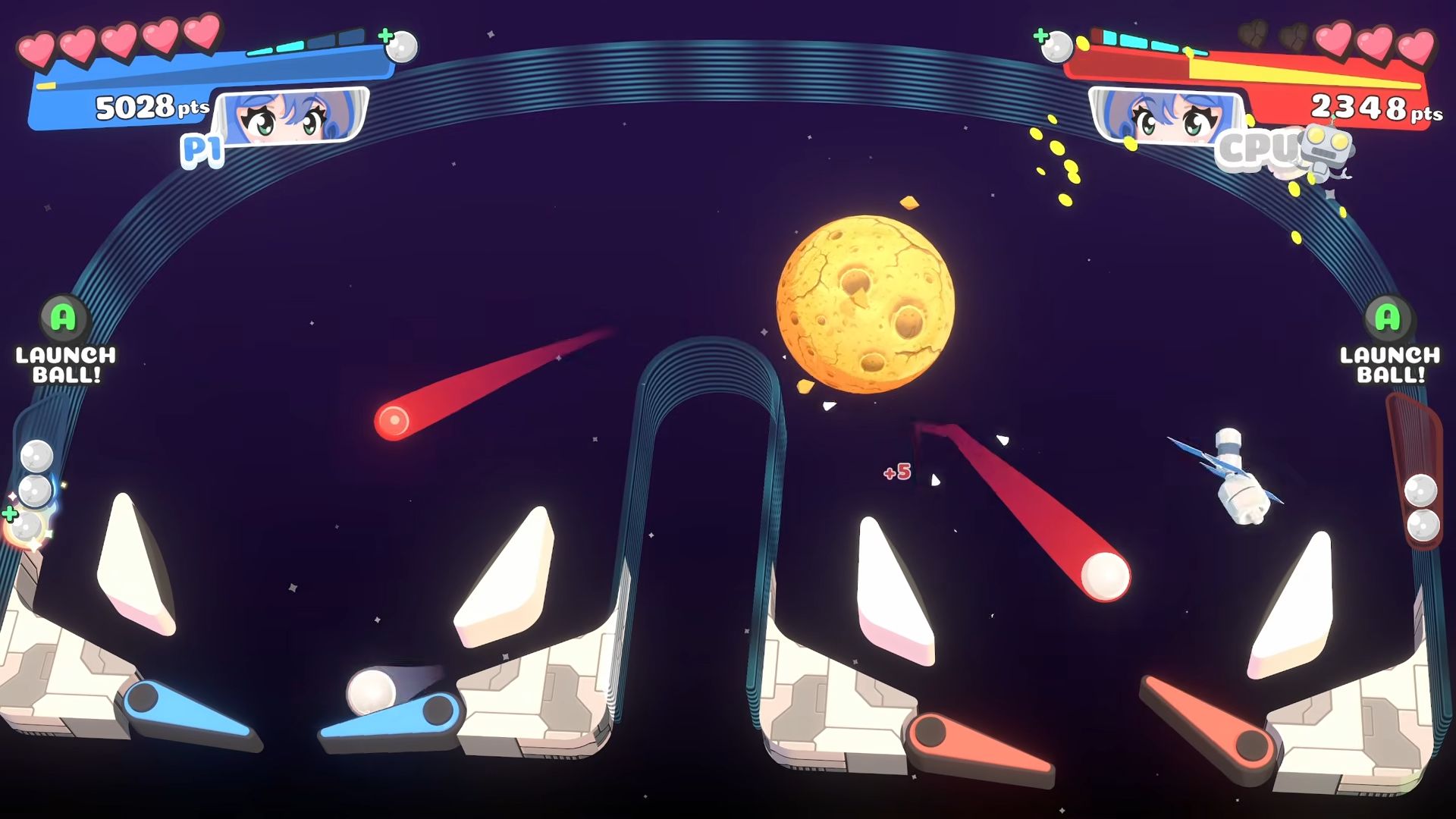
Image credit: PC Gamer
Why the idea clicks instantly
Some game pitches need three paragraphs of explanation. This one needs a single sentence. Bumper Bout is two player competitive pinball. Per columnist Jody Macgregor, the concept landed immediately at PAX Australia, and then the execution held up across several rounds on the show floor.
The comparison offered in the PC Gamer report is Puyo Puyo Tetris. That reference does a lot of work for readers who already know versus puzzle games. In those games, each player manages a well on their own side while sending garbage to the other side. Bumper Bout applies the same pressure to pinball. Each player keeps a ball or several balls alive above their own flippers. Each player also looks for chances to send trouble across the screen boundary.
The report describes the feeling with a vivid neighbor image. You try to land a skill shot. You try to manage balls already pinging between your flippers. Meanwhile the player beside you casually lobs another problem over the fence. The quoted attitude is friendly and hostile at once. Deal with this. Good luck.
That social texture matters. Local multiplayer thrives on readable chaos. A great convention game lets a stranger pick up controls and understand the stakes within seconds. Score points. Keep balls alive. Do not drain. Send attacks. Survive longer than the person next to you. Bumper Bout appears to communicate all of that through play rather than through a tutorial wall.
The PC Gamer columnist frames the discovery as part of convention culture. One of the great things about videogame conventions is that people wait nearby, ready to be handed controls and thrown into a new experience. That setting rewards games with instant drama. Pinball already has drama because every drain feels personal. Adding a rival who caused that drain makes the drama shared.
It is worth pausing on why pinball plus versus play feels so obvious after the fact. Pinball is normally solitary. The machine is the opponent. The score is the story. Bumper Bout keeps those pleasures and adds a human opponent. Your rival does not replace the table. Your rival adds to the table. You still fight physics, flippers, bumpers, targets, gravity, and bad luck. You also fight intent, because someone chooses when to harass you and how.
The columnist admits surprise at never having played this idea before. That reaction is easy to understand. Competitive score chasing has existed around pinball for decades. Match play, high score tables, and turn based multiplayer all exist. Direct simultaneous interference is rarer. Sending a live ball into an opponent playfield turns defense into offense in a way that turn based pinball cannot match.
For Indie Kings readers, the indie angle is clear. A small focused concept can stand out at a crowded event. PAX Australia has noise, lights, queues, announcements, and large booths. A two player pinball duel cut through that noise for at least one experienced writer. The report says the game overcame the noise and overwhelm of a busy show floor. While playing, the writer felt fully locked in. Focus is a meaningful compliment at a convention. Distraction is the default. Lock in means the loop works.
This feature stays close to what the source actually confirms. The game is called Bumper Bout. It had a playable presence at PAX Australia. It was selected as the final game of the Omegathon. It has a demo on Steam now. The full game is dated October 29. The systems below come directly from the PC Gamer account. Anything beyond that is presented as reading and context, not as confirmed fact.
How a round works
The core round structure is blunt and readable. Every time a ball goes down the ballhole, you lose a heart. The first player to lose five hearts loses the round. That is the entire lose condition as reported. No complex stock system is described. No timer is mentioned. Drain five times before your opponent drains five times and the round ends.
Five hearts is a smart number for live play. One heart would make every drain feel brutal and random. Ten hearts might drag a round past the attention span of a convention demo. Five gives room for comebacks while keeping each drain meaningful. It also gives spectators an easy scoreboard. Count the hearts. Feel the tension rise at three hearts. Expect panic at four.
The drain rule also shapes risk. In normal pinball, a drain ends a ball and costs bonus. Here a drain costs a heart and hands momentum to the other player. The report does not say whether drained balls return automatically or whether attack balls change the count of active balls. It does say players deal with balls already pinging between flippers, plural, which suggests multiball pressure is common. The safest reading is that each side can have more than one ball in play, and each drain through the bottom costs one heart.
The skill shot detail matters too. The report mentions trying to land a skill shot while under pressure. That implies aimed targets and opening shots still matter. This is not only survival. Scoring still builds advantage because scoring earns attacks. A player who aims well gets more chances to harass. A player who only survives may avoid drains but will fall behind in ammunition.
The table below restates the confirmed round rules in plain form. It adds no new systems. It only organizes what the source states so readers and AI summaries can cite it cleanly.
| Round element | What the source confirms | Why it matters |
|---|---|---|
| Format | Two player competitive pinball on split halves | Both players act at the same time with cross screen attacks |
| Lose condition | First player to lose five hearts loses the round | Easy to follow for players and spectators |
| Heart loss trigger | Ball goes down the ballhole | Classic pinball drain becomes versus damage |
| Offense source | Scoring on bumpers and targets earns attack balls | Aimed play creates harassment chances |
| Attack choice | Send attack balls now or store them | Timing and patience become skills |
| Ultimate unlock | Store four attack balls to unlock character ultimate | Saving builds toward a larger swing |
Reading the round as a versus loop helps explain the tension. Step one is stay alive. Step two is score. Step three is convert score into pressure. Step four is decide whether to spend pressure now or save for an ultimate. A drained ball breaks the loop and costs a heart. A stored attack keeps the loop alive even while defending.
The five heart rule also suggests rounds can swing fast. If an opponent times an attack while you already juggle multiple balls, one extra ball can force a mistake. That mistake costs a heart. Hearts do not appear to regenerate in the report. Every drain is permanent within the round. Permanent damage raises the value of safe cradling, controlled passes, and calm flipper discipline, even in chaos.
New players should note the implied mindset shift. Traditional pinball rewards long ball times and careful nudging. Versus pinball rewards long ball times plus disruption timing. You are not only asking how to keep this ball alive. You are asking when your opponent is weakest and whether your stored attack will land at that moment.
Attack balls and ultimates
Attack balls are the versus engine. The report says scoring points by hitting bumpers and targets earns attack balls. Those balls can be zipped over to harass an opponent. They can also be stored. Storing until you hold four unlocks a character ultimate ability.
The choice between spend and save is the central decision. Firing early keeps constant stress on the other side. Stress causes rushed flips. Rushed flips cause drains. Saving builds toward a bigger effect but leaves the opponent free to settle. Four stored balls is therefore both a resource and a tell. A player sitting on three stored balls changes opponent behavior because the ultimate threat is near.
Two ultimate examples are named. One character can create a gravity well. The pirate character can throw bombs around the already hectic playfield. The report does not detail every character, every ultimate, cooldowns, damage values, durations, or counters. It only confirms that characters exist, that ultimates differ, and that these two effects are in the mix.
Gravity well and bombs suggest different disruption styles. A gravity well likely bends ball paths and breaks muscle memory. Bombs likely add bursts of chaos across the playfield. Both punish autopilot. Both reward players who can adapt mid rally. The pirate example also signals personality. Character choice is not only cosmetic if ultimates change tactics.
It helps to think about attack balls as both ammunition and economy. Hitting bumpers and targets is normally how pinball players build score. Here score and ammo overlap. Good aim pays twice. It puts points on the board and pressure on the rival. That overlap keeps aggressive players engaged. It also means a player who falls behind on hearts can still climb back by outscoring and out attacking during a clean stretch.
The report does not say whether attack balls can be blocked, returned, or neutralized. It says players can flick balls across the divide. The verb flick suggests an active send, not an automatic event. The safest interpretation is that the sender chooses the moment, and the receiver must cope with a new live ball entering their side. Coping may mean extra drains, lost control, missed skill shots, or forced defensive flips.
Ultimate timing likely decides close rounds. At four hearts lost, one more drain ends the round. An ultimate used at that moment can force the final mistake. Saving to four while at low hearts is risky, though, because holding attacks means fewer immediate disruptions. The drama comes from that tradeoff. Spend to survive now or save to win later.
For spectators, this system is legible. Extra balls flying across the screen read instantly. A stored count climbing toward four reads as rising danger. An ultimate erupting across a playfield reads as a climax. Versus games live or die on that readability. Bumper Bout appears to have it.
Space level and foosball table
Tables matter in pinball. They set shot geometry, target placement, mood, and story. The PC Gamer report names two playfields. One is a space level. The other is a foosball table. Each adds its own flavor of chaos.
In the space level, satellites and moons bounce into each other to make even more chaos. That line suggests moving playfield toys, not static art. Colliding objects can redirect balls in unpredictable ways. Unpredictable motion punishes memorized shots and rewards reaction. It also fits the versus concept. When the table itself already creates chaos, an incoming attack ball multiplies that chaos.
The foosball table works differently. The report says the flippers also activate half the player standees so players can use them to flick balls around as well. In other words, flipper input moves more than flippers. It moves figures that can strike the ball. That changes defense into something closer to active batting. Instead of only two flippers at the bottom, the player gains extra contact points higher in the playfield.
That design has several implications. First, recovery becomes more possible because a ball heading toward danger might meet a standee. Second, aiming becomes more expressive because standees offer new angles. Third, timing grows more complex because one button press moves multiple parts. Mastery likely means learning which presses help and which presses launch a ball into trouble.
The table below compares the two confirmed playfields using only what the source states, plus direct interpretation labeled as interpretation.
| Playfield | Confirmed feature | Direct reading for players |
|---|---|---|
| Space level | Satellites and moons bounce into each other | Expect moving collisions and extra randomness above the flippers |
| Foosball table | Flippers also activate half the player standees | Expect extra hitting surfaces tied to flipper timing |
| Both tables | Built for versus interference | Expect attacks to feel stronger when the table already pressures control |
| Unconfirmed | No other tables named in the source | Do not assume a launch roster beyond these examples |
Table variety also helps the game translate convention success into home success. A common convention trap is that a demo shines because the crowd, noise, and rival carry the mood. At home, the game must carry the mood itself. Distinct tables help because they change the joke each match. Space chaos one round, foosball batting the next. That rotation keeps rematches fresh.
The report does not list table count, unlocks, hazards, multipliers, or scoring values. It also does not say whether both players share the same table theme each match or can pick different sides. The confirmed fact is narrower: those playfields include the space level and the foosball table as described. This feature does not expand that into a roster claim.
Visually, readers should not infer art style beyond the report. The source describes behavior, not palette or resolution. The safest expectation is that each playfield reads clearly enough to track multiple balls under stress. Clarity matters more than decoration in a versus pinball game. If balls get lost in visual noise, drains feel unfair. The PAX account suggests the opposite feeling. The writer stayed locked in, which implies readable chaos rather than messy chaos.
PAX Australia and the Omegathon
Context matters for why this story surfaced when it did. The PC Gamer piece is dated October 11 2026. It describes play at PAX Australia over the weekend. That timing places the hands on session immediately before publication. It also explains the convention floor details in the report.
The strongest institutional signal is Omegathon selection. Bumper Bout had the honor of being chosen as the final game of the Omegathon, the main stage tournament that plays out over the course of PAX. The Omegathon is described as the main stage tournament across the event. Closing that tournament with Bumper Bout suggests organizers trusted it to entertain a crowd, handle competitive stakes, and resolve cleanly on stage.
The introduction line quoted in the report adds flavor. The game was introduced as a game made by someone who thought, quote, I love pinball, but no one ever dies. That joke captures the design shift. Traditional pinball has drains but not deaths in a versus sense. Bumper Bout adds hearts, drains as damage, elimination pressure, and direct attacks. Someone finally dies, in game terms, when five hearts are gone.
Convention popularity does not always predict launch success. The columnist says this directly. The report notes having seen plenty of demos that are popular at conventions fail to translate that popularity to the final release. That caution is healthy. A loud room, a friendly rival, and a short demo can flatter a thin game. The writer then expresses hope that Bumper Bout manages the jump. Hope is not a review score. It is an honest signal of interest after hands on play.
What might help the jump here is structure. Party games often collapse at home because they need four friends on one couch. Bumper Bout is two player at its core, which is easier to arrange. Planned online multiplayer would remove the couch requirement entirely. Planned singleplayer modes would give solo owners a reason to launch the game between versus sessions. Those modes do not guarantee depth, but they address the usual reasons convention hits fade.
The PAX detail also reinforces the social hook. The writer found the game by being nearby and ready to play local multiplayer. That is exactly how versus indies spread. One match draws watchers. Watchers become next players. Next players bring friends. The Omegathon final likely amplified that loop by putting the duel on a main stage with commentary and stakes.
Readers should keep the sourcing boundary clear. The article confirms PAX Australia play, Omegathon final status, and the quoted introduction. It does not name the developer, publisher, booth number, build version, match scores, or crowd size. This feature makes no claim about those details. The focus stays on systems and reception as reported.
Singleplayer arcade and survival plus online
Versus is the headline, but longevity needs more. The report says Bumper Bout has singleplayer, with arcade and survival modes planned, and the final version will have online multiplayer too. Each clause deserves care because planned and final version language signals intent, not necessarily day one content.
Arcade mode usually means structured progression, score chasing, or staged challenges. Survival mode usually means lasting as long as possible under rising pressure. The source does not define either mode for Bumper Bout. It only confirms both are planned. Readers should therefore treat them as direction, not as reviewed features.
Singleplayer pinball with attack systems raises interesting questions. Against the machine, attack balls might target automated hazards, spawn disruptions, or feed score multipliers. The source does not explain singleplayer rules. It only confirms singleplayer exists in some form and that arcade and survival are planned. This feature will not invent the missing rules.
Online multiplayer is arguably more important for a two player duel game. Local versus is perfect for conventions and living rooms. Online versus is what lets a niche duel game find matches after launch. The report says the final version will have online multiplayer too. That wording points to launch scope rather than demo scope. Demo players should not assume online play is already live.
The prudent takeaway is that the package aims beyond a local only novelty. Local play proves the fun. Arcade and survival give solo practice and score goals. Online play gives the duel a future. If all three arrive in solid shape around the October 29 launch window, the game has a credible path from convention curiosity to regular rotation.
Indie Kings will be watching for confirmation of mode details, netcode quality, matchmaking structure, and singleplayer scoring. None of those facts are in the source. They remain open questions until the developer or launch build clarifies them. For now, the confirmed statement is compact: singleplayer exists, arcade and survival are planned, online multiplayer is intended for the final version.
Demo and October 29 launch
The actionable news is simple. You can try the demo for yourself on Steam, and the full game will be out on October 29. That date comes directly from the PC Gamer report. The year is 2026 in context, with publication on October 11 2026 and launch on October 29 of the same cycle.
A demo before a late October launch is a sensible indie rhythm. It lets curious players test readability, performance, controls, and fun before buying. For a physics heavy versus game, feel is everything. Flip response, ball visibility, attack timing, and drain fairness cannot be judged from screenshots. The demo answers those questions directly.
Players trying the demo should focus on fundamentals first. Learn to cradle and aim. Learn which targets generate attack balls fastest. Practice sending attacks during opponent multiball. Practice saving to four without throwing away rounds. Test both named tables if available. Notice whether space collisions or foosball standees suit your style.
The October 29 date also sets expectations for coverage. Hands on convention impressions are not launch reviews. Systems can change. Balance can shift. Mode availability can move. Readers should treat the PAX account as a snapshot of a build shown at PAX Australia, not as a final verdict on the shipping game.
Because this feature uses only article facts, it does not claim a price, platforms beyond Steam, system requirements, file size, language support, or developer identity. Those details were not in the source. If you need them, check the Steam page from the source report and treat unconfirmed store details as provisional until launch.
FAQ
What is Bumper Bout?
Bumper Bout is two player competitive pinball covered by PC Gamer after PAX Australia. Each player manages pinball on their half of the screen and can flick balls across the divide to harass the opponent.
How do you lose a round in Bumper Bout?
Every ball that goes down the ballhole costs one heart. The first player to lose five hearts loses the round, per the PC Gamer report.
How do attack balls work?
Hitting bumpers and targets earns attack balls. Players can send them immediately to pressure the rival or store them, with four stored balls unlocking a character ultimate ability.
What ultimates and tables are confirmed?
The source names a gravity well ultimate and a pirate ultimate that throws bombs. It also names a space level with colliding satellites and moons and a foosball table where flippers activate player standees.
Does Bumper Bout have singleplayer and online play?
The report says singleplayer exists, arcade and survival modes are planned, and online multiplayer is intended for the final version. Exact mode rules and launch scope remain unconfirmed.
Where is the demo and when does Bumper Bout launch?
The PC Gamer report points to a demo on Steam and gives October 29 as the full game launch date. Publication context places both around October 2026.
Bottom Line
Bumper Bout earns its headline because the pitch is instantly legible and the PAX hands on account says the execution holds up. Two pinball halves, cross screen attacks, five hearts, stored ultimates, and chaotic tables create a duel that spectators can follow and strangers can enjoy. Per columnist Jody Macgregor, the game locked in attention even amid a busy show floor and earned a main stage Omegathon final slot. Try the Steam demo now, watch for October 29, and treat arcade, survival, and online details as pending until launch confirms them.
Sources
Reporting and hands on account per columnist Jody Macgregor at PC Gamer: PC Gamer on Bumper Bout PvP pinball