
RTX 3090 Still The Local AI Buy At 1000 Used
By Indie Kings | October 8, 2026
Updated October 8, 2026: A used RTX 3090 costs over 1000 dollars and carries no warranty after more than six years on the market. Per columnist, it remains the GPU to buy for serious local AI because 24GB of VRAM runs capable models that 16GB cards cannot hold.
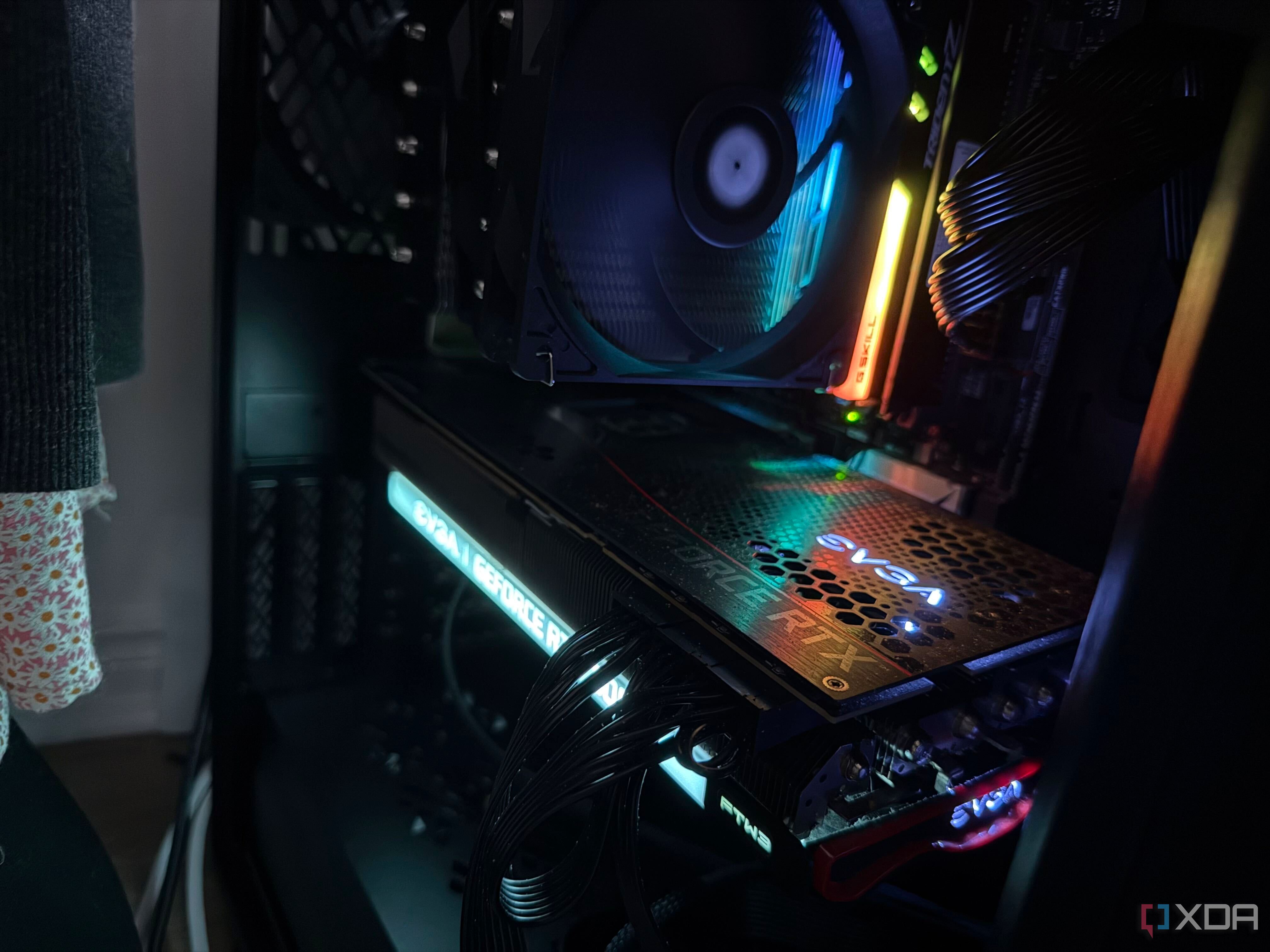
Image: PC build with graphics card. Credit: XDA Developers.
Why the 3090 still leads for local AI
Per columnist, the answer for serious local AI work is still a used RTX 3090. That verdict holds even though the card is more than six years old. It also holds even though used examples sell for over 1000 dollars. It holds even though no used example includes a manufacturer warranty.
That position sounds strange in a market full of newer and more efficient cards. Newer cards offer better ray tracing, better power efficiency, and newer software features. Per columnist, none of those advantages overcome one simple fact for local AI. Memory capacity decides which models run well, and the 3090 offers 24GB.
Smaller efficient models have improved. Per columnist, many mixture of experts models can run on limited VRAM. Those models let a modest card or a mini PC do useful work. They handle chat, summarization, coding help, and many everyday tasks. They do not change the ceiling for larger and more capable local models.
Per columnist, 24GB is the level where real power models become practical. That phrase means models that keep more reasoning ability, longer context, and better image output on the card itself. A used 3090 reaches that level in one GPU. Most new cards near the same price do not.
This article follows only the facts in the source column. It does not add benchmark rates. It does not invent token speed figures. It explains why memory capacity matters, where 16GB falls short, what the used market looks like, and what risks remain.
Why 24GB matters
Local AI is often limited by compute, but it is more limited by memory capacity. That distinction matters because buyers tend to compare core counts and clock speeds first. Per columnist, capacity is the first wall you hit when you move to larger models. Compute decides how fast a fitting model runs. Capacity decides whether a larger model fits at all.
A model that fits in VRAM stays on fast local memory. A model that does not fit must use system RAM and the CPU for part of the work. That split path is much slower for generation. It can turn a smooth local assistant into a slow and frustrating one. More VRAM keeps more layers where they belong.
The table below summarizes why 24GB matters, using only points made per columnist. Each row connects a workload to the memory result. The pattern is consistent across text, image, and tuning work. Capacity expands what you can load. It also preserves speed by avoiding spill.
| Workload | What happens with 24GB per columnist | Why it matters for local use |
|---|---|---|
| Large language models with real power | 24GB holds capable models that limited VRAM cards cannot hold comfortably | You can run stronger reasoning locally instead of settling for only small models |
| 27B to 32B class at 4 bit quantization | Those models fit on a 3090 with room to spare for context | You keep usable context length instead of cutting context to force a fit |
| Image and video generation | Full precision versions of larger diffusion models fit better with 24GB | You depend less on quantized variants or partial offload to system RAM |
| Fine tuning | Training extras fit alongside the model more comfortably | Gradients and optimizer state need memory beyond the base model weights |
| Mixed everyday plus large model use | Small mixture of experts models run, and larger models remain available | You do not lock yourself out of the next larger model you want to try |
Per columnist, more memory wins over more speed when a job does not fit. A faster 16GB card can finish sooner on jobs that fit inside 16GB. That advantage disappears when the model needs more than 16GB. A card cannot run what it cannot load. For serious local AI, fit comes first.
This is also why the 3090 keeps showing up in local AI discussions years after launch. Its core is older. Its power draw is higher. Its feature set is older than current cards. Its memory size remains rare outside very costly current cards. That one specification keeps it relevant.
How VRAM spill works in Ollama and llama.cpp
Per columnist, tools such as Ollama and llama.cpp load as many model layers into VRAM as will fit. They then attempt to run the remainder on the CPU from system RAM. This behavior is often called partial offload or spill. It lets a large model start even when VRAM alone is too small.
Starting is not the same as running well. Once spill happens, generation slows sharply. The CPU and system RAM path cannot match VRAM bandwidth for this work. The result is slower output, longer waits, and a less useful interactive feel. That slowdown is the direct cost of insufficient VRAM.
This is why VRAM guidance focuses on comfortable fit rather than bare minimum fit. A model needs its weights plus room for context. Context means the conversation history, documents, prompt overhead, and output space the model uses while working. A tight fit can break once you add real context. Per columnist, the 3090 fits the 27B to 32B class with room to spare, which leaves headroom for that extra use.
Beginners sometimes assume system RAM can replace VRAM without penalty. It cannot replace it for speed. Large system RAM helps spill work at all. It does not make spill fast. If you want local models to feel responsive, the goal is to keep the working layers in VRAM.
The practical takeaway is simple. Check the quantized size plus context before choosing a card. If the total sits above 16GB, a 16GB card will spill. If the total sits comfortably below 24GB, a 3090 can keep the work on the GPU. Per columnist, that headroom is the reason to accept an older used card.
The 16GB problem
Per columnist, even 16GB GPUs can fall short for serious local models. That statement may surprise gamers because 16GB is plenty for many games. Local AI has a different limit. Model weights grow quickly with parameter count. Context adds more load on top. Gaming memory guidance does not transfer directly.
The clearest example is the 27B to 32B class. Per columnist, those models need roughly 17GB to 20GB at 4 bit quantization before context is accounted for. That range already exceeds 16GB. Adding context only increases the total. As a result, those models would not fit on the cited RTX 5080 example in the source column, but they fit on a 3090.
Image and video work shows the same gap. Per columnist, full precision versions of larger diffusion models exceed 16GB. Smaller cards then depend on quantized variants or on offloading parts of the pipeline to system RAM. Quantized variants can work, but they are a compromise. Offload can work, but it adds slowdown.
Fine tuning is more demanding still. Training holds gradients and optimizer state in memory alongside the model. That overhead means tuning needs substantially more memory than inference on the same base model. A card that barely runs inference may have no chance at tuning. Per columnist, memory capacity again decides what is possible.
A faster 16GB card still has a role for smaller models. It can be efficient, quieter, newer, and covered by warranty. It can run popular smaller models well. Per columnist, it cannot run what will not fit. Buyers should decide which side of that line they plan to live on.
Price reality against new cards
One thousand dollars sounds like a lot for a card over six years old. Per columnist, new GPU prices make that figure less shocking. The least costly Blackwell card with 16GB of VRAM cited in the column was the cheapest RTX 5070 Ti at 1120 dollars at the time of writing. That means a new 16GB card can cost more than a used 24GB 3090.
The higher tiers widen the gap further. Per columnist, an RTX 5080 ran around 1600 dollars at the time of writing. The RTX 5090, described as the one current GeForce card with more than 24GB, cost at least 5000 dollars and often sold for more. Those prices put a larger memory new card far beyond most local AI budgets.
Used 3090 prices have also climbed. Per columnist, listings sat in the 600 to 800 dollar range earlier in the year. Recent sold listings ran from around 1000 dollars to well above it. So buyers are not getting the old bargain price. They are paying a premium because 24GB remains useful.
Even so, the comparison is stark. A used 3090 costs about the same as a new 16GB card while offering half as much memory again in practical terms. The exact phrase in spirit is that 24GB beats 16GB by eight gigabytes, which is a 50 percent capacity advantage. For local AI, that extra room changes model choice. For gaming alone, the newer card may still be the better pick.
Buyers should treat those prices as time sensitive. GPU street prices move with supply, demand, tariffs, memory costs, and AI demand. Per columnist, the figures reflect the time of writing in October 2026. Current listings should be checked before any purchase. The structural point remains even if exact dollars shift. New large VRAM cards cost far more than used 24GB cards.
Caveats before you buy used
Per columnist, a six year old pre owned card can be a gamble. Over 1000 dollars is a large amount to invest in an old card. Buyers need to enter with open eyes. The risks are not minor details. They affect lifespan, stability, noise, thermals, and recourse if something fails.
There are no new RTX 3090 cards in normal retail. Buying one means buying a card that has already been used to some extent. Per columnist, none of them has a warranty now. That means the buyer absorbs the full repair or replacement cost if the card dies.
Many of these cards have lived multiple lives. Per columnist, many were gaming cards, then mining cards, and now local AI cards. That history does not prove a particular card is bad. It does mean wear, heat cycles, fan wear, and memory heat exposure vary widely. Two listings at the same price may offer very different remaining life.
Heat is a specific concern. Per columnist, cards this old almost certainly need thermal pad replacement because of how hot the memory runs. Thermal pads transfer heat from memory modules to the cooler. Old pads can dry out, lose contact, or perform poorly. Replacement can help, but it requires disassembly skill and care. Buyers who do not want to open a card should factor in service cost or avoid worn examples.
The table below collects the caveats stated per columnist. Use it as a checklist before bidding or buying. If any row is unacceptable, a used 3090 is not the right choice. A newer card with warranty may be better even with less VRAM.
| Caveat | What per columnist says | Buyer implication |
|---|---|---|
| Age over six years | The card design is more than six years old | Expect older efficiency, older features, and more wear risk |
| No warranty | Used 3090 cards have no warranty coverage | You pay for repair or replacement if it fails |
| Price over 1000 dollars used | Recent sold listings run from around 1000 dollars upward | You pay new card money without new card protection |
| Uncertain prior use | Many cards lived gaming, mining, then AI lives | Ask for history, photos, temps, and test proof where possible |
| Thermal pads likely needed | Old cards almost certainly need pad replacement due to hot memory | Budget for maintenance or professional service |
| Power and heat | High draw design with hot memory behavior | Check PSU capacity, case airflow, and noise tolerance |
These caveats explain why the recommendation is framed as a risk worth taking rather than a safe bargain. Per columnist, the buyer accepts real downsides to gain 24GB at a reachable price. That tradeoff only makes sense for serious local AI use. Casual users and pure gamers have less reason to accept it.
Alternatives that ask for a tradeoff
Per columnist, there are cheaper ways to get 24GB of VRAM. The Intel Arc Pro B60 was cited as selling new for around 650 dollars. It comes with a warranty. It has a 200W power rating. Those facts make it tempting on paper. The tradeoff sits in bandwidth and software support.
Memory bandwidth matters for token generation speed. Per columnist, the Arc Pro B60 offers 456GB per second of memory bandwidth, less than half the 3090 figure. Lower bandwidth can mean slower token output even when the model fits. It also runs on the Intel software stack, which fewer projects support. Buyers may face more setup work and more compatibility gaps.
The AMD RX 7900 XTX is another path to large memory at lower cost. Per columnist, it could be found for roughly 700 to 900 dollars at the time of writing. That card offers strong memory capacity for the money. The tradeoff is software familiarity and platform choice.
Per columnist, the RX 7900 XTX is a credible choice for someone who only runs large language models on Linux through ROCm. If you are willing to learn a new stack, it can be a good choice. If you want plug and play support with most projects, CUDA remains the easier path at the moment. That distinction matters because local AI tools, guides, and optimizations often target CUDA first.
A new 16GB Nvidia card is the simpler mainstream alternative. Per columnist, it offers a warranty, much better efficiency, and enough memory for many popular models. It is easier to power and cool. It is easier to support. It simply cannot match 24GB for larger models. Buyers must choose between broad compatibility plus warranty and maximum local model size.
No alternative in the column gives everything at once. Intel gives price, warranty, and efficiency but less bandwidth and narrower support. AMD gives capacity value but asks for Linux and ROCm comfort. New Nvidia 16GB gives warranty and efficiency but less memory. Used 3090 gives 24GB and CUDA but age and no warranty. Per columnist, each path requires some kind of sacrifice.
Buying used with less risk
Per columnist, the pre owned risk is somewhat manageable. It depends on where you buy and how much due diligence you do. That is not a promise of safety. It is a method for reducing avoidable mistakes. Careful buyers still face residual risk because old hardware can fail without warning.
Marketplace protection helps. Per columnist, eBay offers a money back guarantee for items that are not sold as described. The columnist also notes personal experience using that protection successfully in the past. That history supports relying on it enough for a purchase of this size. It does not remove the need to read carefully.
Per columnist, buyers should read the listing carefully no matter where they choose to buy. Photos should match the exact card. The description should state condition, included accessories, functional status, and return terms. Vague listings deserve extra caution. Clear test results, temperature reports, and honest wear disclosure are positive signs.
Practical checks also help. Ask whether the card was repadded or repasted. Ask about fan noise and hotspot temps under load. Ask about original versus replacement cooler screws and pads. Ask about artifacting, crashes, or repairs. Ask for a short local AI load test if possible, not only a gaming benchmark. A seller who answers directly is easier to trust than one who avoids detail.
Plan the system around the card as well. Verify PSU wattage and cable setup. Verify case clearance and airflow. Plan for heat output during long AI runs. Budget for new thermal pads or a professional service if temps are high. These steps do not restore a warranty, but they reduce surprise costs after delivery.
FAQ
Why would anyone pay over 1000 dollars for a used RTX 3090?
Per columnist, 24GB of VRAM lets it run capable local AI models that 16GB cards cannot hold. New cards with as much or more memory cost far more. So the used 3090 remains the reachable path to serious local model size.
What does 24GB allow that 16GB does not?
Per columnist, models in the 27B to 32B class need about 17GB to 20GB at 4 bit quantization before context. Those models miss on 16GB but fit on a 3090 with room to spare. Larger diffusion models and tuning work show the same capacity gap.
How do Ollama and llama.cpp use VRAM?
Per columnist, they load as many layers into VRAM as will fit and run the remainder on the CPU from system RAM. Once spill happens, generation slows sharply. More VRAM keeps more work on the fast GPU path.
Are smaller mixture of experts models enough instead?
Per columnist, many mixture of experts models run on limited VRAM and cover a lot of useful work. They do not replace larger models for users who want maximum local power. Serious local AI users still benefit from 24GB.
What are the biggest risks of a used RTX 3090?
Per columnist, the card is over six years old, has no warranty, may have gaming plus mining plus AI wear, and likely needs thermal pad replacement. Over 1000 dollars is a large sum for hardware with those risks. Careful listing review and buyer protection reduce but do not remove the gamble.
What cheaper 24GB alternatives exist?
Per columnist, the Intel Arc Pro B60 sold new for around 650 dollars with warranty and 200W rating, while the RX 7900 XTX sat near 700 to 900 dollars. Intel trades bandwidth and broad software support, while AMD asks for Linux plus ROCm comfort for large language models. CUDA on the 3090 remains the plug and play path.
Bottom Line
Per columnist, a used RTX 3090 remains the pick for serious local AI despite age, no warranty, and a price over 1000 dollars. The reason is capacity first and speed second. Ollama and llama.cpp slow sharply when layers spill to system RAM, and 16GB falls short for the 27B to 32B class while 24GB fits it with room for context. Cheaper large memory cards exist, but Intel asks for bandwidth and software compromises and AMD asks for Linux plus ROCm comfort, while new 16GB Nvidia cards offer warranty and efficiency but not enough memory for the largest local jobs. Buy used only after careful listing review, marketplace protection, thermal planning, and a clear need for larger local models.
Sources
Per columnist reporting: XDA Developers column on the used RTX 3090 for local AI, published October 7 2026.