
Wardogs Bribes Players With Cash XP For Blue Team
By Indie Kings | October 11, 2026
Updated October 11, 2026: Wardogs will pay Blue team players extra Lonestar cash and XP in Season 2 to fix low Blue popularity. Per columnist Morgan Park, Bulkhead CEO Joe Brammer confirmed the plan in the Road to Season 2 devlog with a new Bakurani spawn.
Standing: Per columnist.
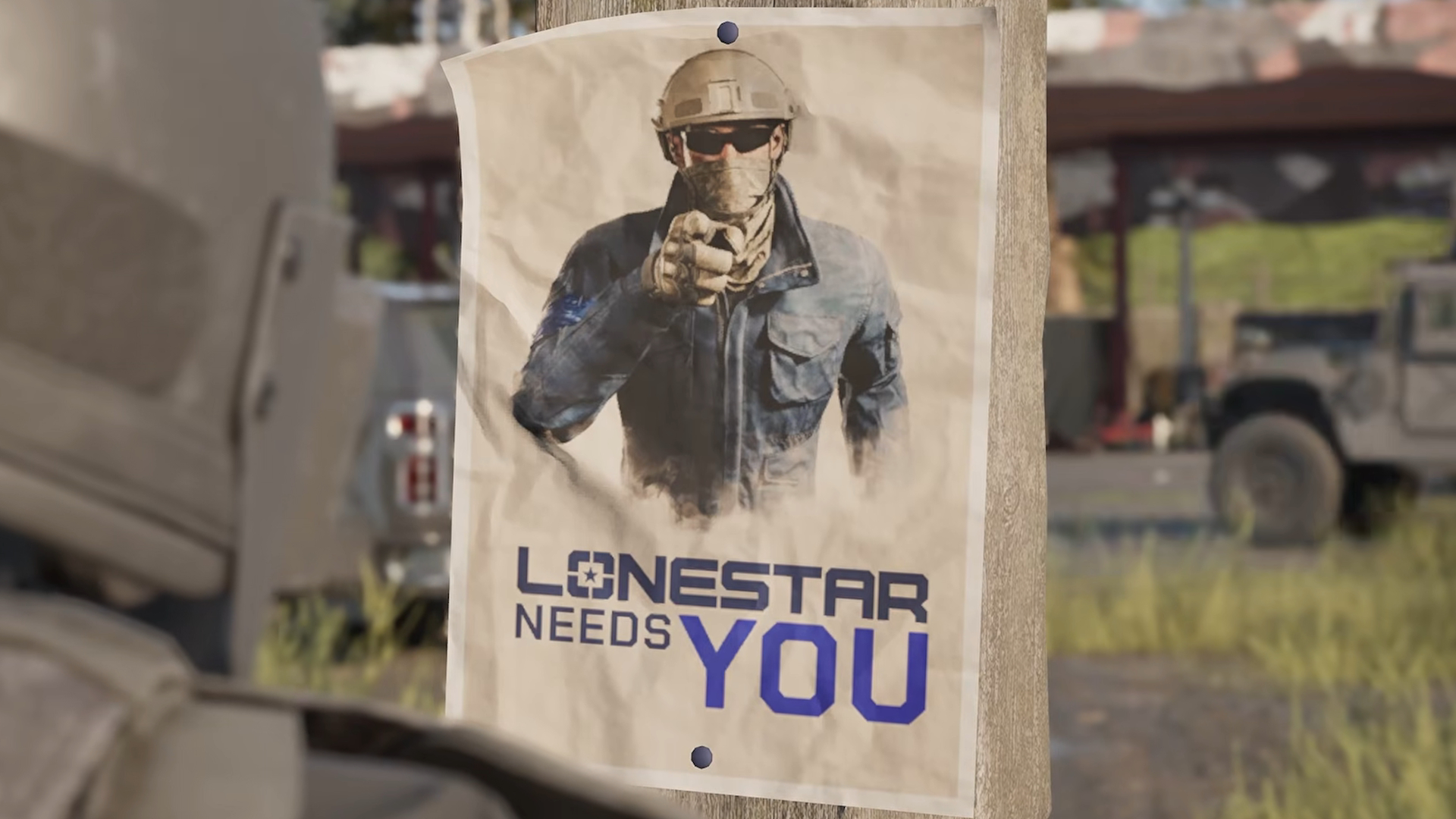
Image credit: PC Gamer.
Blue bribe explained
Wardogs developer Bulkhead will offer a Lonestar cash and XP bonus for players who pick Blue team in Season 2. Per columnist Morgan Park, who reported the plan on October 9 2026 for PC Gamer, the bonus is Season 2 only. The same report notes a new Bakurani spawn as part of the Season 2 changes. Bulkhead CEO Joe Brammer summarized the intent in the Road to Season 2 devlog with the line that the team is looking at how it can help the win rate of a certain team. That certain team is Blue, also known as Lonestar in Wardogs.
The structure of Wardogs matters for understanding why this bonus exists. Wardogs has three teams that started on equal grounds. In principle, Green, Red, and Blue began with the same footing. In practice, players have not treated the three teams equally. Per columnist Morgan Park, many Wardogs players have avoided Blue from the start. Some players go so far as to idle on the team selection screen for minutes waiting for a slot to open on Green or Red. That behavior leaves Blue short on players, short on experience, and stuck with a losing reputation. The Season 2 bonus is a direct attempt to break that pattern by paying players in the two currencies that matter most for progression, which are in game cash and XP.
It is important to be precise about what is confirmed and what is not confirmed. Confirmed per the columnist report: there will be a Lonestar cash bonus, there will be a Lonestar XP bonus, it will apply in Season 2 only, and Season 2 includes a new Bakurani spawn. Also confirmed: the statement from Bulkhead CEO Joe Brammer about helping the win rate of a certain team came via the Road to Season 2 devlog. Not confirmed in the report: the exact size of the cash boost, the exact size of the XP boost, whether the boost scales with wins or score, whether it applies to every mode, or how long into Season 2 the bonus will last. Per columnist Morgan Park, it is unclear how big these boosts will be. That uncertainty is central to any prediction about Season 2, because a small bonus might only nudge undecided players while a large bonus could flip team choice across whole servers.
The timing is also confirmed. Season 2 arrives with the October 15 patch. The columnist report ties the Blue team bonus to that patch window. The October 15 patch is therefore doing two jobs at once. It is introducing general Season 2 content and it is testing whether an economic incentive can rebalance team selection without changing weapons or maps in a heavy handed way. For readers tracking Wardogs as a live shooter, that makes Season 2 a useful case study in soft balance, where rewards change behavior even when guns and movement stay familiar.
Attribution matters here. This entire account comes from one PC Gamer news report by columnist Morgan Park, published October 9 2026. Indie Kings has not independently verified bonus values because those values were not disclosed in the source report. Where this article offers views about what might happen next, those views are framed as analysis of the reported plan, not as new facts about Wardogs.
Why Blue lost players
Blue team avoidance in Wardogs is not a small quirk. Per columnist Morgan Park, players have actively avoided one team in particular since launch. The report describes players idling on the selection screen for minutes waiting for a slot on Green or Red rather than locking Blue immediately. In a three team shooter where all three teams started on equal grounds, that kind of selection bias has compounding effects. Green and Red fill faster with willing players. Blue fills slower, often with players who joined late, players who are new, or players who simply gave up waiting for another slot. Over many matches, that difference in roster intent can look like a difference in team strength even if the underlying faction stats are equal.
The report points to practical balancing problems that work against Blue team alongside the social pattern. Two are named directly. First, Blue has lackluster camouflage. Second, Blue has unfavorable spawn points. Both issues affect moment to moment survival in a shooter. Camouflage affects how easily opponents spot Blue soldiers at distance and in cover. Spawn points affect rotation time, map control, early objective pressure, and how often a team walks into unfavorable fights right after respawn. A team can feel worse to play when these small frictions stack up across dozens of respawns in a long match. Players notice that friction quickly and they tell friends, which feeds the wider reputation that Blue is the team to avoid.
The selection screen wait is worth dwelling on because it reveals intent. Idling for minutes to avoid Blue is not casual preference. It is active avoidance with a time cost. Players are willing to lose minutes of play time to reduce their chance of landing on Lonestar. That choice suggests that the reputation of Blue is strong enough to change lobby behavior. It also suggests that queue design and team assignment rules matter. If enough players refuse Blue, matchmaking fills Blue last, which can concentrate less experienced players on the same side. The report raises exactly that concern in its discussion of a self fulfilling cycle, which is covered in its own section below.
For context, Wardogs is a multiplayer FPS built around three way faction play. The three team format makes imbalance more visible than a two team format. In a two team game, one weak side still gets half the lobby on average. In a three team game, two popular teams can drain the third team at the same time. Green and Red both pull from the same pool of Blue avoiders, so Blue can end up short even when total player counts are healthy. That structural risk helps explain why Bulkhead is reaching for an economic lever rather than waiting for reputation to fade on its own.
None of this means Green or Red players are doing anything wrong by picking a preferred team. Players follow friends, follow win streaks, follow aesthetics, and follow comfort. But when those individual choices point the same way for weeks, the result is a faction population gap that design tweaks alone may not close. Cash and XP speak the language of progression, which is why Bulkhead is testing whether rewards can move players who would not move for balance notes alone.
Bakurani spawn and camo fix
Season 2 tackles Bakurani directly. Per columnist Morgan Park, Season 2 is addressing spawn points with a new Bakurani spawn. The source summary lists three linked items together: Lonestar cash and XP bonus, Season 2 only, and new Bakurani spawn. That grouping matters. Bulkhead is pairing an economic incentive with a map level fix. The bonus pulls players toward Blue while the spawn change removes one of the practical reasons players gave for avoiding Blue in the first place.
Bakurani has been cited as an unfavorable spawn area for Blue. The report does not provide coordinates, distances, or layout diagrams for the new spawn. It confirms only that a new Bakurani spawn is coming in Season 2. Readers should not expect a detailed map breakdown until the patch notes arrive next week. What can be said now is that spawn design shapes early match flow. A better spawn can shorten rotations to key objectives, reduce exposure during the first minute, and give Blue a fairer chance to contest ground before Green or Red lock down sightlines. If the old Bakurani spawn forced Blue into long or exposed paths, a revised spawn could improve both win rate and feel, which together reduce the urge to dodge the faction.
Camouflage is the other practical complaint named in the report. Blue camouflage is described as lackluster. The report does not confirm a Season 2 camouflage rework with the same clarity as the Bakurani spawn change. Season 2 is described as tackling Bakurani, while camouflage is listed among the practical balancing problems that work against Blue team. Readers should treat camouflage as a known concern rather than a confirmed Season 2 fix. A camouflage pass would be a visual and readability change, which is harder to tune than a spawn point move. Spawns can be repositioned. Camouflage interacts with lighting, weather, vegetation, and player settings across every map.
Weather adds another wrinkle. The October 15 patch adds rainy weather on all maps per the columnist report. Rain changes visibility, sound, and surface readability in shooters. It can mute colors, flatten contrast, and make movement noisier or harder to track. Whether rain helps or hurts Blue camouflage specifically is not stated in the source. It is reasonable to watch for that interaction after launch, but it would be wrong to claim rain was added to fix Blue. The report lists rainy weather as general Season 2 content alongside new guns and vehicles, not as a Blue specific remedy.
Taken together, the Bakurani move plus the bonus shows a two track approach. Fix the map friction where it is clearest, and pay players to reconsider a faction while the fix beds in. That pairing is smarter than either step alone. A spawn fix without a bonus might go unnoticed by players who already refuse Blue. A bonus without a spawn fix might pull players into a frustrating experience that reinforces the old reputation. Bulkhead appears to be trying to avoid both failure modes at once.
Self fulfilling prophecy
One of the most quoted ideas in the source report is that Blue team infamy may be a self fulfilling prophecy. Per columnist Morgan Park, another less talked about possibility is that players have one bad night with Lonestar and decide to believe the reputation, or hear Blue is the team to avoid, or notice everyone else actively avoiding it, and the end result is a Blue team full of less experienced players. That single paragraph explains how equal starting conditions can still produce unequal outcomes. Reputation filters who is willing to play Blue, and that filter changes team composition over time.
The cycle is easy to trace. A new player hears Blue is weak. That player avoids Blue when possible. Experienced players do the same because they want faster wins or smoother matches. Blue then fills with whoever remains, which often includes newer players, solo players without a squad, and late joiners who missed Green and Red slots. Those rosters lose more often. Losses confirm the reputation. The reputation drives the next round of avoidance. After enough loops, Blue can post worse results even if faction weapons and stats match the other sides, because roster experience is itself a balance factor.
The NA West observation in the report adds texture to this theory. Per columnist Morgan Park, the Blue bias appeared to be dying down over the past couple weeks on the NA West servers he frequents. Blue was still mostly losing there, but Blue was also scoring points and competing, which he framed as a positive sign. He also reported being on a couple of winning Blue teams. That anecdote does not prove regional balance, and it is explicitly framed as personal experience rather than data. But it hints that the cycle may be loosening as players learn maps, as squads stabilize, and as early launch habits fade. A faction can climb from constant blowouts to competitive losses before it climbs to wins, and that middle stage is where reputation starts to crack.
This theory also explains why cash and XP might work better than a straight stat buff. A stat buff tries to make Blue stronger in a vacuum. A bonus tries to change who is willing to play Blue. If the core problem is roster composition driven by reputation, then moving experienced and motivated players back onto Blue attacks the cause rather than the symptom. Stronger Blue rosters score more, win more, and generate positive word of mouth, which then pulls in the next wave without any further payment. The risk is that the effect reverses when the bonus ends, which is why the Season 2 only limit deserves close attention once Season 3 plans surface.
Readers should keep the limits of this theory in mind. A self fulfilling prophecy can coexist with real map or camo disadvantages. Both can be true at once. Blue can suffer from unfavorable spawns and also suffer from reputation driven roster sorting. Season 2 is interesting precisely because it addresses both layers at once, with a spawn change for the map layer and a bonus for the social layer. If Blue improves, it will be hard to separate how much came from each change without internal data. If Blue does not improve, that result will also be informative, because it will suggest the remaining friction sits elsewhere.
Will cash and XP work
XP and cash bribes are described in the source report as a drastic move that should have a real impact. Per columnist Morgan Park, he expects Blue will instantly become the most popular team by a wide margin in Season 2. That prediction rests on a simple read of shooter incentives. Progression is the main reason many players queue night after night. Faster XP means faster unlocks. Extra cash means faster loadout flexibility. When one faction pays more for the same time played, efficiency minded players will follow the payout, at least initially.
The open question is size. The report states clearly that it is unclear how big these boosts will be. Size determines whether the bonus merely offsets Blue frustration or overwhelms team loyalty. A modest boost might convince solo players and new accounts while leaving established Green and Red squads in place. A large boost could pull whole squads onto Lonestar for the duration of Season 2, especially combined with the first progression wipe that sends everyone back to level 1. After a wipe, early XP has outsized value because every unlock is locked again. A Blue XP edge in week one could shape team choice for weeks as players protect their head start.
There are also second order effects to watch. If Blue becomes overpopulated, queue times for Blue could rise while Green and Red become the faster queue. That would invert the original selection screen problem. Some players will tolerate a slower queue for a bonus, but many will not, which could create a natural ceiling on Blue stacking. Another effect is skill sorting in reverse. If strong squads chase the bonus, Blue win rate could spike quickly, which then attracts even more players for social reasons rather than economic ones. That is the virtuous version of the same reputation loop that previously hurt Blue. The danger case is bonus farming without objective play, where players pick Blue for payout but do not contest points, which could hold Blue win rate down even as Blue population rises.
The Season 2 only label is doing important work. A temporary bonus is easier to tune and easier to remove than a permanent faction trait. It signals that Bulkhead views this as a corrective, not as the long term identity of Lonestar. Temporary bonuses also create urgency, which boosts early uptake. The tradeoff is a possible snap back at the end of Season 2 if players were only there for payment. Bulkhead CEO Joe Brammer framed the goal as helping the win rate of a certain team, which implies the studio will watch win rate data and not just population counts. Population without wins would mean the bribe moved bodies but did not fix results.
For now, the reasonable expectation matches the columnist view. Blue should surge in Season 2 on bonus appeal plus wipe reset plus spawn attention. The harder test comes mid season, when novelty fades and players can compare actual Blue win rates against the bonus value. If Blue is winning or even splitting competitively, many bonus converts will stay. If Blue is still losing heavily despite fuller rosters, Bulkhead will need map, camo, or systems changes beyond payment. Either outcome will teach the wider shooter market something useful about whether economies can fix faction reputation.
Season 2 patch and wipe
Wardogs Season 2 arrives with the October 15 patch. Per columnist Morgan Park, the patch also adds new guns, vehicles, and rainy weather on all maps, with more to be revealed in the patch notes next week. Those three additions matter because they show Season 2 is larger than a Blue team tuning pass. New guns change loadout math for every faction. New vehicles change rotation speed and objective pressure. Rainy weather on all maps changes visibility and atmosphere across the whole rotation. Blue team changes will therefore land inside a shifting sandbox, not a static one.
The same report notes that Season 2 marks the first progression wipe in Wardogs. Everyone goes back to level 1. Wipes reset unlocks and compress the skill and gear gaps that build up after launch. For Blue, a wipe is potentially helpful. It removes the excuse that Blue rosters are behind because they lost early unlock races. It also increases the value of the Blue XP bonus, because early levels gate the fastest power gains. For Green and Red veterans, a wipe is a mixed message. It erases progress right as new guns and vehicles arrive, which can feel harsh, but it also creates a fresh race where efficient players can climb quickly. Expect week one guides to focus heavily on the fastest leveling path, and expect Blue to feature in those guides if the bonus is meaningful.
Patch notes timing is confirmed in a limited way. Per the columnist report, more will be revealed in the patch notes next week. That line was written ahead of the October 15 patch, so readers should look for the full notes in the days around that date. Until those notes land, claims about specific gun stats, vehicle names, or rain mechanics would be speculation. This article does not list gun models or vehicle types because the source report does not name them. Any site naming specific weapons as Season 2 additions before the notes would be going beyond what this source supports.
The report also frames Season 2 as bigger than expected so soon after release. That framing is the columnist view, not a studio roadmap quote. It reflects surprise at the breadth of changes arriving in one patch: faction incentives, a spawn change, guns, vehicles, weather, and a wipe. For a new multiplayer FPS, that pace suggests Bulkhead wants to stabilize faction health early rather than let Blue avoidance harden into a permanent community habit. Early intervention is usually cheaper than late repair in live games, because fewer players have quit and fewer content creators have cemented their faction takes.
Players preparing for October 15 should keep plans simple. Expect full lobbies, expect Blue to be popular, expect leveling guides to dominate discussion, and expect rain to change sightlines on familiar maps. Hold judgment on Blue balance until rosters settle after the first week. Launch week data mixes bonus tourists with true converts, so win rates will be noisy. The cleaner read comes once queue times normalize and squads pick a home for the rest of the season.
| Issue | What the source says | Season 2 signal |
|---|---|---|
| Team avoidance | Players idle for minutes to avoid Blue and wait for Green or Red | Cash and XP bonus aims to pull players back to Lonestar |
| Camouflage | Blue camouflage is described as lackluster | Listed as a concern with no confirmed rework in the report |
| Spawn points | Blue spawns are described as unfavorable | New Bakurani spawn is confirmed for Season 2 |
| Reputation loop | Blue infamy may be self fulfilling as experienced players avoid it | Bonus plus wipe may reset roster sorting |
| Item | Detail | Status |
|---|---|---|
| Lonestar cash bonus | Extra in game cash for picking Blue team | Confirmed for Season 2 only |
| Lonestar XP bonus | Extra XP for picking Blue team | Confirmed for Season 2 only |
| Bakurani spawn | New spawn location work in Season 2 | Confirmed as a Season 2 change |
| New guns | Additional weapons in the October 15 patch | Confirmed without named models |
| New vehicles | Additional vehicles in the October 15 patch | Confirmed without named models |
| Rainy weather | Rain on all maps | Confirmed as general Season 2 content |
| Progression wipe | Everyone returns to level 1 | Confirmed as the first wipe |
| Full patch notes | More reveals beyond the early summary | Expected next week around the patch |
FAQ
What is the Wardogs Blue team bonus in Season 2?
It is a Season 2 only Lonestar cash and XP bonus for players who pick Blue team. Per columnist Morgan Park, Bulkhead confirmed the plan ahead of the October 15 patch.
Why is Bulkhead paying players to pick Blue?
To help the win rate of a certain team. Bulkhead CEO Joe Brammer used that line in the Road to Season 2 devlog, and the context in the report points to Blue.
Why do Wardogs players avoid Blue team?
Per the columnist report, Blue suffers from lackluster camouflage, unfavorable spawn points, and a reputation that makes players idle for minutes waiting for Green or Red. Those factors combine into a self fulfilling cycle.
What is changing at Bakurani in Season 2?
A new Bakurani spawn is coming in Season 2. The report confirms the spawn change but does not provide layout details, so full specifics should wait for the patch notes.
How big are the Blue cash and XP boosts?
The sizes are not disclosed in the source report. Per columnist Morgan Park, it is unclear how big the boosts will be, though he expects Blue to surge regardless.
Does Season 2 wipe progression?
Yes. Season 2 marks the first progression wipe in Wardogs, so everyone goes back to level 1 with the October 15 patch.
Bottom line
Wardogs Season 2 is a live test of whether progression rewards can fix faction reputation. The confirmed package is a Lonestar cash bonus, a Lonestar XP bonus for Season 2 only, a new Bakurani spawn, new guns, new vehicles, rainy weather on all maps, and a full progression wipe tied to the October 15 patch. Per columnist Morgan Park, the goal stated by Bulkhead CEO Joe Brammer is to help the win rate of a certain team, and all signs point to Blue. Expect Blue to be popular early as players chase value after the wipe, then watch mid season win rates to judge whether the bonus plus the spawn fix solved the underlying loop. If Blue holds competitive results once the novelty fades, Bulkhead will have shown that soft economic balance can move a shooter community faster than map tweaks alone.
Sources
Per columnist Morgan Park, PC Gamer reported on October 9 2026 that Wardogs will offer Blue team cash and XP bonuses in Season 2. Read the source report here: PC Gamer report on the Wardogs Blue team Season 2 bonus.