
WoW Forever Self Hosted On MacBook Before Launch
By Indie Kings | October 14, 2026
Updated October 14, 2026: World of Warcraft Forever does not launch until November 4, 2026, yet hobbyists already run self hosted test realms on home hardware, per Warperia. This report summarizes the TrinityCore based forever branch, a Warperia reported MacBook self host account, and a parallel community project, with official launch context for readers who wait for release.
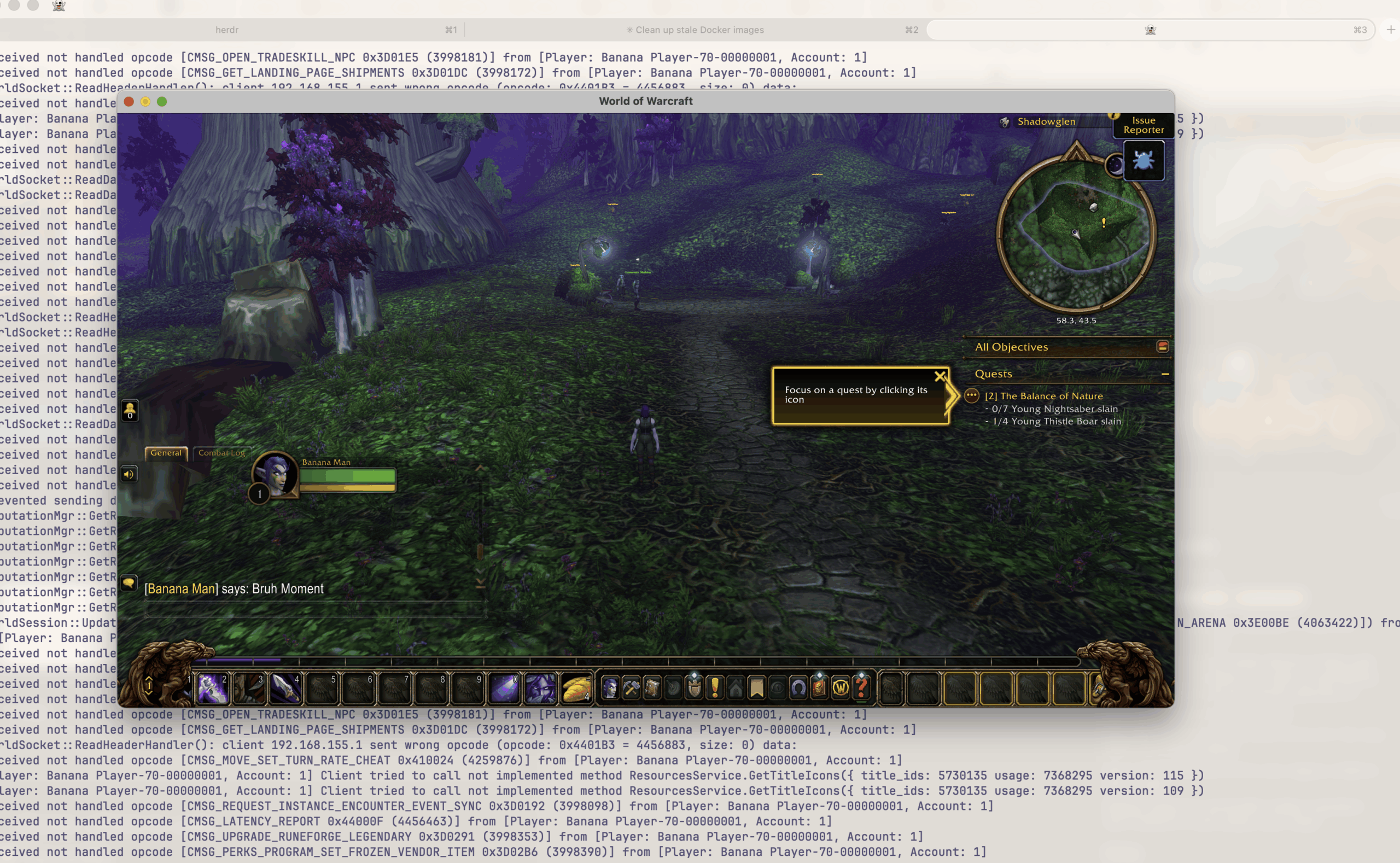
Image: WoW Forever private server artwork. Credit: Warperia.
What Warperia reports
Per Warperia, the World of Warcraft Forever self hosting scene emerged during the pre launch window before the November 4, 2026 release. The central piece is a fork of TrinityCore with a forever branch aimed at the Forever beta client. Hobbyists use that code base to start local realms on ordinary home PCs and laptops for study and experimentation. One account describes a MacBook setup built around containers and a macOS game client. A separate parallel passion project tracks the same client build and focuses on Vanilla content stability plus early Forever material. A public community server also appears in the report in open beta. Per Warperia, much of the newest Forever content remains of uncertain playability on community code, and several technical claims come from forum posters rather than independent testing.
Per Warperia, this story matters for three reader groups. First, Forever fans who want to understand what community emulation can and cannot show before launch. Second, technically curious readers who follow open source game server work and Apple silicon experimentation. Third, cautious readers who want a clear statement of account and security risk before they consider anything beyond reading about the subject. This article serves all three groups by describing reported work without providing access, files, or setup direction.
Per Warperia, the timeline is short and specific. Blizzard announced World of Warcraft Forever at BlizzCon 2026 on September 12. The official beta started September 17 and runs through October 21. The full launch is scheduled for November 4 at 3pm PST. Community self hosting reports surfaced inside that beta window, which explains both the interest and the gaps in the record. Beta access itself is tied to paid bundles, so many players cannot see the official beta at all. That access gap is part of why local server experiments attract attention, even when their content coverage is incomplete.
Official Forever context
Per Warperia, World of Warcraft Forever is positioned as a third version of the game alongside modern World of Warcraft and Classic. The level cap stays fixed at 60. That design choice frames Forever as a place for new stories inside a familiar power band rather than another climb to a higher cap. Blizzard lists three new zones called Mount Hyjal, Zephras Isle, and Riverglades. The announcement also lists more than 1,000 new quests, nine new dungeons, two new raids, and a new race called the Skyborne. Those figures are useful as a yardstick when judging community claims, because any local realm can be asked in plain terms how much of that list it actually reproduces.
Per Warperia, the official beta runs from September 17 through October 21. Access comes with the Skyborne Epic Pack and the Warcraft Forever Collection, so beta participation is limited to buyers of one of those bundles. That paywall shapes the news cycle in two ways. It concentrates early impressions among a smaller group, and it increases curiosity among everyone else. Self hosted servers appeal to that second group by offering a local way to inspect client behavior and converted world data, although they do not grant official beta access and they do not substitute for the launch client.
All previously verified background on this site states that the Forever launch takes place November 4 at 3pm PST and that subscription covers Forever. That background is restated here only to orient new readers. The subscription point matters because it answers the most common pre launch question in one line. Players who already subscribe do not need a separate subscription theory for Forever. They need a calendar reminder for the beta end on October 21 and the launch on November 4 at 3pm PST, plus patience while Blizzard completes beta testing.
Per Warperia, the content scale also explains why community progress looks uneven. More than 1,000 quests plus new zones, dungeons, raids, and a new race is a large surface for any volunteer codebase to cover in a few weeks. Open source server frameworks reuse years of prior work on combat, movement, quests, and instancing, but new geography, new quest logic, new encounters, and new racial content still require fresh data and fresh scripts. Readers should therefore treat broad claims of full support with care and look for specific evidence such as working quest chains, working dungeon encounters, or stable instancing under load.
The TrinityCore fork behind self hosting
Per Warperia, most reported activity centers on a fork of TrinityCore, the open source server framework that has supported World of Warcraft emulation for years. The fork maintains a forever branch that runs TrinityCore master against the World of Warcraft Classic beta client, build 1.60.1.70338. That build number matters because it pins the discussion to a specific pre launch client rather than to modern retail or to long released Classic eras. Readers who compare reports should check that they refer to the same build, since client behavior and data layouts can shift between beta updates.
Per Warperia, the fork combines a vanilla world converted from VMaNGOS with Skyborne and Zephras Isle content. In plain terms, the project starts from a community maintained Vanilla world, then layers early Forever material on top. The report describes two broad routes for Windows users. One route uses a prebuilt repack with extraction, a setup stage, server startup, and a purpose built launcher with a Play action. Another route is aimed at hosts who want friends to join the same local realm, with host side and guest side helper scripts that handle trust and name resolution. This article describes those routes only to identify what the README claims. It does not repeat commands, file names beyond general labels, or configuration values.
Per Warperia, it remains unknown how much of the new content is actually playable on the fork. That uncertainty is central and should stay in the foreground. A server can start, accept a local connection, show characters, and move through older zones while still failing on new quests, new dungeons, or new systems. Warperia does not present a verified completion percentage for Forever zones or encounters on this fork. Readers should treat startup success and content completeness as two different questions, and should expect the second question to stay open until independent testers publish detailed evidence.
The names in this section appear in prose without links, as required. Blizzard publishes the official game and operates Battle.net as its online service. TrinityCore is the open source server framework from which the reported fork derives. Keeping those names unlinked preserves a clean boundary between description and direction. Readers can understand the roles without receiving a path to files or services. That boundary runs through the entire article by design.
Self hosted and community projects compared
Per Warperia, at least three community efforts appear in the same pre launch picture, and they serve different purposes. The table below keeps them separate so readers do not merge a local experiment with a public server or with a long running passion project. Standing for the table is Per Warperia. Details drawn from forum posts carry added caution where noted.
| Project | Form | Reported focus | Verification note |
|---|---|---|---|
| TrinityCore forever branch fork | Self hosted code base | Runs TrinityCore master against Classic beta client build 1.60.1.70338 with converted Vanilla world plus Skyborne and Zephras Isle material | Reported from project documentation per Warperia. New content playability unknown. |
| MacBook self host account on r slash wowservers | Single user local realm [NEEDS VERIFICATION] | Native container build, map data sourcing, local trust setup, and macOS client connection [NEEDS VERIFICATION] | Warperia reported summary only. Thread itself is login walled so thread contents carry [NEEDS VERIFICATION]. |
| Parallel 1.60.1 passion project | Community test realm | Vanilla content stability, more than 500 bug fixes, capped dungeon helper bots, new Forever material, and a level 30 mirror of beta | Project claims per Warperia. Independent verification not reported. |
| ForeverWoW.biz public server | Public server on its own core | Open beta presence reported in one line | Named only per Warperia. No address, link, or access detail in this article. |
Per Warperia, the parallel 1.60.1 passion project deserves its own paragraph because its claims are unusually specific. The project is described as a passion effort with no donations, no shop, and no monetization. It claims all Vanilla content works, with more than 500 bugs fixed. It describes dungeon bots capped at five per hour. It says new Forever content is implemented. It describes a level 30 mirror of the beta. It describes account based testing through direct contact, and it states an open source goal. Each of those points is a project claim relayed through Warperia, not an independently verified result. Readers should keep that distinction visible when they repeat any of the figures.
Per Warperia, ForeverWoW.biz appears as a public server on its own core in open beta. That is the full extent of what this article states about it. No server address, client download, launcher link, or account instruction appears here. The mention exists to acknowledge that public servers are part of the same news cycle as self hosted experiments, not to rank them or to guide readers toward them. Anyone waiting for a stable and lawful way to play Forever should wait for the November 4 launch.
Per Warperia, the practical lesson from the table is that form predicts risk and effort. A local realm affects one machine and its owner. A community test realm adds other players, other accounts, and other trust questions. A public server adds scale, visibility, and enforcement exposure. The sections below keep those layers apart so a reader interested in code history does not mistake it for a recommendation to join anything.
MacBook self host report
Per Warperia, the clearest public account of a non Windows setup comes from a post on r slash wowservers describing a MacBook based Forever realm. The thread itself is login walled, so this section summarizes Warperia reporting about the post and marks thread contents with [NEEDS VERIFICATION]. Readers should treat the technical color as a secondhand summary rather than as a reviewed primary document. That caution does not remove the interest of the account. It explains why local emulation on Apple silicon draws attention during a Windows centered beta period.
Per Warperia, the poster said they built the Forever fork from source as a native ARM64 container image and sourced map and collision data from official content delivery infrastructure because local client files were not available [NEEDS VERIFICATION]. The poster then described creating a local certificate authority, issuing a certificate, trusting it on the same machine, and pointing the service name at the local machine through system name resolution [NEEDS VERIFICATION]. This article states that sequence only as a reported outline. It omits names, addresses, file paths, commands, and configuration values. The omission is intentional and permanent for this topic.
Per Warperia, the client half was harder than the server half [NEEDS VERIFICATION]. The poster first tried the Windows client through a patched data tool and a compatibility layer. The client started but rendered nothing [NEEDS VERIFICATION]. The macOS client obtained through Battle.net then worked when pointed at the local server through its configuration file [NEEDS VERIFICATION]. That contrast is plausible on its face because rendering and platform integration often fail before networking does, but plausibility is not verification. Without open logs or reproducible artifacts, the result remains an anecdote with useful shape and uncertain detail.
Per Warperia, the maintainer of the fork provides a patched Windows launcher, but the poster found no macOS equivalent and wrote a dynamic library of about 200 lines that is loaded at launch and replaces the regional key with the private server public key on an ongoing basis, because the client rewrites that value during login [NEEDS VERIFICATION]. The poster also described removing the client binary Hardened Runtime flag and signing it again [NEEDS VERIFICATION]. In the poster words as relayed by Warperia, nothing cryptographic is broken because the client checks still run and the client simply trusts a different key. The poster also said the work involved no decompilation or reverse engineering beyond troubleshooting needs, and that a macOS path had simply not been documented [NEEDS VERIFICATION]. Those characterizations are attributed claims, not findings of this article.
Per Warperia, the poster spoke openly about using large language models during the project and argued that model assistance did not imply careless code [NEEDS VERIFICATION]. In the poster account, models handled installation, configuration, and log reading, while the injection library was the one piece of real engineering. A note attributed to the poster assistant put the total at roughly 500 lines of C, Python, and shell, with most effort spent on diagnosis rather than writing code [NEEDS VERIFICATION]. Usage figures were also shared. The poster cited a usage report showing 1.26 billion tokens over two days at an estimated API cost of 392.15 dollars, then estimated the World of Warcraft work at about 20 percent of that total and said a coding plan kept actual cost near 2 dollars per day [NEEDS VERIFICATION]. Warperia notes these numbers come from the poster and have not been independently verified, and this article repeats that caution without alteration.
Per Warperia, the MacBook account is best read as evidence that motivated individuals can assemble a local realm outside Windows, not as evidence that Forever is broadly playable on community code. A single machine login does not prove quest completeness, dungeon scripting, raid stability, economy behavior, or long session reliability. It also does not show what happens with more than one client, with latency, or with concurrent instancing. Readers who care about preservation and open source methods may find the container and platform notes interesting. Readers who want to play Forever should still look to the official beta and the November launch.
Scope and limits of this article
This article describes reported community server work. It does not direct readers to join, host, download, configure, or operate any private server. Private servers breach Blizzard terms of service and risk closure and bans. That scope limit applies to every section, table, and answer below. No server addresses, client downloads, launcher links, or account instructions appear anywhere in this article. Where the source discusses helper scripts, certificates, keys, hosts entries, launchers, or account access, this article keeps the discussion at the level of general description and omits actionable detail.
This scope also means some natural reader questions go unanswered on purpose. This article does not explain how to obtain the beta client, how to convert world data, how to trust a certificate, how to edit name resolution, how to patch a launcher, how to load a library at launch, how to request an account, or how to join any named server. Those omissions are not gaps to be filled later. They are the condition under which a news style summary of private server activity can responsibly exist.
Official release versus private test realms
Per Warperia, the choice facing readers is not close on reliability, legality, or completeness. The official path offers supported clients, official data, account safety, and the full announced content at launch. Community paths offer early local experimentation with incomplete content, added security tradeoffs, and terms of service exposure. The table below states that contrast in plain form. Standing for the table is Per Warperia, with official dates restated from previously verified background.
| Dimension | Official Forever | Community and self hosted realms |
|---|---|---|
| Availability | Beta September 17 through October 21. Launch November 4 at 3pm PST. | Reported during beta window. Coverage varies by project and build. |
| Access basis | Beta through qualifying bundles. Launch under subscription. | Local or community hosted. No official access granted. |
| Content completeness | Three zones, more than 1000 quests, nine dungeons, two raids, and Skyborne race as announced. | Vanilla base plus partial Forever material. New content playability unknown. |
| Client | Official client through normal distribution. | Beta era client repurposed for local connection with reported modifications. |
| Account standing | Normal account standing when used as directed. | Private servers breach Blizzard terms and risk closure and bans. |
| Security posture | Standard install and update path. | Reported custom trust setup and client changes carry added personal security risk. |
| Support | Official support channels. | Volunteer documentation and forum posts, with macOS path described as previously undocumented. |
Per Warperia, the table should not be read as giving equal weight to two finished options. The official column describes a product moving through beta toward a dated launch. The community column describes work in progress with uneven evidence. That asymmetry is the point. A reader who wants the announced zones, quests, dungeons, raids, and race in supported form should wait for November 4. A reader who follows emulation as a technical subject can read the project summaries above without mistaking them for a playable substitute.
Per Warperia, cost comparisons also need care. The official beta requires a qualifying bundle, and launch sits under subscription. Community code may appear free because source is open, but the MacBook account shows hidden costs in time, diagnosis, platform work, and possibly model assisted tooling. The poster usage figures illustrate that point, although the figures themselves carry [NEEDS VERIFICATION]. A fair comparison counts time and risk alongside money, and on that basis the official path is simpler for anyone whose goal is to play rather than to tinker.
Why private realms appear before launch
Per Warperia, private servers have a long history of appearing around official World of Warcraft milestones. Beta clients circulate among buyers, data formats build on years of prior study, and open source frameworks lower the cost of a first boot. The Forever beta follows the same pattern. A client build exists in the wild, a fork tracks that build, and hobbyists fill the gap between announcement curiosity and launch availability. None of that implies feature parity. It only explains why startup reports arrive weeks before release.
Per Warperia, access gating plays a direct role. Beta access comes with the Skyborne Epic Pack and the Warcraft Forever Collection, so only buyers can enter the official beta. Players outside that group still read headlines about Mount Hyjal, Zephras Isle, Riverglades, new dungeons, new raids, and the Skyborne. A local server promises a way to look at something Forever shaped without waiting. That promise is partial at best because unknown content gaps remain, but the appeal is easy to understand during a five week beta window.
Per Warperia, curiosity about Apple silicon adds a second driver. Most emulation guides assume Windows, so a native container image and a macOS client path stand out even when details are thin. Technical readers forward such reports because platform novelty itself is news, regardless of quest coverage. This article treats that novelty as the news while keeping the playability question open. A boot on a MacBook is a platform data point, not a content verdict.
Per Warperia, the passion project figures show a third driver, namely long standing volunteer investment in Vanilla stability. Claims of all Vanilla content working, more than 500 bug fixes, capped dungeon bots, and an open source goal speak to preservation values as much as to Forever hype. A level 30 mirror of beta fits the same pattern. It offers a bounded place to compare behavior without claiming the whole game. Readers should still treat each figure as a claim until test evidence appears, but the motive behind the work is recognizable from years of Classic community history.
Enforcement history and security notes
Per Warperia, running a server with Blizzard client and game data goes against Blizzard terms, and the company has acted against private servers before. The widely cited example is Nostalrius, a large Vanilla server that shut down in April 2016 after Blizzard sent a cease and desist letter. Blizzard announced World of Warcraft Classic at BlizzCon 2017 and launched it in 2019. That sequence is often recalled in community discussion because it connects enforcement, official rerelease strategy, and long term demand for older game versions.
Per Warperia, enforcement in the past has targeted large public realms. A single laptop serving its owner is a different situation from a public server, but the setups described still involve installing a custom certificate authority and modifying the game client, which carries its own security risk for the person doing it. That distinction matters and should not be stretched into comfort. Lower visibility does not make local modification safe, supported, or permitted. It only changes the kind of risk from public enforcement exposure toward personal machine integrity and account standing.
Readers should keep three practical cautions together. First, private servers breach Blizzard terms of service and risk closure and bans. Second, custom trust anchors and altered binaries can weaken the safety assumptions of the machine that runs them. Third, forum cost and performance figures are self reported until independent reviewers reproduce them. Those cautions apply equally to Windows repacks, container builds, helper scripts, patched launchers, and library injection approaches. Describing a method is not the same as endorsing it, and this article endorses none of them as a way to play.
Per Warperia, the calendar remains the safest guide. The beta ends October 21 and the game launches November 4. Anyone who wants the announced Forever zones and systems without terms exposure or machine surgery can simply wait. Community code will still exist after launch for historians and developers to study, but the reason to rush toward it fades once the official client is available to subscribers.
FAQ
What is the WoW Forever self hosting story in one sentence?
Per Warperia, hobbyists run local Forever test realms before the November 4, 2026 launch by using a TrinityCore fork aimed at the Classic beta client build 1.60.1.70338, although new content playability remains unknown.
When does official Forever beta and launch happen?
Per Warperia and previously verified background, the beta runs September 17 through October 21, and launch is November 4 at 3pm PST under subscription, with beta access tied to qualifying bundles.
What does the MacBook report actually show? [NEEDS VERIFICATION]
Per Warperia reporting on a login walled r slash wowservers post, it shows a claimed native container build plus a macOS client connection, with thread contents marked [NEEDS VERIFICATION] because the thread itself was not directly reviewable.
What does the parallel passion project claim?
Per Warperia, it claims no donations, no shop, and no monetization, plus all Vanilla content working, more than 500 bug fixes, dungeon bots capped at five per hour, new Forever material, a level 30 beta mirror, account based testing, and an open source goal, all as unverified project claims.
Do private Forever realms risk accounts or machines?
Yes. Private servers breach Blizzard terms of service and risk closure and bans, and reported setups involving custom trust configuration and client modification carry added personal security risk.
Should readers wait for launch instead?
For play, yes. The official November 4 launch offers supported access to the announced zones, quests, dungeons, raids, and Skyborne race, while community realms remain incomplete and carry terms and security tradeoffs.
Bottom Line
Per Warperia, self hosted Forever realms are real as experiments and limited as games. A TrinityCore fork tracks the beta client, a MacBook account suggests Apple silicon hosting is possible, and a parallel project reports broad Vanilla fixes plus early Forever work, but new content completeness is unknown and key forum details carry [NEEDS VERIFICATION]. Private servers breach Blizzard terms of service and risk closure and bans, and this article provides no addresses, downloads, launchers, or account paths. Readers who want to play Forever should watch the beta close on October 21 and return for the November 4 launch at 3pm PST.
Sources
Standing: Per Warperia. Primary source for community and technical claims is Warperia reporting at the link below. Official dates and announcement points are restated from Warperia with launch background previously verified on this site.
Warperia: WoW Forever Private Servers Self Hosted Before Launch, October 14, 2026