
Yu-Gi-Oh Forbidden Memories: Every Function Matched, Four Platforms Out
By Indie Kings | October 20, 2026
Updated October 20, 2026: Yu-Gi-Oh Forbidden Memories Recompiled has matched all 1,134 of its C decompilation targets, byte for byte, per the project's own progress table, and ships the result as a native game on Windows, Linux, Android and Apple Silicon macOS. The latest release, v0.3.1-preview.1, was published on October 18 and adds a Tower mode, talking duelist busts, custom card types and a large cut in CPU use. The current build requires your own USA disc image and contains no game data beyond translated text.
The one-sentence version: a 2001 PlayStation card game has been rebuilt function by function until the recompiled executable matches the original, and the payoff is a PC version with 4x resolution, 3D monsters on the field and a mod API.
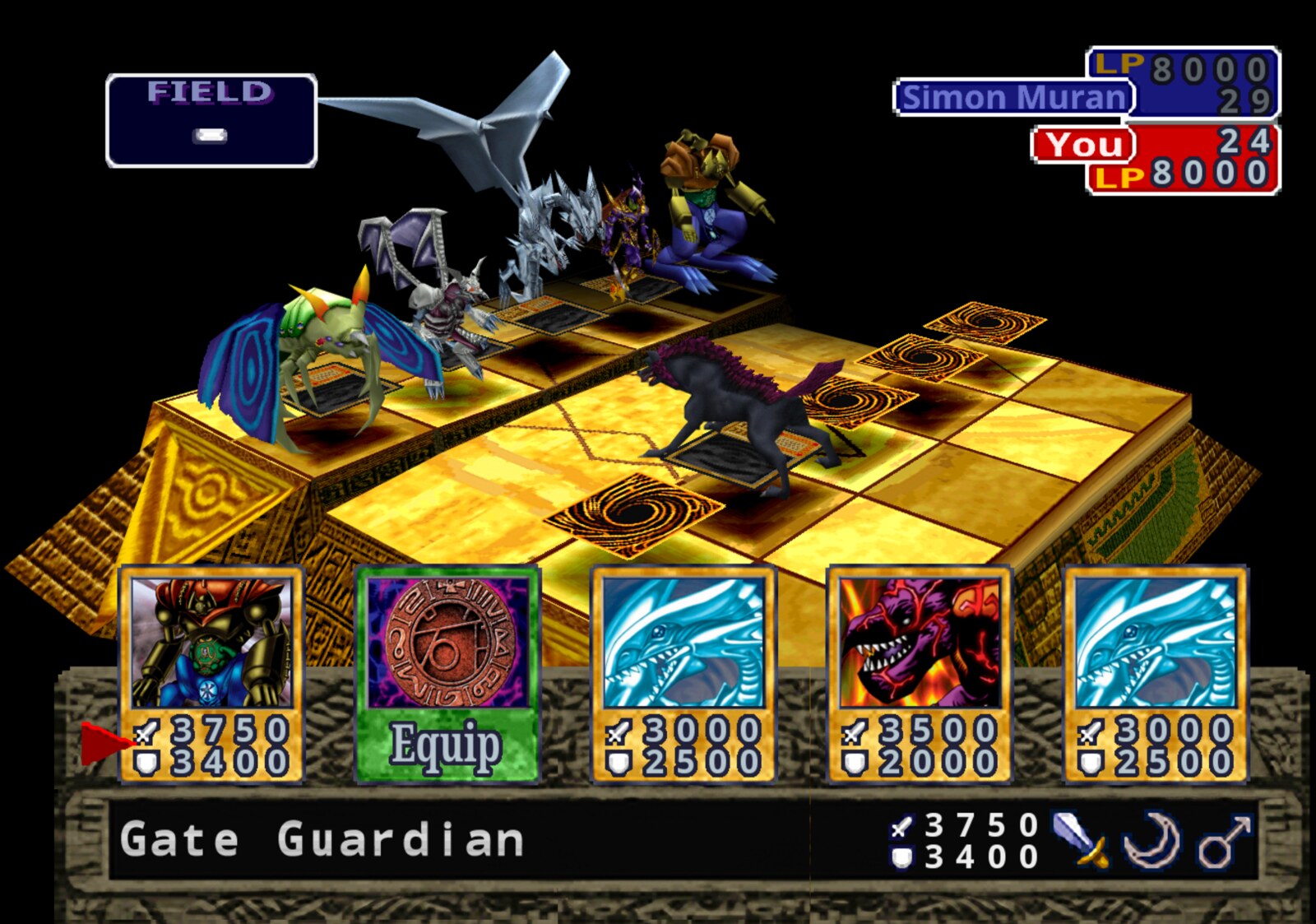
Image credit: Yu-Gi-Oh Forbidden Memories Recompiled project, docs screenshot.
What 100 percent matched actually means
The repository's generated progress table is unusually specific, which makes it easy to check the claim instead of trusting a badge. It reports 1,134 of 1,134 C decompilation targets matched, which is 356,080 bytes of 356,080 in hexadecimal, or 100.00 percent. Remaining C targets: zero functions, zero bytes.
That does not mean every function was written in C by a person reading assembly. The project separates the totals. It lists 61 functions and 40,116 bytes of evidence-backed handwritten game assembly, 1,195 game-owned functions in total, 591 preserved Psy-Q CRT and SDK functions covering 117,348 bytes, 1,786 discovered functions overall, and 1,780 bytes of embedded or unassigned resident text.
The runtime overlays are matched as well, at least the ones shown in the table: free_duel at 9 of 9 functions, main_menu at 31 of 31 and overworld_after_coup at 15 of 15, each at 100 percent of its bytes. Overlays matter in a PlayStation game because large parts of the code load at runtime rather than sitting in the main executable, and matching them is the difference between a partial reconstruction and a complete one.
The verification method is reproducible. The README says every game function matches the original executable byte for byte, and provides make tools and make match to rebuild SLUS_01411 exactly with a pinned toolchain. That is the standard the decompilation community uses, and it is a stronger claim than "the game runs".
The work sits on top of krystalgamer's memories-decomp, which the license names as the upstream decompilation. Unchiga's project adds the native PC port on top, and the README credits both layers rather than presenting the whole thing as new.
What the native port adds
A matched decompilation is an achievement, but it is not a product. The port is what turns it into something you can play, and the feature list reads like a good remaster rather than a bare source port.
Rendering goes up to 4x internal resolution, with widescreen support and HD text. Face-up monsters appear on the field as their battle models, which is the change that alters how the game looks rather than just how sharp it is. An optional Forbidden Memories HD pack adds redrawn cards, frames and portraits, and it is a 108 MB download that installs beside the game and can be toggled in the Mods window.
Mod support goes past cosmetics. The project describes a framework for new cards beyond the original 722, new fusions, textures, music and gameplay tables. Save slots, a fusion helper, adjustable card drop rates and rebindable controls fill out the quality of life list. The FM Editor is a separate optional download that opens the game's data for editing, and it is available for Windows, Linux and macOS.
Languages are handled in an interesting way. The Game menu offers English, French, German, Italian and Spanish, taken from the European releases. The README says the port itself read the text off the PAL discs, and that the languages folder is the only game data in the repository: text, no pictures. A script can export the languages again from PAL discs in the game folder, and a check mode compares the files.
That text exception is worth pausing on. Most preservation projects in this space ship no assets at all. This one ships translated strings, explains exactly where they came from and how to regenerate them, and keeps images out. It is a defensible line, and it is drawn in public.
Windows, Linux, Android and Mac
The release cadence has been fast. v0.3.0, published on October 11, added an Android app and a native Mac version, card effects for monsters, spells and traps, monster fights in 3D Monsters mode, and a reworked FM Editor. v0.3.1-preview.1, published on October 18, added Tower mode, duelist busts with expressions that talk and blink, custom monster types, attributes and card frames, and cut the Windows game's CPU use to about a quarter of a core.
The platform list is broader than most decompilation ports manage. Windows and Linux get a zip or tarball and a memories-pc executable. Android gets an arm64 APK with touch menus and mod import from a zip. macOS gets an Apple Silicon build that is not notarized, so the first launch requires the usual Privacy and Security override. Each release also publishes checksums.
Compatibility is documented instead of assumed. Existing saves and settings carry over between releases, and mods made for v0.1.2, v0.2.0 and v0.3.0 still work in v0.3.1. Save states from v0.3.0 do not load, which is the one break the notes admit.
| Release | Date | Platforms | Headline additions |
|---|---|---|---|
| v0.3.0 | October 11, 2026 | Windows, Linux, Android arm64, macOS Apple Silicon | Android and Mac builds, card effects, 3D monster fights, reworked FM Editor |
| v0.3.1-preview.1 | October 18, 2026 | Same four platforms, plus optional FM Editor | Tower mode, talking duelist busts, custom types and frames, CPU use down to about a quarter core |
| Field Fusion Helper v0.1 (fork) | October 5, 2026 | Mod for the PC build | Fusion routes from monsters already on the field into the current hand |
Source: release notes for v0.3.0 and v0.3.1-preview.1 on the project repository, and the Field Fusion Helper release in the TatsunaKyo fork, October 20, 2026.
The fork that helps with cards on the field
The third link in this batch is TatsunaKyo's fork of the same project, and its contribution is one focused mod rather than a competing port. Field Fusion Helper v0.1, released on October 5, extends fusion assistance to monsters already on your side of the field.
The built-in fusion helper tells you what a card in your hand can become. The fork's mod asks a different question: for each of the five player monster zones, what can this monster on the field fuse or equip into using the cards in your hand, and what would the result be. It displays the resulting monster with its attack and defense, supports multi-card routes, and uses the game's own fusion and equip rules.
It runs as a mod, not a patch. Installation is a folder copy into the mods directory under Documents, or the mods folder beside the executable, followed by enabling it under Game, Mods. No compilation is required, and the mod is independent of the built-in View, Fusion Helper, so both can be used.
The release also scales overlay text to 3x in the tested build, which is the kind of detail that suggests the author actually played with it on a large display. The mod was proposed for upstream inclusion as pull request 282, which is the correct path for a change that belongs in the base game rather than in a fork.
The compatibility catch in the fork
The field helper's release notes say it was tested with YFM Re-Decomp v0.1.3-preview.1 and Mod API 5. The base project is now on v0.3.1-preview.1, three minor versions later. The mod may still work, because the base has kept older mods working across releases, but the fork does not claim compatibility with the current build and its release has not been updated since October 5.
That gap is not a scandal. It is what a one-mod fork looks like when the upstream project moves quickly. The honest way to read it is as a mod with a tested version and an untested newer host, and the honest way to install it is to try it, keep a save backup and expect the possibility of a mismatch.
The fact that the change was proposed upstream also changes the calculus. If pull request 282 lands, the functionality stops being a fork and becomes part of the base, which is the outcome most users should want. Until then, the fork is a preview of a feature rather than a supported branch.
| Decompilation metric | Count | Bytes | Status |
|---|---|---|---|
| Game C targets matched | 1,134 of 1,134 | 356,080 of 356,080 | 100.00 percent |
| Handwritten game assembly | 61 functions | 40,116 | Evidence backed |
| Total game-owned functions | 1,195 | Not listed | Matched |
| Preserved Psy-Q CRT and SDK assembly | 591 functions | 117,348 | Preserved |
| Total discovered functions | 1,786 | Not listed | Accounted for |
| Runtime overlays shown | free_duel 9, main_menu 31, overworld_after_coup 15 | All matched | 100 percent each |
Source: the project's generated progress table in its README, fetched October 20, 2026.
Licensing and what you must supply
The license is MIT, but scoped. It covers the native PC port this repository adds: the PC source, tools, tests, mods, examples, build scripts and CMake file. It does not cover the upstream decompilation by krystalgamer, which belongs to its authors, or Yu-Gi-Oh Forbidden Memories itself and its data, which belong to Konami.
GitHub reports the repository license as NOASSERTION rather than MIT, because the license file is a custom scoped notice rather than the standard text. That is a quirk of automated license detection, not a hidden restriction, and the file itself is short enough to read.
What you must supply is a USA disc image, SLUS-01411, in bin form. A new install asks for it on first launch, and the PC build instructions say to put it in the game folder before running the play script. No game data is included apart from the European text files, and the port is not distributed with the ROM.
FAQ
Do I need the original PlayStation disc?
Yes. The port asks for your own USA disc image, SLUS-01411, in bin format on first launch. No game data is included beyond the European translation text, which the project says it read from PAL discs.
Is this an emulator?
No. The game's code was decompiled and rebuilt as native C, with 1,134 of 1,134 C targets matched byte for byte and 61 functions kept as evidence-backed handwritten assembly. The PlayStation executable is not being interpreted by a virtual console.
Which platforms can run it?
Windows, Linux, Android arm64 and Apple Silicon macOS, per the v0.3.1-preview.1 release. The Mac build is not notarized, so the first launch needs the Privacy and Security override, and Android installs from an APK.
Does the HD pack cost anything?
No. The Forbidden Memories HD pack is a 108 MB optional download from the same release, installed into the game folder and toggled in the Mods window. It adds redrawn cards, frames and portraits.
Will my old mods and saves work?
Mods made for v0.1.2, v0.2.0 and v0.3.0 still work in v0.3.1, and existing saves and settings carry over. Save states from v0.3.0 do not load, which the release notes state directly.
What does the fork add?
Field Fusion Helper v0.1, a mod that checks all five player monster zones and shows the best field-to-hand fusion or equip route using the game's own rules. It was tested with v0.1.3-preview.1 and Mod API 5, and it has been proposed for upstream inclusion as pull request 282.
Our take
The decompilation numbers are the story, and they are the least flashy part of the repository. A 100 percent match with a reproducible build is a receipt, not a marketing claim. It means another group of people can rebuild the same executable and get the same bytes, which is what separates preservation from a fan remake that happens to look right.
The port around it is smarter than it needed to be. 4x resolution and widescreen are expected. Putting the battle models on the field is the change that makes the game feel different, and Tower mode plus a mod API suggests the team understands that a 2001 card game survives on new content rather than nostalgia alone. Shipping it on Android and Apple Silicon is a reach that most projects in this niche skip.
The fork is a useful reminder of how fast the base is moving. A single mod, tested against a build three versions old, is already behind. That is not a criticism of the mod author, who did the right thing by proposing it upstream. It is a warning to users: in a project this active, check the version a mod was tested against before you install it, and keep a save you can go back to.
Bottom Line
Yu-Gi-Oh Forbidden Memories Recompiled has matched all 1,134 C decompilation targets and 356,080 bytes, with 61 handwritten assembly functions, all three listed runtime overlays at 100 percent, and a reproducible make match build of the original SLUS_01411 executable. The native port adds 4x resolution, widescreen and HD text, 3D monsters on the field, a 108 MB HD art pack, mods beyond the original 722 cards, five European languages, save slots and an FM Editor, and it runs on Windows, Linux, Android arm64 and Apple Silicon macOS. The latest release is v0.3.1-preview.1 from October 18, which adds Tower mode, talking duelist busts, custom card types and a large CPU reduction. You still need your own USA disc image, the port is MIT licensed with the upstream decompilation excluded, and the fork in this batch adds a field fusion helper tested against an older build and proposed for upstream inclusion.
Sources: Unchiga/Yu-Gi-Oh-Forbidden-Memories-Recompiled README, progress table, license and release notes for v0.3.0 and v0.3.1-preview.1, plus TatsunaKyo's fork and its Field Fusion Helper v0.1 release notes, all fetched October 20, 2026.
Related: ssrecomp: Pokémon SoulSilver in Native C++, and Claude Wrote Nearly All of It | Decomp.dev: One Founder Is Shutting The Door On A Broken Community