
3DMark CPU Rumble Guide: Free Mobile Benchmark With 20-Minute Stress Test
By Indie Kings | November 26, 2026
Updated November 26, 2026: UL Solutions launched 3DMark CPU Rumble on November 25, 2026 as a free Android and iOS benchmark that models the 2 to 8 thread workload of a real game, plus a stress test that runs for 20 minutes on a phone. The company calls it the first of two new CPU benchmarks it is building.
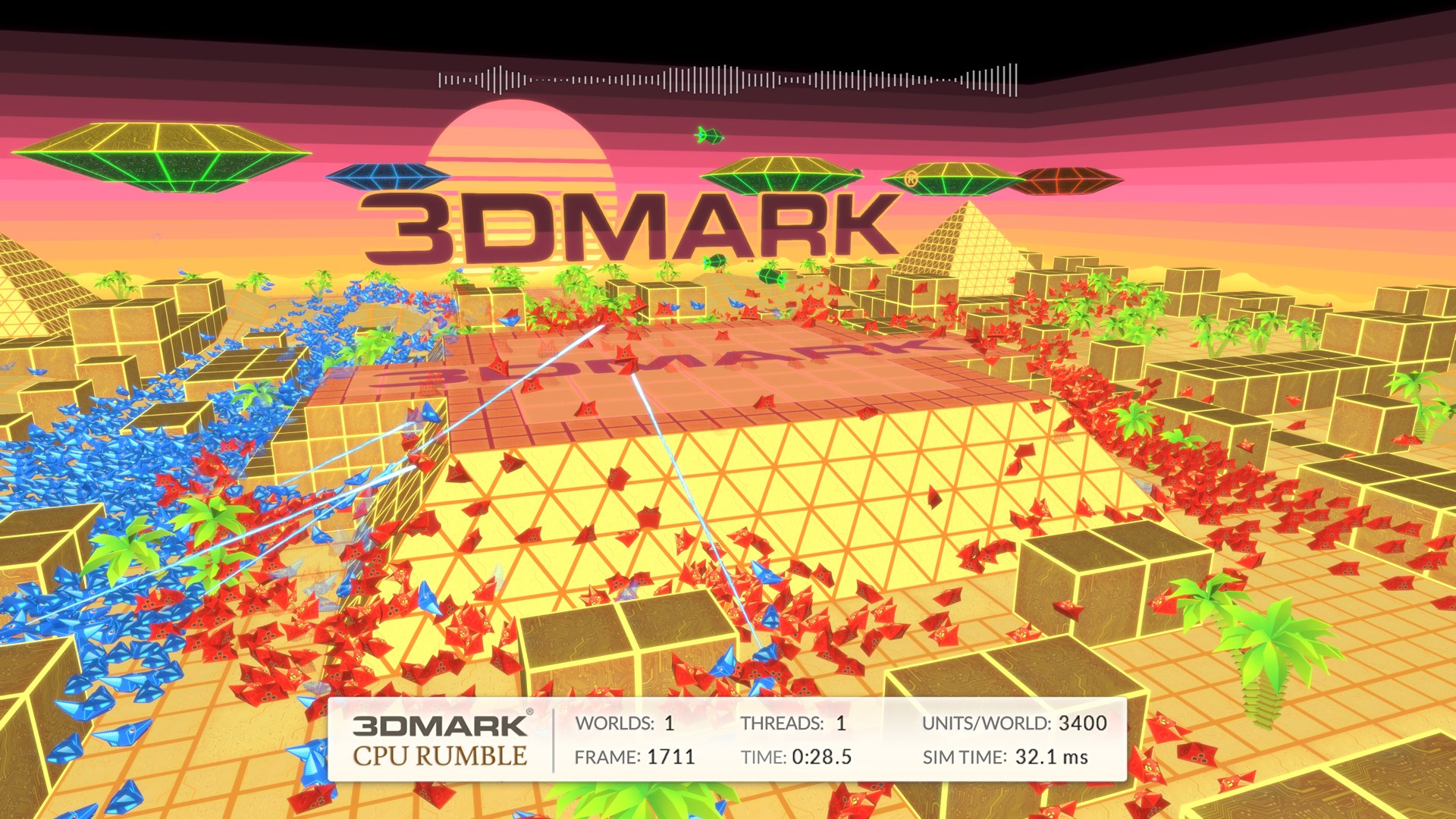
Image: 3DMark CPU Rumble screenshot published with UL Solutions' launch announcement. Credit: UL Solutions.
Most CPU benchmarks push a single thread or every thread at once, which tells you the raw ceiling of a chip but not much about how a phone handles a game. Per UL Solutions' November 25 announcement, 3DMark CPU Rumble is built to close that gap: it uses game style workloads with a main thread and a handful of worker threads, then repeats the workload to expose thermal throttling.
The benchmark launched on the Google Play Store for Android and the Apple App Store for iOS, and UL Solutions says it is free. Users get it by updating to the latest version of 3DMark on either store, per the same announcement.
Overview
UL Solutions describes CPU Rumble as the first of two new CPU benchmarks intended to make it easier to understand how a processor affects gaming performance. The launch announcement was published on November 25, 2026 on the official UL Benchmarks site, and the benchmark went live the same day.
The visual design is a deliberate throwback. Per UL Solutions, CPU Rumble uses minimal graphical effects so that GPU performance has less influence on the result, while still showing a scene where the CPU's real time work is visible. That is a choice about what the score measures, not a claim about visual fidelity.
The target is mobile rather than desktop. The announcement names the Google Play Store and the Apple App Store as launch platforms and gives no PC release date. Within that scope, the stated aim is a workload that looks like a game while behaving repeatably enough to be a benchmark.
Key Details
| Item | Verified detail |
|---|---|
| Name and maker | 3DMark CPU Rumble, from UL Solutions |
| Launch date | November 25, 2026, per the official announcement |
| Platforms | Android via Google Play and iOS via the Apple App Store |
| Price | Free, per UL Solutions |
| Workload shape | A main thread plus worker threads, matching the 2 to 8 thread range UL says most games use |
| Stress test | Runs the workload as many times as possible within a 20 minute window to reveal thermal throttling |
| Graphics approach | Minimal graphical effects to limit GPU influence on the CPU score |
| Building blocks | EnkiTS, Jolt, Recast Navigation, Miniaudio and custom memory and targeting code |
The library list is the substance of the design. UL Solutions published a component table with the announcement, naming EnkiTS for the multithreading model, Jolt for physics, Recast Navigation for pathfinding, Miniaudio for audio, and custom implementations for unit targeting and memory access.
UL's explanation for each choice is specific. Jolt was picked because its simulations are deterministic and it is widely used across mobile, console and PC. Recast is described as the industry standard for navigation meshes. Miniaudio handles audio when worker threads have space, with a deterministic 1/60 second of audio processed per scene each frame.
How It Works
The thread model is the central idea. Per UL Solutions, benchmarks that test one thread or maximum thread count do not reflect modern games, which typically use somewhere between 2 and 8 threads: one main thread for critical tasks and worker threads for audio, NPC AI and assets. The company notes that a struggling CPU can produce game audio problems without crashing the whole game.
Mobile makes that split more visible, UL says, because mobile CPUs combine core types that trade performance against energy efficiency. CPU Rumble is therefore built around a realistic mix of work rather than a synthetic extreme.
Determinism is the constraint that makes the score comparable. UL Solutions defines it as identical behaviour when a test is repeated, and says significant development time went into limiting randomness from physics, NPC behaviour and audio playback while keeping the scene game like. Audio is processed on a fixed 1/60 second cadence each frame and is not played through speakers, because the resulting sound would not be seamless.
The stress test follows the pattern of other 3DMark benchmarks but changes the rule. UL says that instead of 20 runs at the highest possible frame rate, as in its GPU stress tests, CPU Rumble runs the workload as many times as it can within a 20 minute window. The point is to see whether the device slows down as it heats up.
- Install or update 3DMark from the Google Play Store or Apple App Store.
- Run CPU Rumble for a single score from the game style scene.
- Run the stress test if the question is sustained performance rather than a peak result.
- Compare results on the same device model and software version, since UL frames the test around repeatable behaviour.
Evidence and Verification
The primary source for this article is UL Solutions' own announcement, Announcing 3DMark CPU Rumble, our new custom gaming CPU benchmark, dated November 25, 2026 on benchmarks.ul.com. Every date, platform, library name and stress test detail above was taken from that page.
The announcement also supplies the rationale that is easy to misreport: it does not say CPU Rumble replaces existing CPU tests, but that UL is creating two new CPU benchmarks and this is the first. It does not publish reference scores or device rankings, so this article makes none.
The screenshot used here comes from UL Solutions' own page for the announcement, not from a third party gallery. The image was checked for an HTTP 200 response with an indiekings.com referer before use.
Limits and Risks
The launch is mobile only in the announcement. UL Solutions names Android and iOS and says nothing about a Windows build or a release date for one, so any desktop expectation today would be speculation. The second CPU benchmark in the pair is mentioned only as a plan.
Minimal graphical effects are a feature for score integrity, but they also mean the result should not be read as a gaming graphics test. Ultra mobile users who want frame rate data for a specific game still need game specific measurements; CPU Rumble is a controlled CPU workload.
The audio is deliberately processed but not played, per UL, because it would not be seamless. That keeps the workload deterministic but means the test cannot reveal the audible glitches that UL says can happen when a CPU struggles in a real game.
No independent test results were available at launch. The announcement describes how the benchmark is made and what the stress test does, but it publishes no scores, no thermal data and no cross device comparison. Those numbers have to come from separate testing, not from the launch material.
FAQ
Q1: When did 3DMark CPU Rumble launch?
November 25, 2026, according to UL Solutions' announcement. The company says it was available that day through 3DMark updates on both mobile stores.
Q2: How much does CPU Rumble cost?
It is free. UL Solutions says CPU Rumble launched on the Google Play Store and Apple App Store at no charge.
Q3: What does the 20 minute stress test actually do?
Per UL Solutions, it repeats the CPU Rumble workload as many times as possible within a 20 minute window so a user can see whether the device thermally throttles over time.
Q4: Why does UL say the benchmark uses a main thread and workers?
Because UL says most games use between 2 and 8 threads, with one main thread for critical work and workers for audio, NPC AI and assets, which single thread or all core benchmarks do not model.
Q5: Which engines and libraries are inside it?
The announcement lists EnkiTS for multithreading, Jolt for physics, Recast Navigation for pathfinding, Miniaudio for audio, and custom code for unit targeting and memory access.
Q6: Is there a desktop version?
Not in the launch announcement. UL Solutions named Google Play and the Apple App Store as the November 25 platforms and gave no desktop date.
Bottom Line
3DMark CPU Rumble is a free Android and iOS benchmark launched on November 25, 2026 that tests a game shaped 2 to 8 thread CPU workload and offers a 20 minute thermal stress test, according to UL Solutions. It is a useful new way to compare phone and tablet CPUs under a repeatable load, but the launch material publishes no scores and announces no PC version, so treat it as a measurement tool rather than a result set.
Related: 3DMark - Time Spy (DirectX 12 Benchmark Teaser), Counter-Strike 2 - CPU Benchmarks, FPS Benchmarks Are Flawed: Introducing Animation Error
Sources: UL Solutions, Announcing 3DMark CPU Rumble, our new custom gaming CPU benchmark, November 25, 2026, benchmarks.ul.com; the 3DMark CPU Rumble screenshot on the same announcement page.