
Aurora: WebGPU Layer for GameCube and Wii Decompilations
By Indie Kings | November 26, 2026
Updated November 26, 2026: Aurora is a source-level GameCube and Wii compatibility layer built for game decompilation projects. Its repository describes a WebGPU based GX graphics layer using Chromium's Dawn, with support for D3D12, Vulkan and Metal, plus SDL3 based application and input layers.
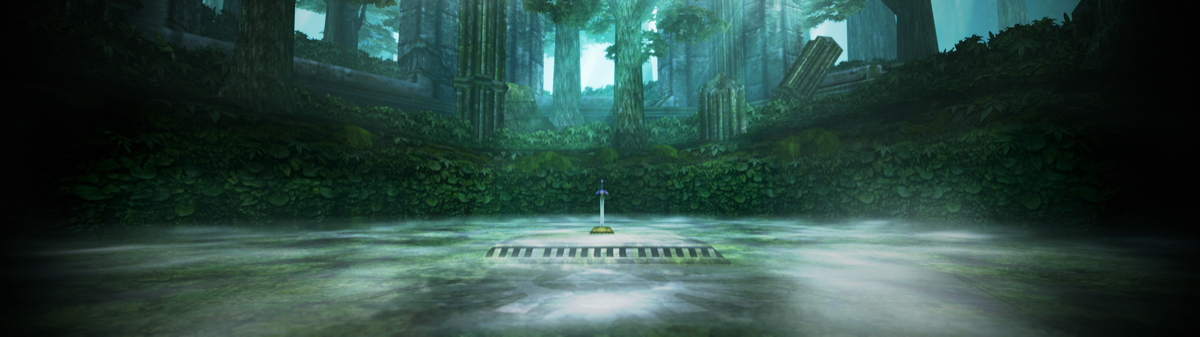
Image: Screenshot published in the Aurora repository README. Credit: encounter and Aurora contributors.
The Aurora repository describes a source-level GameCube and Wii compatibility layer intended for use with game decompilation projects. Per the README, it began inside the Metaforce Metroid Prime reverse engineering project and now powers several completed source ports, including Dusklight. That places Aurora in a different category from a conventional emulator frontend: it is a library that decompiled game code can use to replace console platform functions.
The project does not publish a compatibility list or frame rate figures in its README. The claims available there are capability descriptions, such as platform support, graphics backends, texture pack support and controller routing. This article reports those project descriptions and time stamps the repository metadata rather than turning them into performance conclusions.
Overview
Aurora's stated purpose is to serve decompilation projects. The README calls it a source-level GameCube and Wii compatibility layer, and the building guide says Aurora is designed to be integrated as a library in GameCube and Wii decompilation projects. In that model, the game source supplies the title logic while Aurora supplies GX graphics, controller, disc image, memory card and application services.
The repository groups those services into named compatibility layers. There is an application layer using SDL3, a GX graphics layer, a PAD input layer, a DVD layer and a CARD layer. The README also lists Dear ImGui for simple debug interfaces and RmlUi for HTML and CSS based interfaces.
That structure explains why Aurora is discussed alongside source ports rather than only alongside emulators. A decompilation team can rebuild a game as native source and then link against Aurora to recreate the console environment the source expects. The building guide describes a minimal example that produces a blue screen, which is a developer starting point rather than a game distribution.
Key Details
| Item | Verified detail | Source |
|---|---|---|
| Project description | Source-level GameCube and Wii compatibility layer for game decompilation projects | Repository README and GitHub description |
| Origin | Originally developed for Metaforce, a Metroid Prime reverse engineering project | Repository README |
| Current use | Said to power several completed source ports, including Dusklight | Repository README |
| Application layer | SDL3, listed for Windows, Linux, macOS, iOS, tvOS and Android | Repository README |
| Graphics layer | GX compatibility on WebGPU using Chromium's Dawn; D3D12, Vulkan and Metal listed | Repository README |
| Input layer | SDL_Gamepad support, layered routing and remapping, saved bindings, gyro, keyboard and mouse | Repository README |
| Disc and save layers | DVD support through nod, including RVZ; CARD compatibility with Dolphin gci and raw saves | Repository README |
| License | MIT | Repository README and GitHub API |
| Build baseline | CMake 3.25 or later and a C++20 compatible compiler, per the building guide | Repository building guide |
| Repository snapshot | 610 stars, 161 forks, 9 watchers, 12 open issues and 23 open pull requests; created July 27, 2022; last push November 5, 2026 at 23:30 UTC | GitHub page and API, fetched November 27, 2026 UTC |
Those repository numbers are time stamped because they change. The API also reported C++ as the primary language, a default branch named main and a metadata update time of November 26, 2026 at 22:26 UTC. None of those fields measures compatibility or runtime quality.
WebGPU and GX Compatibility
The README says Aurora's GX compatibility layer is built on WebGPU, a cross-platform graphics abstraction. It names Chromium's Dawn as the WebGPU implementation used by Aurora. Per the project, WebGPU is intended to target major platforms with minimal overhead, and the README lists D3D12, Vulkan and Metal as supported graphics API paths.
GX is the graphics API used by GameCube and Wii software, so recreating it is central to a source-level compatibility layer. Aurora describes its GX implementation as highly accurate and performant, but that wording is the project's own description. There is no independent benchmark in the repository materials checked for this article, so the claim should be read as intent rather than measured performance.
The repository also describes a pipeline cache system with transferable cache support for releases. The building guide adds that a default option compresses WebGPU cache entries with zstd. The README also lists Dolphin-compatible texture packs, widescreen support, resolution scaling and custom APIs for offscreen rendering.
Those features address practical problems for source ports. A decompiled game still needs a familiar way to submit graphics work, load enhanced textures and render beyond the original display assumptions. Aurora presents those as library capabilities, not as a user facing frontend with a compatibility database.
Input, Discs and Saves
Aurora's PAD compatibility layer uses SDL_Gamepad for controller support. The README says that includes GameCube controller adapters, layered input routing for advanced handling and remapping, automatic saving and loading of bindings and port mappings, plus gyro, keyboard and mouse support. Those are implementation details for developers integrating a decompiled title, not setup instructions for players.
The DVD compatibility layer uses nod, which the README says supports all GameCube and Wii disc image types, including RVZ. The CARD compatibility layer is described as fully compatible with Dolphin gci and raw memory card save formats. Together, those layers cover two areas that source ports often have to solve outside the game's rebuilt code.
The building guide lists component options that reflect this split. The GX implementation and WebGPU renderer are enabled by default, the CARD implementation based on kabufuda is enabled by default, while the DVD implementation backed by nod and the RmlUi interface library are disabled by default. Those defaults describe library configuration, not a claim that every integration uses the same feature set.
Decompilation Role and Project History
The README traces Aurora back to Metaforce, a Metroid Prime reverse engineering project. It says Aurora now powers several completed source ports and names Dusklight as one example. Indie Kings has previously covered Dusklight's 2.0 release, which provides a separate, verified reference point for that side of the ecosystem.
Aurora's own documentation frames it as infrastructure for decompilation rather than as a standalone consumer product. The building guide says the project is designed to be integrated as a library, lists CMake and C++20 requirements, and describes a simple example that creates a minimal Aurora application. This is why the repository topics include compatibility layer, GameCube, Wii, WebGPU and Dawn.
The scope boundary matters. The repository describes game platform functions and ports built from decompiled code, but its README does not publish game compatibility grades or measured frame rates. This article therefore does not describe Aurora as a drop in replacement for established emulators or as a finished port of any particular title.
FAQ
What is Aurora?
It is a source-level GameCube and Wii compatibility layer intended for game decompilation projects, according to its repository README.
Is Aurora an emulator?
The project describes itself as a source-level compatibility layer, not as a conventional standalone emulator frontend. Its building guide says it is designed to be integrated as a library in decompilation projects.
Which graphics technology does Aurora use?
The README says the GX layer is built on WebGPU using Chromium's Dawn, with D3D12, Vulkan and Metal listed as graphics API support.
Which platforms are listed?
The README lists Windows, Linux, macOS, iOS, tvOS and Android for Aurora's SDL3 application layer.
Does Aurora handle disc images and memory cards?
Yes. The README says its DVD layer uses nod for GameCube and Wii disc image types including RVZ, and its CARD layer supports Dolphin gci and raw save formats.
What projects did Aurora come from or power?
The README says Aurora began in the Metaforce Metroid Prime reverse engineering project and now powers several completed source ports, including Dusklight.
Bottom Line
Aurora is best understood as shared console infrastructure for native source builds. It gives decompiled GameCube and Wii projects a GX layer on WebGPU, an SDL3 application and input layer, disc image support through nod, memory card compatibility and built-in UI libraries, with RmlUi documented as optional in the building guide. The repository's own history ties those pieces to Metaforce and Dusklight, while publishing no measured benchmarks or frame rate figures; the README's "highly accurate and performant" wording is a project claim without measurement.
Our take: We would treat Aurora as a developer library with a clear preservation use case, not as a consumer emulator release. The most useful checkpoint is the quality of its GX implementation and transferable pipeline cache in real source ports, since those decide how much console behavior a rebuilt game inherits without rewriting its graphics core.
Related: Twilight Princess PC Port Dusklight 2.0 Adds a Built-In Randomizer and Mod Browser, Decompilation vs. Static Recompilation: The Two Pillars of Modern Game Preservation, Awesome Game Decompilations: 488 Projects by Console.