
Xbox Series PC Compatibility Guide: VIctory and XCL Repos
By Indie Kings | November 26, 2026
Updated November 26, 2026: Eight public GitHub repositories are working on running an Xbox Series title, Grand Theft Auto VI, natively on Windows without CPU emulation. The projects span two base layers, XCL and VIctory, plus six forks targeting AMD and NVIDIA graphics cards. All figures below are self-reported in each repository's README as of November 26, 2026, and none of the repositories include game files or instructions for obtaining them.
What these projects actually are
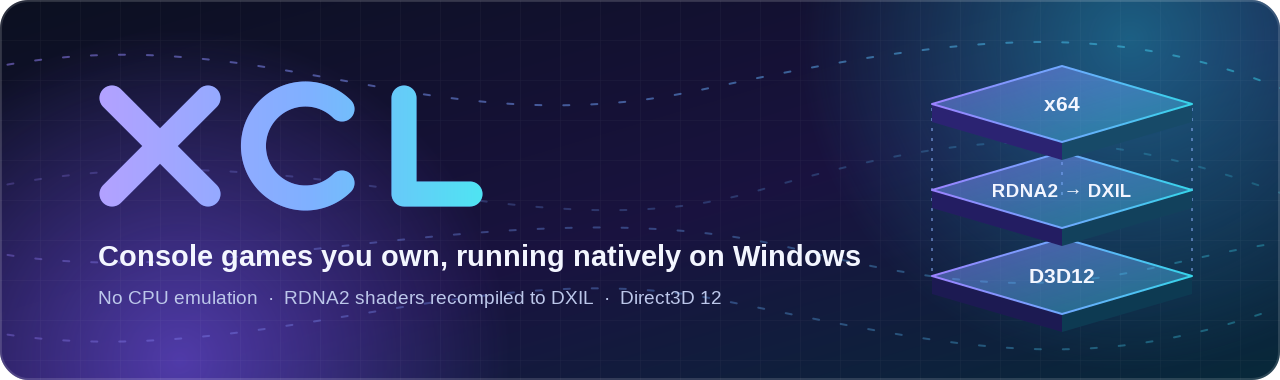
Each repository describes a compatibility layer, in the spirit of Wine or Proton, that runs Xbox Series X|S executable code natively on a Windows PC. There is no CPU emulation: the game's x86-64 code runs unchanged in a PC process, while the project supplies the console platform underneath it and translates the console's graphics work to Direct3D 12.
The title named in the READMEs is Grand Theft Auto VI. Marvisak's original VIctory repository is bluntly described as "An attempt at running GTA VI on PC." XCL calls its work-in-progress target "a newer retail game" in its game table, but its community and the forks consistently discuss the same title.
Crucially, every repository states that it contains no game files, code, or assets from the game, and that users must supply their own copy. XCL explicitly says it works only on unpacked game files the user already owns, does not download, decrypt, or unpack game packages, and contains nothing for circumventing DRM. This guide reports on the engineering only; it does not describe how to obtain game files.
The two base layers: XCL and VIctory
The oldest of the eight, xcl-dev/xcl, was created on November 20, 2026 and is licensed GPL-2.0-only. Its README says it provides its own independently written implementations of console system libraries the PC lacks, naming kernelx.dll, XGameRuntime, and d3d12_xs.dll, and recompiles the console's RDNA2 GPU code into DXIL through HLSL. Its game table lists Minecraft Preview and Unicorn Overlord as fully playable, Fortnite and XDefiant as working subject to their online services, and the newer retail game as roughly 60 percent playable by its own estimate.
Marvisak/VIctory was created on November 23, 2026, is GPL-3.0, and is described by its README as running the title natively on Windows from files the user supplies. Its status section, dated November 25, 2026, says the game is not playable yet because of frame rate: about one frame per second in the world. It reports that the title boots, runs menus at 30 fps, loads the world, plays the intro cutscene, and reaches the prologue with graphics fully displayed.
Both projects carry strong warnings. VIctory notes that entering the world hung on a real GPU in earlier builds and triggered a Windows display driver reset, and that a run can still end on a GPU fault. XCL says the newer game is not playable yet because the world picture is incomplete and it does not keep running there for long.
| Repository | Created | Focus stated in README | Stars, Nov 26 2026 |
|---|---|---|---|
| xcl-dev/xcl | Nov 20 | Base layer, native x64 with RDNA2 to DXIL recompilation | 8,442 |
| Marvisak/VIctory | Nov 23 | Original VIctory, the title boots to prologue | 12,948 |
| fxceless/victory-fork | Nov 24 | Work-in-progress fork, world rendering and playability | 3,193 |
| uiliannn/VItoriaBr | Nov 24 | Brazilian fork, Portuguese and English docs | 214 |
| fablinoo/kelvaroq | Nov 24 | Experimental runtime, memory layer research | 74 |
| Belobug/VIctory-Belobug-AMD | Nov 25 | AMD RDNA 3 speed focus, RX 7900 XTX | 1,730 |
| DexNom/VIctory | Nov 25 | RayTime, AMD Radeon with FSR 4.1.2 | 1,009 |
| avatarmanz/VIctory-7900XTX | Nov 25 | Renderer patching, 30 fps target on RX 7900 XTX | 1,541 |
The six forks and what each targets
fxceless/victory-fork follows upstream VIctory's main branch and adds fixes aimed at one goal: getting the world to render correctly and playably on one PC. Its status section, timestamped November 26, 2026 at 11:50 UTC, reports roughly 8 to 9.5 world frames per second at the first boat mission, 10 to 14 in lighter views, tested on an Intel i7-14700KF with an NVIDIA RTX 4070 12 GB and 32 GB of RAM. It says a device-lost error appears after 30 to 50 minutes of play and that shadowed areas remain black because the game's ray-traced bounce light does not run yet.
Two forks focus on AMD RDNA 3. avatarmanz/VIctory-7900XTX states a goal of a stable 30 fps or more without ray tracing on an RX 7900 XTX, using porting rather than emulation and ahead-of-time shader translation. Belobug/VIctory-Belobug-AMD says it is about speed on AMD RDNA 3 and is not there yet, listing detailed per-scene frame times from the same kind of test machine, an i9-12900K with 64 GB of RAM and an RX 7900 XTX.
DexNom/VIctory, subtitled RayTime, is a fork of Marvisak's work that it calls its most complete tested build and the source of an FSR Quality 4K baseline. Its tested PC uses an RX 7900 XTX, a Core Ultra 9 285K, and 64 GB of DDR5, with a Series X profile rendering at 2560 by 1440 and presenting at 3840 by 2160 using FSR 4.1.2 Quality.
uiliannn/VItoriaBr is a Brazilian fork with Portuguese and English documentation, built on Marvisak's project with rendering improvements from fxceless. Its November 26 status says the 3D world renders live at up to 6 fps on an RTX 5060 Ti, with menus at 30 fps. It separately publishes evidence for a public tracker and is careful to distinguish a 22 fps experimental build from the 4 to 6 fps of its standard preset.
fablinoo/kelvaroq is the newest approach and the smallest by stars. Its README says all code and documentation were produced with the Moon AI platform by Stellarr Studio SAS. It argues that most public projects spend their time copying game memory to the GPU and back every frame, and reports an in-testing memory layer that cut per-frame copied memory from over 100 MB to under 8 MB in the first scenes measured.
Reported performance and technical approaches
Every number here is self-reported by its repository and should be read as a project's own measurement, not an independent benchmark. avatarmanz reports a city street scene on a Series S profile at about 45 milliseconds a frame, roughly 22 fps, with renderer patches enabled, against 57 to 75 milliseconds before the patches. It says all but a few unused geometry shaders translate, and recommends 64 GB of RAM because private memory use is around 30 GB.
Belobug lists menus and loading screens at 30 fps, a boat mission at 46 to 53 milliseconds, and a busy street chase at 100 to 165 milliseconds, which is about 6 to 10 fps. It describes tricks such as recording list calls instead of executing them on the title's threads, preparing submissions on a separate thread, and doing buffer fills on the card.
Marvisak's original project reports the intro cutscene at about one frame per second, with textured and lit characters but no ray-traced shadows or indirect light. fxceless reports its fastest world run reaching roughly 9.5 fps with a texture pass on a helper thread, up from 3 to 6 seconds a frame at the start. VItoriaBr reports up to 6 fps on an RTX 5060 Ti with thousands of draws per frame and occasional crashes rather than a stable result.
The common thread is that the game's own code largely works, and the bottleneck is the layer around it. Kelvaroq states that with nothing drawn, the game's code holds a locked 30 fps in a heavy prologue scene, but drawing that scene through a compatibility layer takes about 130 milliseconds a frame. That framing explains why so many forks attack memory synchronization and shader translation rather than the game itself.
Important limits and how to read the claims
First, none of these projects is a finished product. The original VIctory says it is not playable because of frame rate, XCL calls its newer game target roughly 60 percent playable and not playable in the world, and the fastest forks still describe single-digit world frame rates, device losses, or missing ray-traced lighting. Treat every status line as a snapshot from November 2026.
Second, the repositories are only days old. Creation dates run from November 20 to November 25, 2026, and several status sections are timestamped November 26. Star and fork counts move quickly and are captured here only as a November 26 snapshot. A README can change within hours, so check the linked repositories for current claims.
Third, the legal boundary is explicit in the sources. The projects say they include no game files and no console SDK code, keys, or game data, and require the user's own legitimately obtained copy. This article deliberately omits build and setup commands and offers no guidance on acquiring, dumping, or decrypting game packages. Anyone interested should read each repository's own policy and his or her local law before experimenting.
Finally, the self-reported tracker result in kelvaroq and the evidence table in VItoriaBr are the projects' own submissions for community audit, not verified certifications. Both READMEs say an external tracker or reviewer must confirm the numbers before they are treated as final.
FAQ
Do these projects emulate the Xbox Series?
No. Their READMEs describe native execution of the game's x86-64 code with no CPU emulation, supplying console system libraries and translating graphics work to Direct3D 12.
Which game are they targeting?
Marvisak's VIctory explicitly names Grand Theft Auto VI. XCL calls its target a newer retail game in its table, while the forks discuss the same title.
Do the repositories include game files?
No. Every repository reviewed states it contains no game files, code, or assets, and requires the user's own copy. XCL says it contains nothing for circumventing DRM.
Which project is furthest along by frame rate?
By self-reported world frame rate, avatarmanz reports about 22 fps in one city scene and Belobug reports roughly 19 to 22 fps in a boat scene, while fxceless reports about 8 to 9.5 fps on an RTX 4070. These are different scenes and hardware, so they are not directly comparable.
Why are frame rates so low?
The projects attribute most of the cost to keeping two copies of memory in sync every frame, plus shader and submission work on the CPU side, rather than to the game's own logic or the GPU.
Are these ready to play?
No. Even the fastest forks describe single-digit or low-double-digit world frame rates, crashes, and missing lighting. They are experimental research projects.
Bottom Line
Eight freshly published GitHub repositories show how quickly the open-source community has organized around running an Xbox Series title natively on Windows. XCL and VIctory provide the two base layers; six forks push AMD and NVIDIA performance, renderer patching, shader caching, and memory synchronization, all with no game files included. The engineering is real and detailed, but every performance figure is self-reported, the repositories are only days old, and none of the projects is playable in the full sense. Watch the repository status sections rather than the star counts, and pay attention to each project's own legal boundaries.
Sources: xcl-dev/xcl, Marvisak/VIctory, fxceless/victory-fork, DexNom/VIctory, avatarmanz/VIctory-7900XTX, Belobug/VIctory-Belobug-AMD, uiliannn/VItoriaBr, fablinoo/kelvaroq (all READMEs and repository metadata fetched November 26, 2026).
Related: Leonida Recompiles Xbox GTA 6 Code for Native PC Play, Xbox Series X|S Tests Open-Source AMD Shader Compiler